Drone Zone: Proposed aerial surveillance rules for Seattle
Feb 5, 2013, 5:05 PM | Updated: 6:42 pm

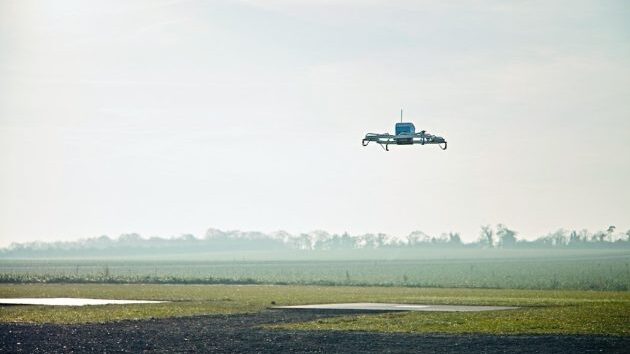
The Draganflyer X6 is an electric powered Unmanned Aircraft System (UAS) which most people refer to as a drone. Seattle Police have two of them. The drones must follow FAA guidelines which include not flying over crowds. They must be monitored by at least one operator and one observer.(File photo)
(UAS)
Put words like “surveillance” and “unmanned aerial systems” together, and people begin to worry about Big Brother watching their every move.
At the direction of Mayor Mike McGinn, the Seattle Police Department has been working on rules governing the use of drones. A city council committee will discuss, and likely vote, on the proposed policy Wednesday afternoon.
The SPD has two drones, so far, that were obtained with a grant from the Department of Homeland Security. While the technology will become more advanced, the drones Seattle has burn through batteries in about 10 minutes.
The city says the systems “are intended to help us protect public safety by gathering visual information in specific situations where sending in an officer would not be safe, or to take crime scene photography that a human being could not easily capture.
The use of aerial surveillance cameras will be “tightly controlled, regulated and will not be used to conduct random surveillance,” they say.
Here’s how the Seattle Police Department proposes using the new technology:
HAZMAT response: In the event of a hazardous material incident, the UAS would provide first responders with important visual information without having to expose them unnecessarily to the hazard. A HazMat event includes incidents involving Chemical, Biological, Radiological, Nuclear or Explosives.
Search and Rescue: Would provide search personnel with aerial views of large areas, much like an airplane or helicopter.
Barricaded persons: Would provide commanders and first responders additional information needed to develop tactical plans without unduly putting officers at risk.
Video/photographs for investigations: Would assist investigators with the ability to video/photograph large crime scenes. These images would be used to further investigations and for eventual court prosecution.
Significant traffic collision investigations: The “bird’s eye view” of a crime scene is extremely important during an accident reconstruction investigation.
Disaster response (Flood, earthquake, etc.): The use of UAS during a natural disaster would be helpful to first responders as they begin to assist the community in recovery.
Any other requests for use of the surveillance system would require a police warrant.
The police promise, “We will balance all operations with the need to accomplish the mission while maintaining public privacy and the freedom from intrusion.”
Not so fast.
The American Civil Liberties Union of Washington says if society is not vigilant, new technology can outpace public policy.
“Police drones give government unprecedented abilities to engage in surveillance of people’s activities,” says the ACLU’s Doug Honig. “Our elected officials need to adopt laws controlling law enforcement use of this new technology, or it will control us.”
Charlottesville, Virginia this week became the first city in the U.S. to formally pass an anti-drone resolution.
On a 3-2 vote, the resolution, “calls on the United States Congress and the General Assembly of the Commonwealth of Virginia to adopt legislation prohibiting information obtained from the domestic use of drones from being introduced into a Federal or State court,” and “pledges to abstain from similar uses with city-owned, leased, or borrowed drones.”
The final wording stopped short of calling their city a “No drone zone.”
A Councilmember there who voted in favor of the bill, Dede Smith, says drones are “pretty clearly a threat to our constitutional right to privacy.”
Vice Mayor Kristin Szakos, who voted against the resolution, says she can imagine ways in which drones might be “used for positive things.”
By LINDA THOMAS