FBI says no easy answers on sexual slavery issue in Snohomish County
Oct 7, 2015, 4:35 PM | Updated: 4:37 pm

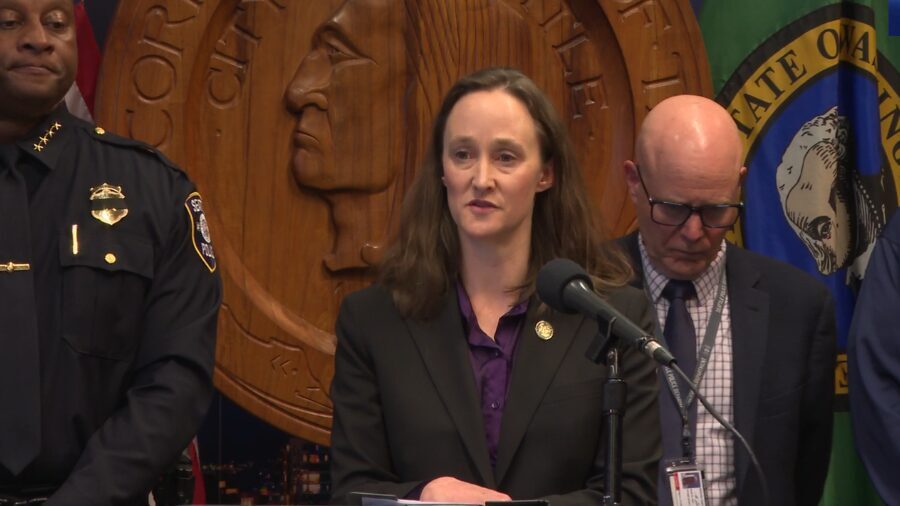
Two FBI special agents helped explain that it's difficult to fight sexual slavery because there's a market for what's being sold. (Photo courtesy FBI)
(Photo courtesy FBI)
Answers aren’t easy, or specific, when it comes to understanding sexual slavery. That’s both the frustrating and telling part about the hidden world of forced prostitution.
Related: Former prostitute says ‘nothing worse’ than Snohomish County
“Throughout the state of Washington there are, you might say, hubs of high activity involving prostitution and, therefore, trafficking,” said FBI Agent Steve Vienneau. “Seattle and King County are part of that, but so is Snohomish County.”
Vienneau, who works in Snohomish County at the FBI office in Everett, said anywhere there are people with money to spend, sexual slavery exists.
“It’s real and it’s there whether we choose to see it or not,” Vienneau said. “It’s probably not going away anytime soon, unfortunately, until we see a lot of shifts in our culture.”
Related: Finding answers to Snohomish County’s sexual slavery problem
And by culture, Vienneau means demand.
“The demand, right? It exists because there are people willing to pay. It’s about money in the end,” he said. “It exists because people make money off of it. If there’s money to be made, there will be people who will make that money who don’t care what it takes to make it.”
And there’s usually someone to manage that demand, most commonly pimps. But pimps don’t always come packaged like one would expect, like in a Hollywood film. Some are far more subtle.
“A person who sells someone for sex can take on a lot of different forms and it can look different depending on what community you live in,” Vienneau said. “It could be a parent, it could be a gang member, it could be the traditional pimp you see in the movies. All of these things exist.”
Vienneau said another common misconception is that sex traffickers are always men.
“Very often girls are recruited by other women because they’re, what, less scary, maybe?” he said. “And a trafficker will know that if [they] send another girl to recruit her, she’s better received than I would be.”
And who are these girls that are preyed upon and lured into sexual slavery?
“The reality is that these predators are really adept at targeting what they perceive as certain types of girls, essentially at-risk girls,” said FBI agent Sara Blond, an agent who works with Vienneau. “I don’t want to give the impression that every girl who is at a shopping mall with her friend is a potential target because that is terrifying for anybody to think about.”
But Blond added that anywhere at-risk youth may congregate, such as malls or bus stations, are likely targets.
The unpredictable nature of the crime also makes it difficult to solve through statistical tracking.
“No one really knows how many girls, kids, adults are being trafficked and [being forced into] sexual slavery,” Vienneau said. “But we go by what we see, ourselves, firsthand and what we hear from our partners. And we know it’s a significant problem, but there’s no way to really put a number to it.”
The FBI agents might not be able to provide a number, but that’s because they can’t, and don’t, tally their success in statistics. Instead, the progress is in the individual children and women they’ve successfully pointed toward recovery.
“I remember all the kids that I’ve worked with,” Blond said. “Sometimes I call the families and see how they’re doing. I’m in contact with them a lot. Is there a specific one? I mean, I remember them all so specifically.”
“I hear so often from girls that they just feel like ‘nobody’s got my back,’ and so, as adults, whatever we can do to come alongside a vulnerable kid to have (his or her) back, then we’re helping,” Vienneau said.
If there is one solid answer the two FBI agents could offer about fighting the demand and supporting, at-risk girls and women, it’s on the issue of legalization. Many wonder if legalizing prostitution would remove the problem altogether, giving power to the sex worker. But sexual slavery is a different matter and legalization doesn’t speak to the cases Vienneau and Blond have worked.
“I’ve never met anyone who said they wanted to do it,” Vienneau said.
Blond added, “It’s no little girl’s dream, right? I mean how many little girls do you know who wake up and say, ‘Oh I want to be a prostitute one day’? Nobody dreams of that.”
The problem of sexual slavery doesn’t always start with adults who could consent if paying for sex were ever legal. It sometimes starts with underage girls. Legalizing prostitution doesn’t solve the demand for that.