Debate: Are hate crime numbers really on the rise?
Aug 4, 2019, 1:09 AM

A statistics professor once told me that if you torture the numbers enough, they’ll tell you whatever you want. I’m reminded of this after reading a recent column claiming that spikes in Seattle hate crime numbers, and national figures, are overblown.
On one hand, you have a report from The Seattle Times, stating that hate crimes have shot up nearly 400 percent in Seattle since 2012. On the other hand, you have a column on the blog Quillette titled The Hate-Crime Epidemic That Never Was: A Seattle Case Study which counters The Seattle Times.
Could it be that FBI reports of spiking hate crimes in Washington are overblown?
Sugarcoating the message: White supremacist tactics in Washington
A debate has emerged between these two perspectives. One that misses a bigger, more concerning point: whether the numbers are at one level, or another, or there is some arbitrary reason for hate crime spikes, the fact is that they are happening. Any number of hate crimes is a bad number. I think most folks can agree on that.
An argument
Quillette columnist Wilfred Reilly says that there is really no rise in hate crimes in Seattle or the United States. Rather, he argues that more law enforcement agencies are reporting these crimes, which inflates the numbers.
He writes, “This provides an excellent case study of how media coverage of flash-point issues such as hate crime can—whether intentionally or not—sensationalize and exaggerate the urgency of social problems.”
A report from the Capitol Hill Blog somewhat confirms this, stating that Seattle officials have encouraged people to report bias crimes.
A new report from the Seattle City Auditor’s office shows efforts to encourage people to report bias crime are — sadly — working. In 2018, there were some 521 crimes and incidents involving bias reported in Seattle. That is up 25% over the previous year and up 313% in the five-year period starting 2014.
Reilly further argues that if there was a common theme among Seattle’s reports of hate crime, its that of homeless, mentally ill persons yelling slurs. To be fair, this exact thing has happened to me twice in Seattle. But his perception is that these crimes are lighter offenses that do not rise to the level of gruesome beatings that many people may think of when it comes to hate crimes. Beyond that, he says that the total number of incidents are tiny compared to the region’s 3.5 million population.
But despite Reilly’s effort to downplay the significance of hate crime reports, the Quillette column still fails to address a key point: incidents of hate are still happening in America in significant numbers. Even if it is true that more people are reporting those numbers, causing a spike, that just means the problem has always been there and we haven’t paid enough attention to it.
Just a side note (going back to that point about torturing numbers to tell you anything you want). Comparing one particular crime to a region’s total population lacks quite a bit of context. There were 184 traffic injuries and deaths in Seattle over 2018. As Reilly points out, the region has 3.5 million people, so the accidents are much less than 1 percent of the population. Still, I’m not about to drive down Aurora Avenue at 90 mph without my seat belt.
Another perspective
The Anti-Defamation League does its own tracking of hateful incidents, specifically of an antisemitic nature. Their annual audit is independent from the FBI numbers that Reilly criticized in his column. It also uses a different methodology. According to Miri Cypers, regional director for the Anti-Defamation League in the Pacific Northwest, they have observed a similar upward trend in anti-Semitic activity in recent years.
Seattle, FBI investigate anti-Semitic threats to council candidate
“Unfortunately, we are seeing a lot of really serious and ugly trends emerge from these reports…” Cypers said.
The ADL has conducted this audit since 1979. It is sourced from direct reports to the ADL, media accounts, and reports filed with law enforcement. Cypers says it’s more comprehensive than the FBI – it takes into account events that may not rise to the level of a criminal act.
“We do feel like when you look at the issue of anti-Semitism, although it’s just one community being targeted, hopefully if gives people a barometer of how minority communities are being treated in the United States today,” Cypers said.
“Overall, we’ve been seeing the largest number of incidents ever — over the past few years since 2016 — since we started tracking in 1979,” she said. “We’ve been seeing sharp increases in the rise of anti-Semitic incidents and crimes being committed.”
Cypers notes a recent “big trend” with white nationalism being tied to “everyday acts of bias and hate targeting the Jewish community and other minority communities.”
While 2018 numbers show a decrease in some types of antisemitism, it stands as the third worst year on record.
- There were 1,879 incidents in the ADL’s 2018 audit.
- In 2018, there was a 105 percent increase in physical assaults on Jewish individuals (a total of 39 reports, and a total of 59 assault victims).
- Harassment increased in 2018 by 5 percent from the previous year.
- There were 774 cases of vandalism in 2018, a decrease from 2017 (952 cases).
- In 2018, there were 249 incidents associated with extremist groups or individuals with extremist ideology, accounting for 13 percent of incidents and marking an all time high of anti-Semitic incidents connected to extremist groups.
- There was a wave of robocalls targeting Jewish schools, community centers, and synagogues.
- The worst attack on Jews, a mass shooting, in US history was in 2018.
- The 2017 audit showed a 94 percent increase in anti-Semitic incidents in K-12 schools, Cypers said.
Cypers believes that many incidents are never reported and don’t make it on an FBI or ADL report.
“Because bigotry has become more prominent, everyday people have felt the need to report and speak out when these kinds of acts occur,” Cypers said. “Which might not have happened several years ago.”
“I do think that because of the political climate and the tones of xenophobia and racism and antisemitism that are increasingly being spewed in the political context every day, we are seeing more and more acts of everyday hate targeting minorities in our society,” she said. “…We are seeing a huge escalating number of bias incidents in schools targeting minority students because of people feeling more validated in today’s climate to espouse hateful views.”
SPD hate crime data
Beyond arguments over inflated numbers, the Seattle Police Department’s bias crime unit has been accused of being, well, biased — that the unit is more likely to bolster reports to justify its own existence. That is mere speculation, of course.
In the case of the Quillette column, it is not saying anything new. In fact, it repeats what Seattle’s own report states — that more reporting is inflating the numbers.
A rise in reported hate crimes does not necessarily mean there are more of these crimes occurring. Jurisdictions that report more hate crimes are typically seen as leaders in hate-crime response efforts because high reporting can indicate law enforcement is prioritizing these crimes.
The column also claims that because Seattle only prosecuted 40 cases out 521 in 2018, these hate crimes weren’t all that serious — despite the city’s own study stating that “hate crimes can be challenging to investigate and prosecute for many reasons.” After all, anyone living around Seattle is aware of how much the city adequately prosecutes offenders.
Looking at Seattle’s bias crime dashboard, and only considering assaults under malicious harassment (Washington’s hate crime offense), there were 55 such incidents in 2018. There were 49 in 2017; 28 in 2016; 30 in 2015; 29 in 2014; 17 in 2013; and 12 in 2012.
Despite the argument that hate crimes aren’t a big deal, it only re-enforces the claim that the country has a hate crime problem. Saying that the issue is fake because people weren’t previously reporting it is illogical. The problem has always been there, despite agencies not reporting it. We now just have broader numbers on the issue.
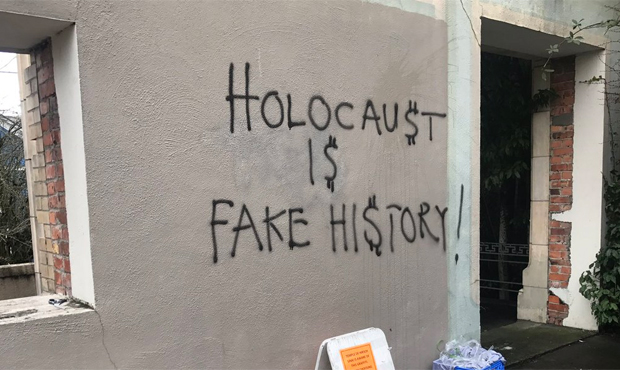
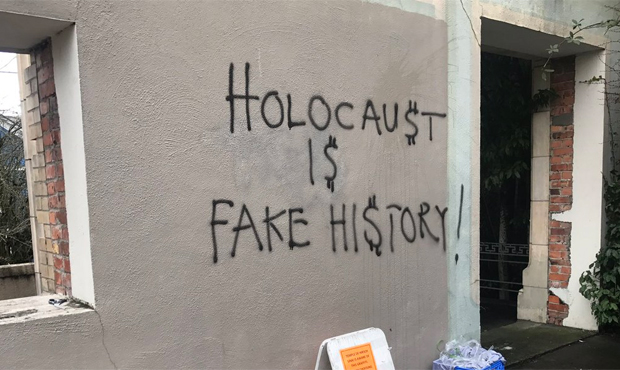
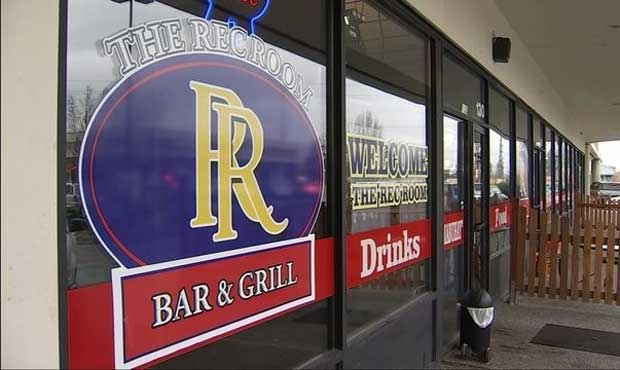
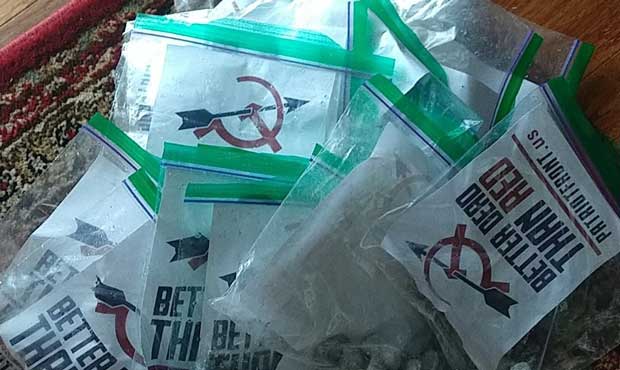
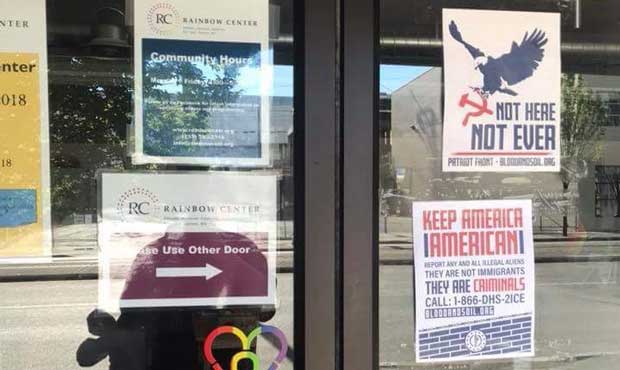
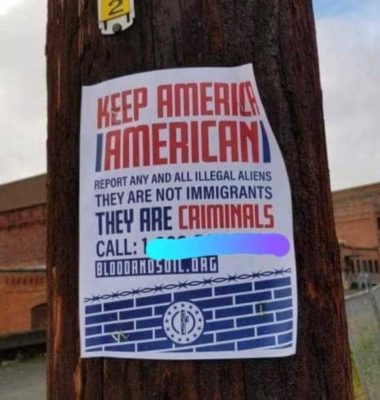
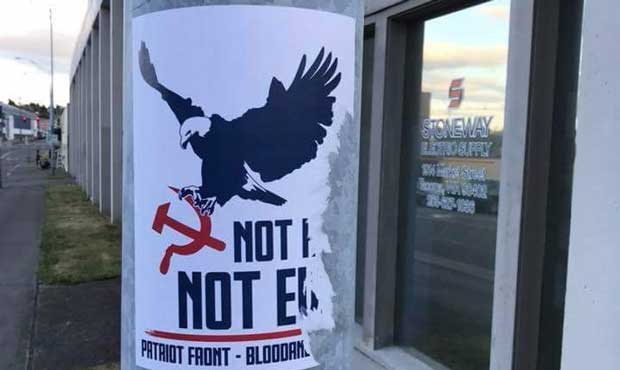
It also doesn’t negate the fact that white supremacists are dropping fliers with candy near schools in Bellevue and Clyde Hill, pasting posters up in Tacoma, leaving antisemitic graffiti in Seattle, or the fact they beat up a DJ at a Lynnwood bar.
So sure, there may be a spike in reported cases, but that doesn’t chip away at the fact that the crimes are happening in the first place.
This is like your doctor suddenly finding out that you are suffering from a serious illness. But after running some more tests, and looking at the numbers, they find out that you have actually been suffering from this illness for a long, long time; the tests just weren’t previously showing it. None of that information negates the fact that you are sick and need help.
America has been sick with hate crimes for years. Whether or not we knew it is moot.