Rantz: I think I have the coronavirus — so does ‘John’
Mar 3, 2020, 11:36 PM | Updated: Oct 8, 2024, 7:37 am
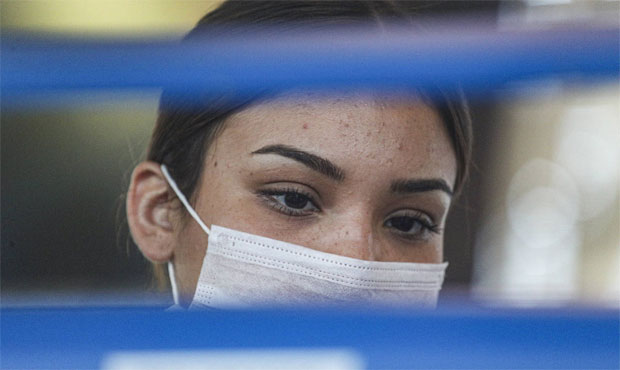
An airline agent wears a protective mask while printing out boarding passes. (AP Photo/Esteban Felix)
(AP Photo/Esteban Felix)

I think I have the coronavirus. I mean, I don’t have it, but I think I do. Or maybe I do have it and I’m right to think I do. Honestly, I don’t know. Maybe it’s birthday-related depression.
I’ve been feeling unusually fatigued. Well, I normally feel tired because I don’t sleep and I work a lot. But this fatigue feels different, you know?
And my throat is a bit sore. Sort of. Not really but sometimes. And today, when I opened my mailbox, I sneezed. In public. People saw. They were probably wondering if I have coronavirus.
Like you, since we started talking about the coronavirus, with a steady diet of coronavirus coverage that includes Democrats pretending the Trump administration doesn’t know what it’s doing, I started to develop symptoms. Or maybe this is normally how I feel and I’m just more aware. Anxiety can cause symptoms, both physical and mental.
But imagine if you’re actually experiencing severe flu-like symptoms. Not just in your head because you’re freaked out by the coverage, but an actual fever, severe cough, and extreme fatigue. It’s happening to John from Snohomish County.
Dear John: By the time you read this letter, you’ll have coronavirus
John is a friend of mine, though his name isn’t actually John; I’ve changed his name to protect his privacy. He recently went on a cruise to the Bahamas, from the east coast, for his honeymoon. He developed symptoms on the cruise, then came back to his home very sick.
“I started having a sore throat and didn’t think anything of it,” he tells the Jason Rantz Show on KTTH. “It sort of started to progress into coughs. And now we’re home and the cough has continued to get worse. And I had a fever yesterday.”
John, very aware of the coronoavirus crisis, called the Washington State Department of Health (DOH) coronavirus hotline “out of an abundance of caution.” That didn’t go so well.
“You’ll call, and they will say if you have questions about coronavirus … press pound,” John explained. “You press pound and it rings for about four or five seconds, and then it goes to… a voicemail and it will hang up. I kept trying to call and I think on attempt number 11, it didn’t send me that voice mail. It kept ringing, and I went into the hold cycle. So I just sat there. It was about an hour and five minutes on hold.”
A quick way for the coronavirus to spread? Vulnerable homeless people passing it around, maybe without even experiencing symptoms. I talked about it with #TuckerCarlsonTonight. We need to get them in the system to help.
Watch below, then read my take: https://t.co/Pkl6MuaoOB pic.twitter.com/JEw9y8CvEb
— (((Jason Rantz))) on KTTH Radio (@jasonrantz) March 3, 2020
A human!
Finally, John got through to a human being. That also didn’t go so well.
After waiting on hold for so long, the DOH staffer said he wouldn’t qualify for coronavirus testing because he hadn’t come into direct contact with someone with a positive test.
It’s almost impossible to qualify for testing unless officials almost certainly think you have it. According to the DOH, patients must meet one or more of the following requirements:
- Fever or lower respiratory symptoms and close contact (including health care work) with a confirmed COVID-19 case within 14 days of symptom onset.
- Fever and lower respiratory symptoms requiring hospitalization and travel to an affected geographic location within 14 days of symptom onset.
- Fever with severe acute lower respiratory illness (i.e. pneumonia, ARDS, etc.) requiring hospitalization and without an alternative explanatory diagnosis.
- A request from a local health officer (or any equivocal epidemiology or clinical symptoms).
John wasn’t happy.
Are the numbers accurate?
Given he couldn’t get the test to confirm whether or not he had the coronavirus, John wonders if the data reported by the state is accurate.
“I was blown away, and so was my wife,” John said. “I mean, I get it. People are hypochondriacs. I’m sure that the urgent care facilities in the area are overwhelmed right now. But if there’s someone… who does have it for sure, and and they have to meet that criteria of bumping into someone who’s confirmed tested for it… I mean, what it said in my mind is this is probably a lot bigger in our area than we’re thinking. And the people that have it, who want to test themselves or get reported, literally can’t. They can’t even get past the hotline.”
He said he doesn’t believe the data is very credible.
Why is this the system?
The reason John — and others — aren’t being tested-on-demand is a temporary lack of resources. But it’s also skewing the data. If we’re not testing everyone with symptoms, for a disease that is believed to be extremely contagious, then we’re underreporting.
Any coronavirus-related death is, of course, tragic. But if we had an accurate number of people with coronavirus, the survival ratio would skyrocket. We already believe the chances of surviving coronavirus are overwhelming for most of the population.
But without accurate data, health officials can only accurately say there are nine deaths of 124 cases in the United States. That’s a 7% death rate. If it was nine deaths out of, say, 100,000 cases, the death rate is remarkably less alarming. Better data might mean fewer people freaking out.
Listen to the Jason Rantz Show weekday afternoons from 3-6 p.m. on KTTH 770 AM (or HD Radio 97.3 FM HD-Channel 3). Subscribe to the podcast here. Follow @JasonRantz on Twitter.
Follow @https://twitter.com/jasonrantz