Love them or hate them, traffic expert suggests more tolls
Mar 20, 2012, 10:14 AM | Updated: 4:17 pm

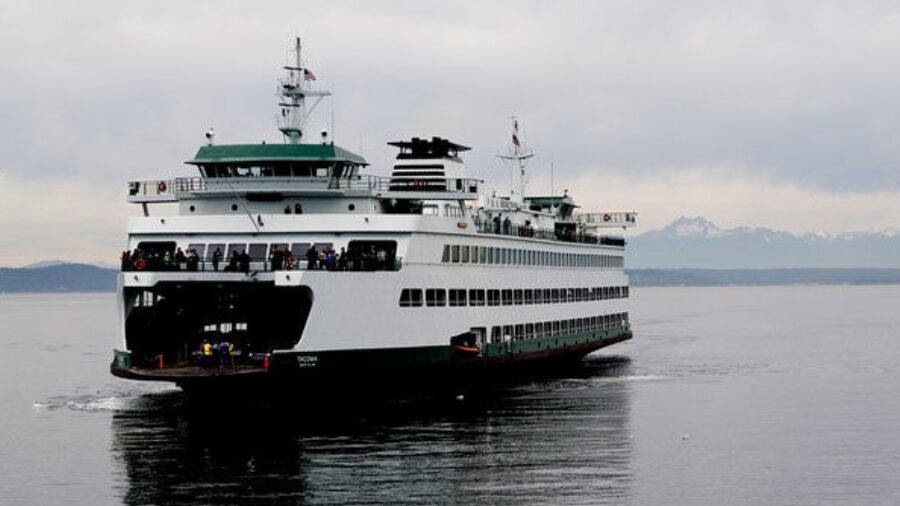
 Robert Poole, Director of Transportation Policy for the Reason Foundation, says the Puget Sound area needs even more tolls like on the 520 bridge and HOT lanes. (WSDOT) |
If sitting in traffic on I-5 or I-405 is frustrating to
you now, just wait a few months for summer construction
season.
Robert Poole, Director of Transportation Policy for the Reason Foundation, tries to shed some light
on congestion in the Puget Sound region. He tells 770 AM The Truth’s David Boze
Show we don’t have to rely on paving new roads, there
are other solutions. And he suggests HOT lanes and tolls
to pay for it all.
“If you can convince people that it’s worth paying a toll
to get better mobility that you otherwise couldn’t
get, a lot of these things become possible.”
Poole is also a fan of the HOT lanes on the I-405 and SR
167 corridors.
While some may argue HOT lanes are for the rich, Poole
argues that decade old data collected from a dozen metro
areas shows a good cross section of all income levels
using those lanes.
“It doesn’t matter what your income level is, there are
times when you really need to be somewhere on time and the
cost of being late, not making your plane, or whatever it
might be, is more than the price of the toll. It applies
to people of all income levels.”
But shouldn’t driving be free? Poole doesn’t think we all
need to be in the same miserable mess when we can pay for
improvements.
“Many of you would rather pay for Starbucks than for
Maxwell House. Why shouldn’t people who drive on the roads
have the same opportunity and have a different range of
services available for different price points?”
What’s not working is the gas tax, says Poole.
More people than ever are using roads, but the gas tax is
based on the number of gallons consumed. Poole says over
the last 25 years, we go twice as far on a gallon of gas
than we used to. And fuel economy is only expected to
improve as the federal government imposes more regulations
on the auto industry.
But Poole knows forking out money doesn’t solve capacity
problems. He recommends using your ballot to help
determine the issues the state transportation department
ought to focus on.
“What the state DOT does is largely driven by what the
legislature tells it to do.”
Poole cites the Texas Transportation Institute, which puts
out an annual urban mobility report estimating that $100
billion a year is the direct cost of congestion in
America’s urban areas. That amount is just wasted time and
wasted fuel.
It’s probably double that if you calculate lost
productivity, Poole says. The hassle of dealing with
traffic not only hurts a city’s economy, but also social
lives. He refers to younger colleagues who ignore
online requests from potential mates that live too far
away.
Mass transit could work with some changes, Poole says.
Only a fraction of daily commuters are using public
transportation in every urban area in America, outside of
New York. It’s about five percent or less of all
commutes, according to
Poole. And in most long range transportation plans, a
handful of public transportation systems would actually
increase the fraction of commuting trips made. He says
they’re
doing good if it increases from four to six percent over
the next 25 years.
“That still leaves the vast majority of trips made every
day out on the highway,” Poole says.
To be successful, Poole says a transit system needs to get
people as close to their destinations as possible, or door
to door.
“Some people call it a single seat ride. If you can do
that and it’s reliable and fast, middle class and
professional people will ride that kind of bus service.”
As for the HOV lanes, Poole says we should turn them into
toll roads.