
This is Seattle losing the war on homelessness
May 12, 2016, 10:55 AM | Updated: 11:50 am

Seattle City Council member Tim Burgess wants to see the city rework its response to the homeless crisis. (Jason Rantz/KIRO Radio)
(Jason Rantz/KIRO Radio)
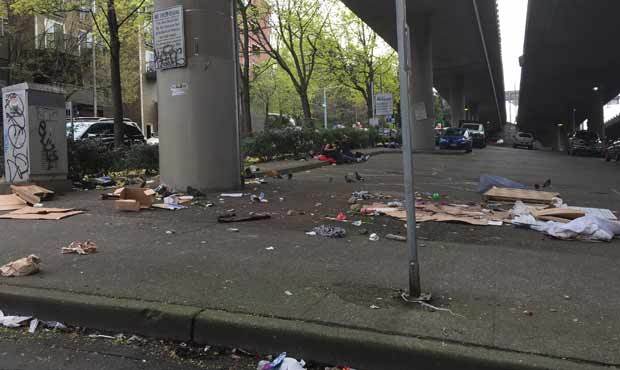
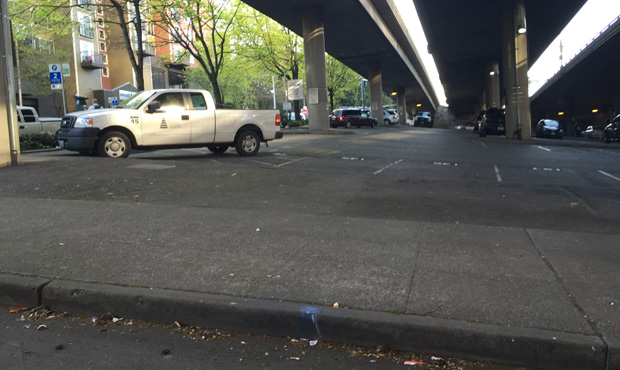

In early April, as I was driving through 7th and Cherry in downtown Seattle, I saw an illegal tent encampment under the I-5 overpass. It was a total mess that made the entire area look like a garbage dump. It was quickly cleaned up after I brought attention to the issue.
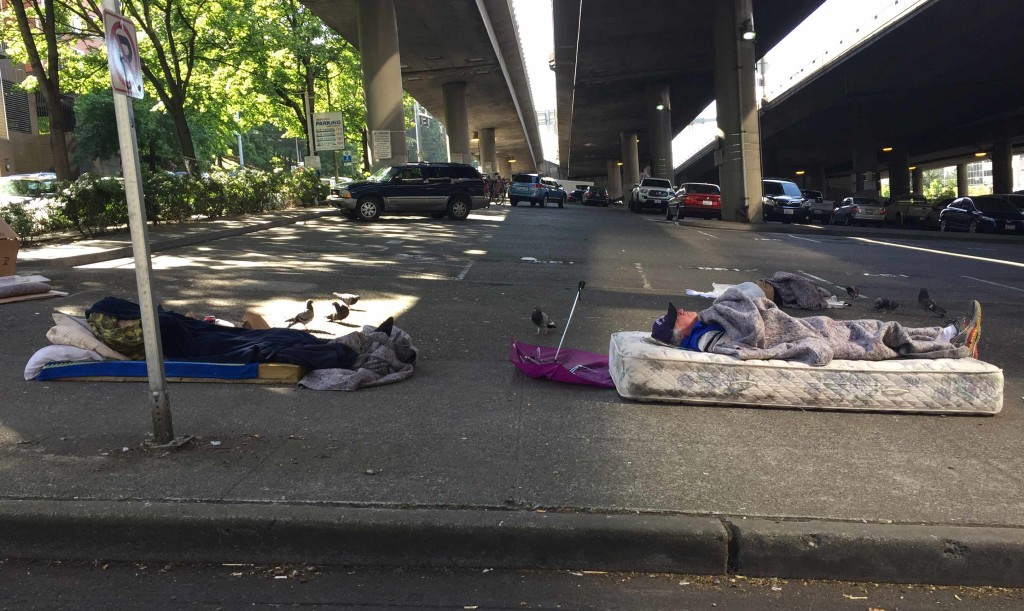
Now, it’s the site of human despair; the image of what it really looks like to be homeless in Seattle.
The image above of two men sleeping on mattresses (one makeshift) in the middle of the sidewalk was taken Thursday around 9:30 a.m. Let’s assume these two are living on the streets through no fault of their own. Perhaps they suffer from addiction; perhaps they lost their job during the rough economic times and they’ve been unable to recover. When will the city help?
Related: Here’s why homelessness is getting worse on Capitol Hill
Think of all the money wasted on the soon-to-be-shuttered Ballard RV safe camp. They could have put the money to better use. Tiny Homes, perhaps? A well-rounded program that actually addresses the root causes of homelessness and gets these folks on the right path to self-sustainability, perhaps? Nope.
We just let human beings sleep in the streets without offering them any help or compassion, then we allow Twitter trolls and blogging bullies to shame people who don’t want to walk or drive around the city to find images of human despair being left behind by the people who claim to want to help them. That we’re upset the city won’t effectively manage the problem and keep our neighborhoods clean and safe is somehow a violation of Progressive values that dictate we should let people do what they want, where they want, however, they want.
Let’s just give the money to Seattle’s Union Gospel Mission. Their president stopped by my show not long ago to explain how to actually help address the problem. No, he doesn’t support the silly safe injection sites that keep people addicted to drugs. No, he doesn’t think setting up tent cities does anything to address the problem. Jeff Lilley actually thinks you ought to build relationships with them, earn their trust, and get them into the services that are already available to them – if only they’ll take them.
Perhaps the city will take this advice and send over some case workers to talk to these two men sleeping on mattresses in the middle of a sidewalk?
Follow @https://twitter.com/jasonrantz

-
 Tune in to Seattle Red AM 770 weekdays at 3-7pm to The Jason Rantz Show.






