Weather vs climate: What’s the difference?
Jan 25, 2024, 9:42 AM

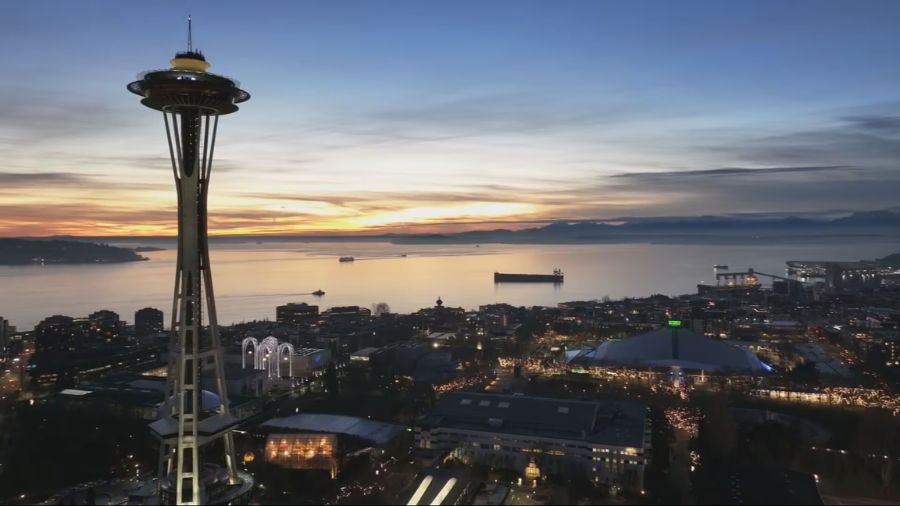
Rain in Seattle. (Photo courtesy of KIRO 7)
(Photo courtesy of KIRO 7)
The recent cold snap once again raised the question regarding the difference between weather and climate — two terms that were taught in earth science class that are vastly different from each other.
Weather is defined as the state of the atmosphere at a particular place and time. Climate is defined as weather conditions prevailing in an area over a long period of time, generally specified as 30 or even 100 years. Weather is very short-term, like today, yesterday, or tomorrow. Climate involves a long period of time in an area, decades or even a century.
Here is an example: TV weather anchors often refer to today’s high temperature and how it compares to the daily average high temperature. That average is determined over what is called a 30-year average. So the daily average high temperature is a climate term.
More WA news: Boeing problems on the Renton assembly line may run deep
Looking at daily average temperatures for a full year during the sequence of 30-year averages going back well into the 20th century, Western Washington’s average high and low temperatures have been steadily rising. This trend is seen elsewhere in the country, as well as around the world. Climatic data provides trends in long-term weather conditions.
In May of 2021, new 30-year averages for both temperature and precipitation were released in the U.S. using the latest decade of climate data from 2011 to 2020. Going back to the 1980s, the latest 30-year averages for the period of 1991-2020 once again got a little warmer and drier for Western Washington.
Globally, the decade spanning from 2011 to 2020 was the warmest decade ever recorded and added to the warming trend in the 30-year averages. This trend has been in place since the 1960s.
The amount of carbon dioxide (CO2) and methane has been climbing in the planet’s atmosphere since the start of the industrial age in the late 19th century. These greenhouse gases have been determined by climate scientists around the world as the driving force behind the warming of the planet. Studies have shown that the amount of CO2 in the global atmosphere at the onset of the industrial age was about 280 parts per million. The burning of fossil fuels has resulted in a rise in the atmospheric volume of CO2 since then.
Cliff Mass on rising temperatures: ‘I don’t think they can say’ 2023 was the hottest year on record
A weather station atop Mauna Loa in Hawaii has been in place since the 1950s, far from any sources of fossil fuel burning. Mauna Loa is a near-perfect site for a wide range of global atmosphere weather measurements including the amount of CO2.
In May of 2022, the National Oceanic and Atmospheric Administration (NOAA) reported the average of CO2 for the entire month was 421 parts per million — a new record high. And last May, yet another new record average of 424 parts per million for the whole month was reported by NOAA.
Last year, monthly average global temperatures hit all-time record highs for the months of July through December.
El Niño, the warming of Eastern Pacific tropical waters west of Peru, adjusts the winter season North Pacific storm track and usually results in warmer than average temperatures for the Pacific Northwest. That trend does not preclude cold snaps such as the region experienced earlier this month. Yet overall, Pacific Northwest winters tend to be warmer than average during El Niño episodes.
More on Seattle weather: The big warm-up will stick
The latest seasonal weather outlook released last week by the National Weather Service’s Climate Prediction Center continued the trend of warmer-than-average temperatures through the rest of this winter and maintains that trend into this summer. For precipitation, the outlook offered odds in favor of wetter-than-normal conditions through at least March.
Heading into this weekend and next week, weather forecasts reflect temperatures 5-10 degrees above average for the latter part of January with highs climbing well into the 50s with a few locations likely to top 60 degrees, quite mild. A series of Pacific weather systems will also soak the west coast including Western Washington.
This winter’s temperatures and precipitation will find its way into future climatic data. Circling back to what is the difference between weather and climate, weather involves current atmospheric conditions, while climate is very long-term, decades or even a century, of prevailing weather conditions in an area.
Follow Ted Buehner, the KIRO Newsradio meteorologist, on Twitter