Seattle crime survey: Where perception and reality join forces
Oct 24, 2016, 7:47 AM | Updated: Oct 27, 2016, 9:29 am

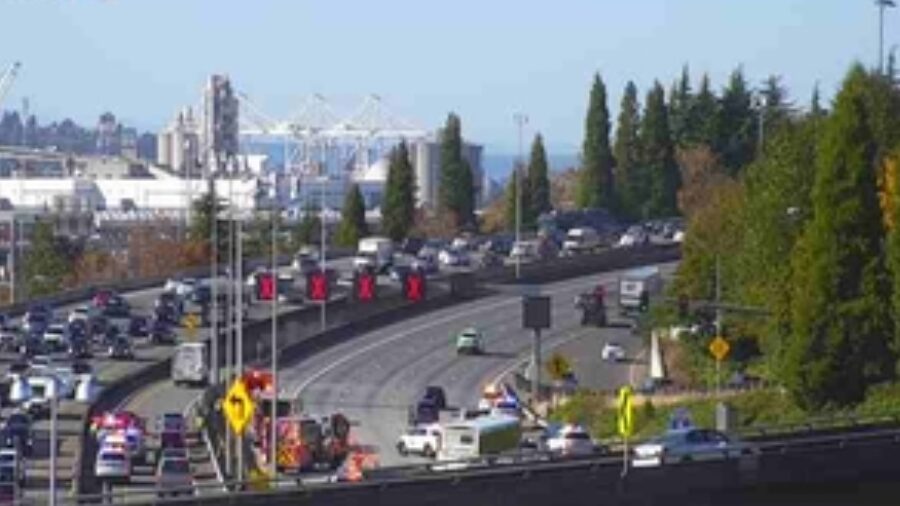
Another prolific offender attack in Seattle, this time against a 68-year-old man on his way home from Bible study with his wife. (AP)
(AP)
When longtime Belltown resident Tracy Roberts began to complete the new Seattle Police Department public survey, she noticed something odd: The questions from the crime survey focused on her perceptions about police and about her neighbors rather than a simple accounting of neighborhood crimes.
She answered questions such as do you “strongly agree” or “strongly disagree” that Seattle Police Officers are “honest” or “do their jobs well.” She submitted responses detailing if she thought her neighbors would be inclined to report a crime if they saw one and if she thinks officers treat everyone equally.
“It surprised me that they were asking about your interactions with the police and neighbors,” Roberts said. “I thought, ‘Well this (survey) is going completely different from where I thought it was going.’ ”
That was by design. Currently, in its second year, the Seattle Police Department Public Safety Survey is an attempt to gauge the gap between actual crime data and how people perceive crime and police in their neighborhoods. More strikingly, it is also an effort to create a blueprint for police to respond to the perception of crime and policing even when that view differs from what actual data says.
“Perception is reality,” said Assist. Chief Carmen Best said. “So if people are perceiving there to be to be an issue, obviously, whether it exists in the data or not, we need to recognize that.”
So if residents see gangs as a problem but the data shows burglary is a far more pressing issue, police should deal with both, Best said. And if people see cops as mostly non-responsive to car prowls in Columbia City or as untrustworthy in Crown Hill, Best said, those precincts will be expected to make changes.
Broadly, the crime survey is a response to local and national concerns about the way policing happens at a city level. In Seattle, it’s a product of Police Chief O’Toole’s effort to improve the department’s sometimes frayed relationship with its constituents.
The survey data, Best said, should allow neighborhood police to tailor efforts into what the neighborhood has identified as the top priority. This will not change how police are dispatched by 911, she added. But rather, what crime initiatives officers will focus on.
“So instead of chasing down something else – shoplifting for example – I’m going to work on what the neighbors have identified,” she said.
The crime survey, which takes 15 to 20 minutes to complete, is part of the SPD’s broader micro community policing initiative. Paid for by a federal grant and managed by Seattle University criminologists, the survey is the only one of its type nationally, law enforcement experts and researchers said.
The anonymous questionnaire breaks Seattle into the same 58 distinct neighborhoods currently measured by SPD crime data. The questions focus on how residents see each other, police and crime. But they also focus on the respondents themselves including age, education, gender, race, income, employment, marital and citizenship status.
For example, numbers crunchers should be able to tease out what a self-employed single mom sees as the biggest problem in Magnolia or what married African American dad with a master’s degree thinks of police response times in Capitol Hill. Do Ballard residents see police in a different way than people in Georgetown? Researchers should be able to see what a neighborhood thinks the police should be doing and make recommendations to fit.
“It gives police an idea how people are experiencing crime at the micro-community level,” said Prof. Jackie Helfgott, the Seattle University criminologist who is running the survey which ends on Nov. 30. “It’s based on the idea that perception is as important as the reality.”
In Belltown, Roberts said her perception is that she’s had more negative run-ins with police in Seattle than in any major city she’s lived in, including New York, Baltimore, Boston and San Francisco. “I am a big supporter of the police,” she said. “But generally here I’ve found them rude. (Seattle cops) look right through you.”
“Is that their idea of community policing?” she asked. Still, Roberts hopes for the best and that’s why she filled out the survey.
Helfgott said the way people see their neighborhoods and police often is a product of the crimes law enforcement deems low-priority, such as graffiti, loitering or a vehicle break-ins. The first year of the survey, they received approximately 7000 usable responses. (And in fact, car prowls ranked highest nearly everywhere in 2015 data.) Student researchers also have been doing in-person surveys at food banks, tent cities and places where people might not have access to a computer.
Helfgott said the safety survey should help uncover what criminologists call hidden crime data, the unreported occurrences that erode the quality of life but don’t end up in police statistics or in the media.
“You know, what if you have an elderly senior citizen who’s doesn’t have a car and is afraid to walk to a place through groups of people who are engaged in open-air drug activity,” she said. “That doesn’t show up in the media and the crime stats but it could have a huge impact on that person’s quality of life.”
In practice, it is going to create an interesting dilemma for law enforcement. Helfgott said researchers haven’t yet compared perception data with actual crime data. In other words, they can’t yet say if people see big problems in their neighborhoods that aren’t backed by crime data – or the opposite. “I expect that is going to happen in some places,” she said. “Finding that is one of the hopes of this project.”
But in the end, she said, even where perception and data don’t match up, police will want to deal with both.
Best agreed: “We’ll go where the data takes us.”