Why forecasting failures unintentionally hurt global warming credibility
Dec 19, 2016, 6:36 AM | Updated: 10:20 am
“Meteorologists can’t predict with accuracy what weather will do in the future, but Liberal Luddites claim to know with certainty that humans cause AGW.”
This is just a snippet of the kind of snipes about climate change from both sides of the MyNorthwest comment section, and they are the kind of politicized talk that Cliff Mass says he hears all too often. And when it comes to climate change, the University of Washington climatologist says anger and confusion about climate change compared to weather forecasting is not surprising.
“People ask, ‘If you can’t get the weather right next week, how can you predict the climate in 40 years?’ But there’s an answer to that,” Mass said. “And some of the media doesn’t really cover (it). They are completely different forecasting problems.”
In defense of meteorologists: Don’t get mad at forecasts
Local meteorologists have famously been wrong on a few occasions related to expected severe weather in Seattle this winter – especially the windstorm in October and calls for snow earlier this month that didn’t transpire. Mass acknowledged that it doesn’t help the credibility of the climatologist community. That is especially true because the amount that humans are driving climate change has increasingly come into question with Donald Trump’s election and his cabinet appointments. Mass recently called out the National Weather Service in a New York Magazine article for not leading the way in weather prediction in the way that they should.
But, in reality, the answer to regaining the public, and leadership at large’s trust when it comes to both forecasting and climate change, might be acknowledging that there are still major unknowns.
“An important lesson is you can’t say this is gonna happen,” Mass said. “There is uncertainty in weather forecasts, too. That was the failure mode in October, we didn’t explain the uncertain well. That’s what we have to do, we have to explain the uncertainty in our forecasts. And if we’re honest about the uncertainty, I think people may trust us more. People have to understand that there is no perfect forecast. There cannot be a perfect forecast.”
The differences between forecasting and climatology
With weather forecasting, Mass explained, meteorologists are trying to forecast the exact configuring of the atmosphere. For example, where a low-pressure center will be on a certain day at a certain time.
“In climate, we don’t do that. No one is saying the low center is gonna be off of Puget Sound on January 3, 2070. No one does that,” he said. “You’re forecasting averages over an extended period of time. And you can do that because if we understand the amount of radiation coming in and out of the planet we can forecast those general types of climatological issues. If we know what the gasses are in the atmosphere, we can do that. There’s an answer to that question but 95 percent of the people do not know the answer to that simple question about how if you can’t forecast the weather next week, how can you forecast the climate in 50 years. I would suspect that nearly all of the people in congress and the senate can’t answer that question either.”
Governor offers sanctuary, legal counsel to climate researchers
A report from NASA found that at least 97 percent of actively publishing climate scientists agree that “climate-warming trends over the past century are extremely likely due to human activities.” Mass generalizes that the vast majority of climate scientists believe that if humans continue to put CO2 and other greenhouses gasses into the atmosphere, the planet will warm, sea levels will rise and that there will be some impacts on weather features around the world. Everything else is just conjecture, Mass says, because there are is still “lots of uncertainty” about what kinds of weather impacts there will be and where they will happen.
“There are some general things that we’re pretty confident in, as what the models suggest, but the exact amount of warming and what’s gonna happen in terms of wind storms or tornadoes or things like that or hurricanes, there is a lot of uncertainty still and that has to be accepted,” he said.
The tools for prediction in both weather forecasting and climate change are based on computer models and what Mass called “probably the most complex technology our species has.” That’s why Mass says it’s important to be as honest and accurate as possible in both areas.
“Scientists play an important role. We’ve spent our whole lifetime understanding this stuff so we need to be brought in to communicate what’s happening. To some degree, people have to trust us but, on the other hand, they have to let us explain why we have what confidence we have. We have to explain that as well. What do you do about a highly technical subject that people don’t have the background or time to understand? That’s the issue here,” he said.
“Weather forecasting, they get a taste of what we’re capable of,” he added. “We’re doing it every day. So we’re being tested every day. Forecasting has gotten immensely better, almost everybody admits it. We may make a mistake once in a while and even what people think are mistakes sometimes is not as big a mistake as they think but weather forecasting has improved immensely. Almost everybody understands that and it shows how far the technology and people understand that. That can give them some confidence that we’re not making things up here. It’s the same models they use for climate change as they are for forecasting.”
Politics getting in the way of science
The idea of global warming is nothing new, but the impassioned fighting behind it has hit new heights around the country. Locally, Mass is one of the staunchest advocates for the fight, urging for I-732 carbon tax initiative, which was handily rejected by Washington voters. But even he sees pieces of deception from both sides.
“There were things in the Inconvenient Truth that were not correct, that was not completely factual,” he said. “… People around here claiming that last summer’s warmth was due to global warming or the lack of snow last winter was due to global warming around here in the Northwest and there’s no basis for that. There are people exaggerating, claiming all kinds of stuff on both sides that are not factually based.”
Mass says there are a variety of opinions and estimations within the climate community of what exactly will happen in the future. He believes the outright skepticism of global warming primarily comes from “politicization” of the topic, which isn’t how it used to be. For example, Richard Nixon, a Republican, established the Environmental Protection Agency. Mass also noted that just eight years ago, Republican John McCain presidential run included a pitch for the importance of combatting climate change.
“It was actually much less political like 10 years ago and it’s become more political. It has become a marker, a litmus test, which is sort of away from the science of it,” he said. “It’s just one of the things that people of certain political persuasions don’t believe in. There has been a politicization that has caused this whole business to happen.”
Mass likened the doubters to “religion.”
“A certain group of people believes that they need to be doubting about climate change without really understanding climate change or understanding the atmosphere they’ll say things that they think pokes holes into it but really doesn’t or they’ll say things that are without any basis in truth,” he said. “Again, it’s the politicization and making the whether you’re for or against it like religion.”
He said there are problems on the other side, too, including from the Obama administration.
“There is a substantial amount of exaggeration and hyping on the pro-global warming side, if you even want to call it that, and some of that has happened in this administration,” he said. “Both sides are hyping, exaggerating and distorting the facts for the wrong political reasons. That’s what’s going on here.”
The Trump administration
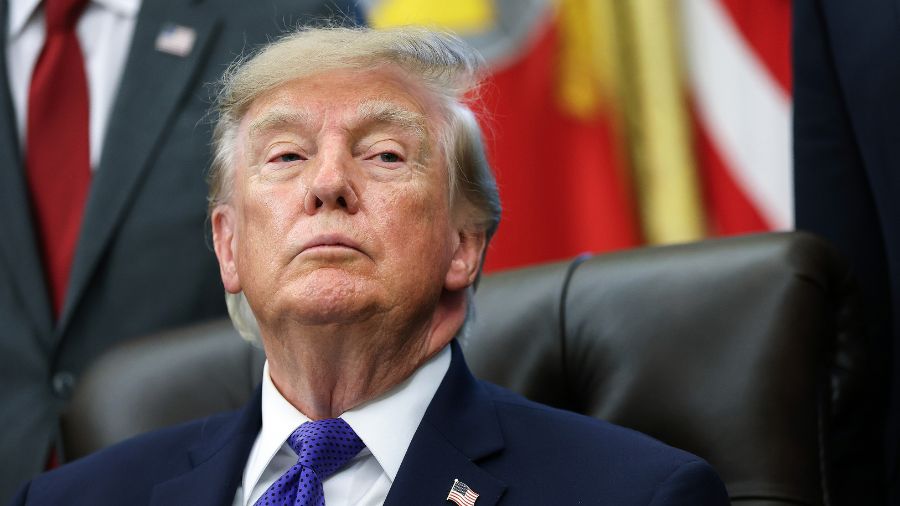
Trump’s cabinet currently includes multiple members that have expressed doubt about human-caused climate change. Trump himself has given mixed signals, at times calling climate change “a hoax created by the Chinese” and later saying there is “some connectivity” between human activity and climate change On Dec. 11, he told Fox News: “I’m still open-minded. Nobody really knows. Look, I’m somebody that gets it, and nobody really knows. It’s not something that’s so hard and fast.”
Mass said that it is “too early to tell” how Trump and his cabinet will confront the issue, noting that there have been previous administrations that weren’t “energetic” about climate change but still supported the research.
“There’s distinction between things like reducing the emissions from coal-burning plants versus cutting the amount of money for research in climate areas. They’re not the same thing and it’s not clear what they’re going to do in that respect.”
He said his personal concern is about the support of climate science and whether the support of the various agencies that are responsible for it, NASA and NOAH and Department of Energy will be influenced.
“The US has a large research enterprise in the areas of weather and climate,” he said. “Will that continue to be supported in the future? That’s obviously important.”
Follow @http://twitter.com/Mynorthwest