5 big Seattle ideas voters rejected because of tax increases
Feb 21, 2017, 6:43 PM | Updated: Feb 22, 2017, 8:32 am
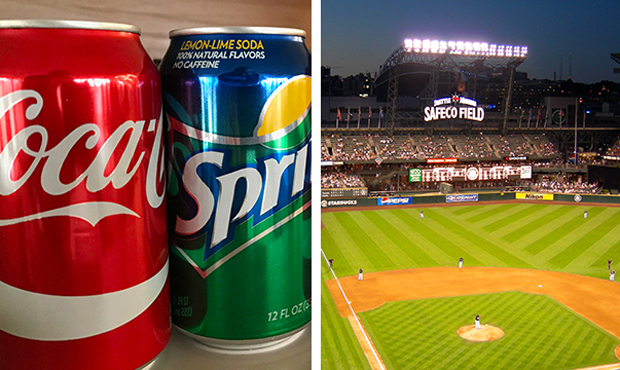
Seattle is considering a soda tax to fund education programs. (KIRO 7)
(KIRO 7)
By Casey McNerthney
In his State of the City address, Seattle Mayor Ed Murray announced that he wants a local tax of 2 cents per ounce on sugary drinks, including regular soda, Monster energy drinks, Sunny D, Gatorade, Starbucks bottled Frappuccinos and Arizona iced teas.
That works out to $1.44 per six-pack.
Related: Mayor Murray proposes a soda tax for Seattle
The tax, which would be put on distributors, is meant to fund education programs and “eliminate the opportunity gap between white students and African American/black students and other historically under-represented students of color,” Murray said.
The tax could be enacted by the City Council, though it could be repealed by voters with a referendum.
Voter rejected tax
Is this tax a unique proposal in Seattle? Not really. There have been several proposed taxes – some more obscure and some that gained popularity – that were shot down by voters. Here are five of them:
1. Initiative 77, The Java Tax: In 2003, a group of educators and supporters got enough support for ballot initiative to add a 10 cent tax on each cup of coffee. The money was to be used for early education and child care programs, promising $7 million annually to serve 5,000 children. But coffee shop owners were furious – it’s a coffee house. “It’s not a money machine,” Café Allegro co-owner Sandi Chelan told the Seattle Post-Intlligencer. Days before the vote, staff from Zoka Coffee Roaster and Tea Co. did a loose reenactment of the Boston Tea Party at Greenlake as a protest to the initiative, dressing like patriots and tossing balloon-filled burlap sacks representing coffee into the water. The media stunt worked. Initiative 77 resonated like stale office coffee and was rejected by a more than 2-to-1 margin.
2. The tax to create Safeco Field: On Sept. 19, 1995, King County narrowly rejected subsidy taxes to build a new stadium for the Seattle Mariners, whose team owners threatened to sell if they had to stay in the Kingdome. The Mariners ownership set an October 30 deadline for a new stadium, and even with strong support by New York Vinnie Richichi and the staff of KJR 950, the outlook wasn’t promising. But then the Mariners kept winning in the season that saved baseball in Seattle. On Oct. 8, 1995, Edgar Martinez hit The Double in Game 5 of the American League Division Series against the New York Yankees – a moment that manager Lou Piniella described as “the hit, the run, the game, the series and the season that saved baseball in Seattle.” Days later, the Speaker of the House changed his mind and allowed a special session that would create the funding for a ballpark. A public facilities district was created to build and operate the stadium, and taxes from restaurants, taverns and bars and rental car taxes paid the tab — and that’s how baseball stayed in Seattle, even without a voter-approval station.
3. The Bogue Plan for a South Lake Union park: This 1911 plan outlined a train station on the south shore of Lake Union and a transit tunnel under Lake Washington linking Seattle and Kirkland. Seattle’s three newspapers at the times – The Seattle Times, Seattle Post-Intelligencer and Seattle Star – all editorialized against the Bogue Plan. The effort that would have totally transformed South Lake Union was defeated on March 5, 1912, with a vote of 24,966 to 14,506.
4. Seattle missed out on regional rail system: On May 19, 1970, King County voters rejected four bond issues that work have created a regional rail system, along with other civic improvements. There was $900 million pending for the mass transit measure. The total local cost for the efforts – called Forward Thrust – was $615.5 million. Only 46 percent of people voted for the mass transit measure. The federal money planned for King County went to Atlanta to create the MARTA system, and local voters instead approved the Metro Transit system on Sept. 19, 1972.
5. The Monorail expansion that never was: On Nov. 4, 1997, 53 percent of voters approved an initiative that called for an expanded Monorail system with 40 miles of new rail. In 2000, voters approved another monorail plan – one of four supportive votes for an expanded Monorail system. But in 2005, after huge cost overruns and the fifth citywide vote, Seattle voters killed the plan. By 2006, the plan had cost taxpayers more than $120 million without any expansion of the Monorail.