Court maintains online ban on plans for 3D-printed guns
Aug 27, 2018, 10:21 AM
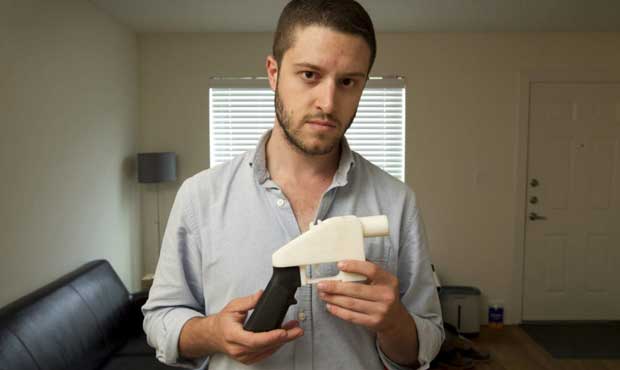
Cody Wilson, the founder of Defense Distributed, shows a plastic handgun made on a 3D-printer at his home in Austin, Texas on May 10, 2013. (Jay Janner/Austin American-Statesman via AP, File)
(Jay Janner/Austin American-Statesman via AP, File)
A federal judge in Seattle has upheld a ban on posting plans for 3D printed guns online while a lawsuit continues in court.
“Once again, I’m glad we put a stop to this dangerous policy,” said Washington State Attorney General Bob Ferguson. “But I have to ask a simple question: why is the Trump Administration working so hard to allow these untraceable, undetectable 3D-printed guns to be available to domestic abusers, felons and terrorists?”
U.S. District Judge Robert Lasinik originally issued a temporary restraining order on July 31, blocking the plans from being posted on the internet. On Monday, the judge upheld the order with a preliminary injunction, meaning the online ban will remain in place as the case continues in court.
RELATED: Critic says plastic gun hysteria unnecessary
Washington state sued after the Trump administration ended litigation with a settlement agreement over the 3D printed guns in late July.
According to the judge’s order on Monday:
Finally, the federal defendants argue that the States will not be harmed at all because the United States is committed to enforcing the Undetectable Firearms Act of 1988. While the Court appreciates the earnestness with which this commitment was made at oral argument, it is of small comfort to know that, once an undetectable firearm has been used to kill a citizen of Delaware or Rhode Island or Vermont, the federal government will seek to prosecute a weapons charge in federal court while the State pursues a murder conviction in state court. The very purpose for which the private defendants seek to release this technical data is to arm every citizen outside of the government’s traditional control mechanisms of licenses, serial numbers, and registration. It is the untraceable and undetectable nature of these small firearms that poses a unique danger. Promising to detect the undetectable while at the same time removing a significant regulatory hurdle to the proliferation of these weapons — both domestically and internationally — rings hollow and in no way ameliorates, much less avoids, the harms that are likely to befall the States if an injunction is not issued.
The ban on posting plans for 3D printed guns online will remain in place as the case continues in court.
Follow @http://twitter.com/Mynorthwest