Ocean viruses threaten loss of species in the Pacific Northwest
Jun 17, 2019, 5:11 AM | Updated: 9:04 am
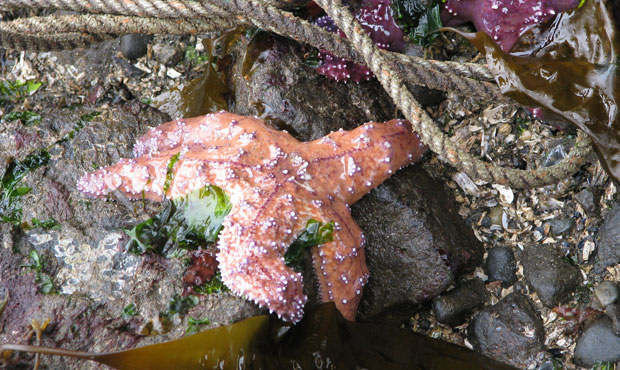
Starfish cling to the rocks waiting for the water to rise. (KIRO Radio file photo)
(KIRO Radio file photo)
If you’re on a beach or poking around a tide pool, one sea creature is going to be a lot harder to find: Sea stars.
UW research: Heat wave deaths will rise with climate change
In 2013, an epidemic called “sea star wasting disease” spread from Mexico up the west coast to Alaska, and caused a massive die-off of 20 different species.
It also infiltrated the Vancouver Aquarium, the Monterey Bay Aquarium, and the Seattle Aquarium, killing sea stars in their exhibits and touch tanks.
Five years later, the sea star population is slowly returning. But rising ocean temperatures combined with plastics pollution, runoff from our roads and agriculture, and mismanagement of farmed fish allow pathogens like sea star wasting disease to simmer below the surface.
A sudden heat wave or deep water swell like El Niño can cause a minor or dormant virus to turn deadly.
Dr. Drew Harvell is a professor at Cornell University and a University of Washington alum. She has traveled as far as Indonesia and as close as the Friday Harbor to study ocean pathogens.
Harvell says the loss of key species like sea stars, abalones, salmon, and even eel grass can throw the marine ecosystem out of balance.
Could PNW kids suing over climate change force lawmakers to act?
The solution is of course to reduce our carbon output and restructure the ways in which we allow pollutants like plastics and fertilizer to flow into our waterways.
But barring that? Invest in restoring marine habitats after the damage is done. Eel grass naturally filters water more easily and cost-effectively than anything we could invent, and provides shelter for fish.
Harvell says she also wants to see best practices standardized for aquaculture. A worldwide pandemic years ago that decimated populations of farmed Atlantic salmon and had a huge economic cost could happen again. And farmed salmon can escape from pens and spread disease to wild fish.