Restorative Justice: A different path to accountability for young offenders
Jul 17, 2019, 6:58 AM | Updated: 10:56 am

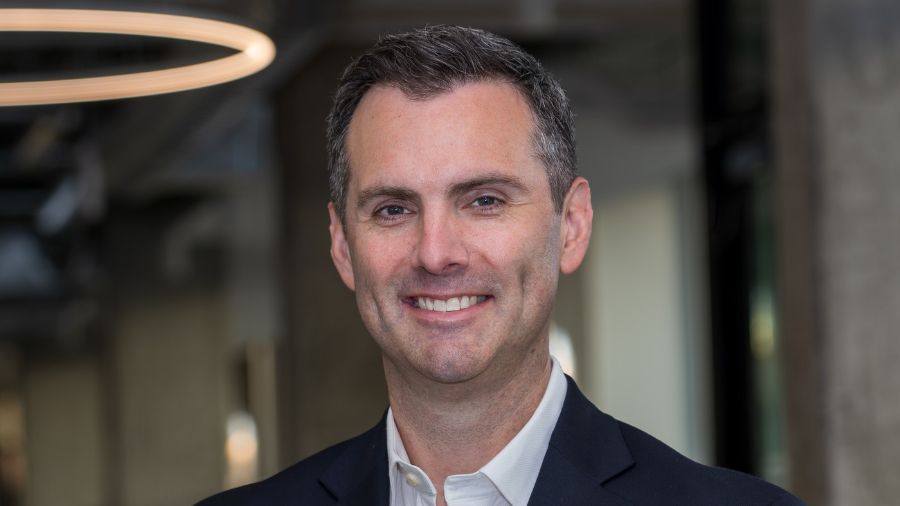
Choose 180 is a youth diversion program that uses restorative justice in King County. (Hanna Scott, KIRO radio)
(Hanna Scott, KIRO radio)
How can Marti Gras beads help kids in trouble with the law make better choices? A lot, if you ask Sean Goode, executive director of Choose 180, a non-profit that runs a diversion program in King County.
Goode uses the beads in his four-hour workshops for kids busted for misdemeanors. They agree to attend the workshop to avoid having charges filed. Goode says the beads provide connections that open the door to possibilities.
“They [the kids] sit down in a space and they listen to stories of people who have made similar mistakes and we attach every one of these stories to a different color Marti Gras bead,” Goode explained.
“We’ll have a presenter speak and talk about their past with violence and they’ll say if you’ve ever had an issue with violence come down and get a red bead,” Goode said.
All of Choose 180’s volunteers, staff, parents and any other adults in the room take part.
Law enforcement, prosecutors key to juvenile justice reforms in King County
“We do the same thing for several different types of things like property damage, drug and alcohol use, theft, truancy, and by the time we’re done the young people look around the room and see that everybody is wearing beads,” Goode said.
Unlike the county’s Community Advisory Board diversion, Goode says when kids come to Choose 180 they’re not there to be given community service, or be held accountable by the adults in the room.
“No, you’re coming to a shared space. We’ve all done things and none of us should be defined by the thing that we’ve done, but who it is that we’re choosing to be from this point forward,” Goode said.
That helps the kids be more willing to share their own issues.
After that initial interaction with the whole group, they separate into smaller groups and use what Goode calls a “compass tool.”
“The young people identify where they are, where they’d like to go – it’s really youth-led, self-led. What are the things that they need to leave behind, and what are the right choices and the right supports that they need to make,” Goode said.
Choose 180 follows up with the kid right after the workshop to get them connected to whatever support they need. That can include case managers, drug and alcohol or behavioral health counselors, mentors, tutors and a variety of other resources to help that kid follow through on a plan they set for themselves in the workshop.
Choose 180 follows up with each participant in the workshop, roughly 200 kids a year, at a series of intervals for up to one year.
Choose 180
The program was born out of a previous effort that partnered with the prosecutor’s office in 2011, called 180.
“It was because Dan Satterberg reached out to community leader Doug Wheeler and said, ‘what we’re doing right now is not working for our black and brown community,’” Goode recalled.
It has grown significantly since then, largely because of its success. In 2016, 80 percent of the kids who went through the workshop had not re-offended within 12 months.
The Seattle City Attorney’s Office also recently started using Choose 180’s young adult diversion program, for 18-24 year olds picked up on misdemeanors. Of 245 people, the city referred to the program in the past two years, 97 percent had no new criminal convictions as of March 2019, and 87 percent had no pending re-offenses.
“Our office partners with the Choose 180 program in an aim to steer 18-24 year-olds down a path of personal responsibility and redemption rather than into misdemeanor criminal charges which can bring lifelong collateral consequences,” said Dan Nolte, spokesman for the City Attorney’s Office. “Crime victims are empowered to give these young people a second chance, in that our prosecutors won’t offer diversion to a person who committed an alleged assault without the victim’s approval.”
Choose 180 has also partnered with Highline Public Schools to offer its workshop to kids in lieu of suspension or expulsion.
“It’s the same model. What we aim to do is find young people at pivotal moments, engage them at these really crucial moments and help them pivot well, and commit to that new direction and then get them the support necessary so they can honor that commitment,” Goode said.
What about the victims in all of this?
“The criminal justice system does nothing for victims anyways. It’s not serving the folks who have been accused of the offense or the accuser,” Goode said.
He says victims he talks to want two things, to be made whole and to have the offender not make that choice again.
“If a juvenile is in a situation where they’re stealing a cell phone, what do you think the likelihood of them being able to pay for that cell phone is? The person that lost cell phone is never actually going to be made whole,” Goode said.
He says that data shows that those going through the program are changing behavior.
“Are we really concerned about people being held accountable? Or do we really want behavior to change?” Goode said. “Because if what you want is accountability, we can go through the old archaic way of being, but all that happens is that young people evolve, become older people that are still committing the same types of offenses, because they never got that opportunity to be fully developed as a possibility, because the world around them constantly looked at them as a problem.”
He says the better way is to have the kids hold themselves accountable to the plans they make for themselves in the workshop and make sure they have every resource they need to follow that plan.
“The criminal justice system is about solving problems, and our young people are not problems. Each one of them are possibilities, many of which are underdeveloped and simply need the right environment to grow,” Goode said.
King County juvenile diversion program expands to immigrant communities
Choose 180 has expanded to also work with those charged with certain felonies, which is separate from diversion, as part of King County’s community-based intervention program, known as CEDAR.
That program offers kids busted for certain felonies an expedited plea process, where they can have their charges reduced by taking part in an intervention plan involving one of several community groups, including Choose 180. If they follow through with the program and meet all the conditions for six months they can even get their charges dismissed.
That includes charges for things like first time unlawful possession of a firearm.
Goode, who used to work in gang intervention and is a former juvenile detention chaplain, says there’s more to the story when a kid is busted with a gun, and that story is often that they feel they need it for protection.
“I have less concern with young people carrying a gun and more concern with why do they feel so insecure that they need to be carrying a gun, and how do we remove the insecurity to make the gun irrelevant,” he said.
Follow @https://twitter.com/HannaKIROFM