Former SWAT leader’s advice on how to respond to a school shooter
Mar 29, 2013, 10:36 AM | Updated: 12:21 pm

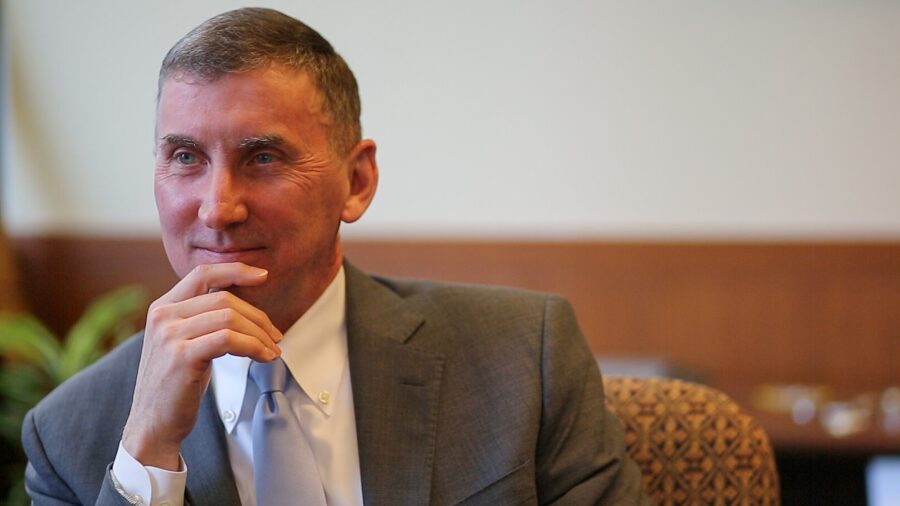
A former teacher and educator says there is more students and teachers can do to protect themselves from a school shooter. (AP Photo/Newtown Bee)
(AP Photo/Newtown Bee)
A former teacher and educator says school policies for how to respond to a shooter in the building are inadequate and more needs to be done to train teachers and students about what they can do to protect themselves before police arrive.
Law enforcement instructor Greg Crane tells KIRO Radio’s Ron & Don Show the old ‘lock the door and sit in the corner’ strategy clearly doesn’t work for everyone.
“Telling people to sit in a danger zone I never have understood,” says Crane. “We don’t tell people to stay in the fire until the fireman get there. Why are we telling them to stay in the building with a shooter until the police get there?”
Crane says going against common advice may have even saved some children at the deadly school shooting that took 26 lives at Sandy Hook Elementary.
“It was a 6-year-old little boy who led his friends right out past [shooter Adam] Lanza while he was trying to reload or operate his weapon after having shot the teacher, and you look at school policies, where is that?” says Crane.
“We don’t want people to have to come up with these plans on their own in the heat of the moment. We want to have them engage in some mental conditioning, some tools in the mental toolbox, so they know other options they have available.”
Crane says casualty statistics from typical gunfire events are much lower than those when gunfire erupts at school.
“Normally, up to 90 percent of people survive firearm wounds, but not in school shootings. It’s not because the school shooter is that much better than anyone else who’s ever used a firearm, it’s that the targets are too darn easy,” says Crane. “After Columbine, we set out on a mission to change the dynamic. We’ve got to make these classrooms and the occupants of these classrooms much harder targets.”
Crane suggests movement and distraction can make a big difference in the shooter’s ability to hit their target. Causing distractions, using devises like flash bangs, are a common police tactic, and Crane says people can use objects at their disposal to achieve a similar result.
“Our strategies revolve around the very natural instincts of movement, distance, distractions. We want to move as much as possible. We want to make as much noise as possible. We want to get as many objects moving in the air to cause visual distractions as much as possible. You’ve got to interfere with the act of shooting accurately.”
Charging the shooter when necessary has also proven successful in some events. Crane cites a shooting event in Oregon where one man took down the shooter.
“When Jake Ryker rushed Kip Kinkel, who had already shot 22 kids in that cafeteria [at Thurston High School] that morning, he was shot, but he was shot in the hand. It didn’t kill him and he took Kip down and he was aided by his brother and other wrestlers. They disarmed Kip and they held him for four minutes before the first officer arrived on scene.”
“Chances are some people may be shot, but the chances of him getting off a lethal shot diminish greatly.”
Even young children can be taught how to handle themselves. Clearly they wouldn’t be encouraged to rush a shooter who is likely larger in size than them, but there are ways they can be taught to fight back.
“Very much like stranger danger programs, we don’t seem to have a problem talking to little ones about being aggressive if a predator tries to attack them on the street in an age appropriate manner,” Crane says.”Why should we have a problem with talking to that same child about how to respond to a predator inside the building?”
The training program Crane teaches is called A.L.I.C.E., which stands for alert, lockdown, inform, control, evacuate. More about the A.L.I.C.E. training program can be found at their website responseoptions.com.