First Asian giant hornet nest of 2021 found east of Blaine
Aug 19, 2021, 5:42 PM | Updated: Aug 20, 2021, 4:34 pm
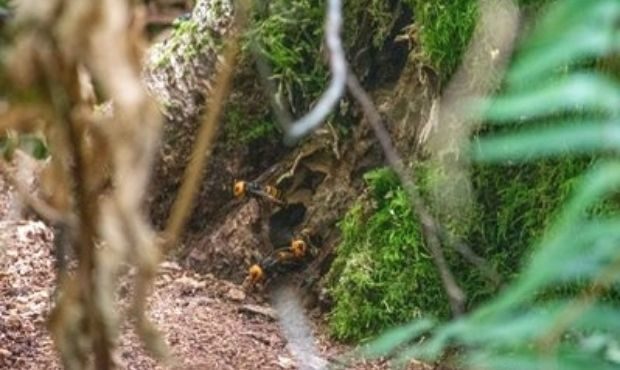
Asian giant hornets enter and leave the nest entrance at the base of a tree in rural Whatcom County. (Photo courtesy of Washington State Department of Agriculture)
(Photo courtesy of Washington State Department of Agriculture)
The first Asian giant hornet nest of the year has been found at the base of a tree on wooded private property east of Blaine, Washington.
Washington Department of Agriculture begins Asian giant hornet tracking effort
The nest is within a mile of where the photo was taken last week of this year’s first live hornet sighting, and just a couple of miles away from the spot where last year’s nest was destroyed.
Karla Salp with the state Department of Agriculture says they tagged a few hornets over the past week, and were able to locate the nest by following one of the hornets home.
“We had a general idea of where the hornet was going and it was just a matter of our availability and connecting with the property owner to make sure it was OK to go back there,” she said.
“It’s pretty exciting to find it this early in the season,” Salp added.
Before the nest is eradicated, scientists are determining whether or not the entire tree will be removed. They hope to have the nest gone sometime next week.
Salp says there could be more nests out there, so the department asks everyone to stay on the lookout.
“There absolutely could be more nests so we still need everyone to take those photos and submit them to us if they think they see an Asian giant hornet,” she said.
If you live in the area, you can join the DIY trap-making effort. To learn how to make your own, visit the department’s website.
It’s Asian giant hornet trapping season and you can help
Asian giant hornets are not native to the United States. They are the world’s largest hornet and prey on honey bees and other insects. These hornets may attack honey bee hives in the late summer or early fall. A small group of Asian giant hornets can kill an entire honey bee hive in a matter of hours.
KIRO Radio reporter Nicole Jennings contributed to this report.
Follow @http://twitter.com/Mynorthwest