SEATTLE NEWS ARCHIVES & FEATURES
What Makes Our Politics So Nasty?
Jun 10, 2022, 4:24 PM
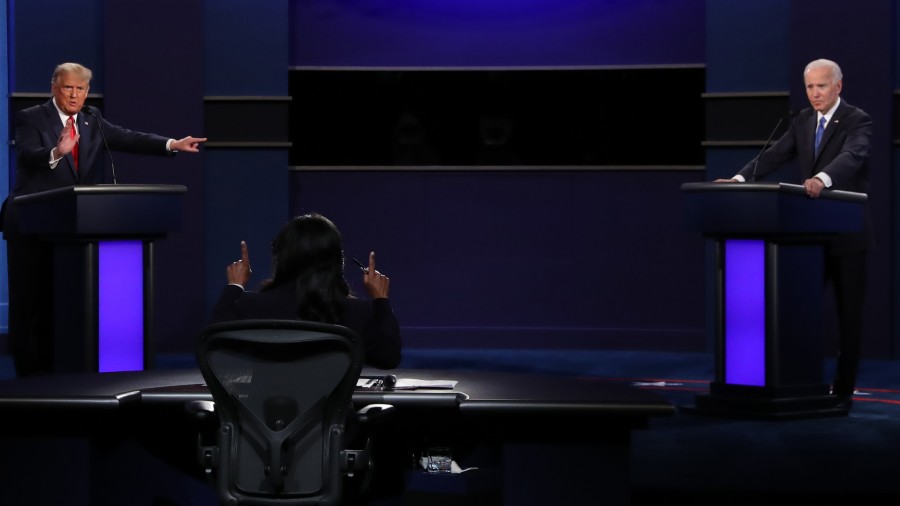
U.S. President Donald Trump and Democratic presidential nominee Joe Biden participate in the final presidential debate at Belmont University on October 22, 2020 in Nashville, Tennessee. This is the last debate between the two candidates before the election on November 3. (Photo by Chip Somodevilla/Getty Images)
(Photo by Chip Somodevilla/Getty Images)
Conventional wisdom blames ideological polarization and the vast gap between left and right for the bitter nature of the attacks and counter-attacks on all sides. But the record of the last 75 years suggests that character assassination and smears intensify not when policy differences are profound, but when those agenda disagreements look petty and inconsequential.
In this primary election season, with ruthless candidates spending literally hundreds of millions of dollars to traduce their purported partisan allies, it should be obvious that the ferocious brawls of the moment bear little connection to philosophical disputes.
Consider the 18 presidential administrations since the death of Franklin Roosevelt in 1945. With Republicans and Democrats almost evenly divided in their occupancy of the White House during this period, only one chief executive could possibly be classified as a radical ideologue of any kind. Ronald Reagan compiled a formidable reputation as a consistent conservative, but his two terms as Governor of California, as well as both terms as president, showed a gift for bipartisan governance and for appealing to voters of the other party or no party. The most significant achievements of his eventful eight years in the White House – the rescue of the Social Security system, the restoration of our military to win the Cold War, the comprehensive tax reform of 1986 – earned surprising levels of Democratic support.
KIRO, KTTH radio hosts react to prime-time January 6 committee hearing
The other re-elected presidents since FDR – Truman, Eisenhower, Nixon, Clinton, George W. Bush, and Barack Obama – all catered to the center of the electorate and steered a moderate course that placed them in the mainstream of their respective parties; they avoided the clamorous fringes that demanded sweeping, across-the-board change.
In fact, the only nominees of either party – Republican Barry Goldwater in 1964 and Democrat George McGovern in 1972 – to promote such drastic and substantive agendas of reform, led their idealistic followers to election day disasters, carrying only six states and one state, respectively.
But if ideological stridency most often damages a candidacy, and contenders on both sides will instinctively migrate to the mushy middle in order to pursue votes, why have battles among moderates and centrists produced the brutish equivalent of “Destruction Derby?” Why, for instance, would Donald Trump, who felt close enough to Hillary Clinton to donate generously to her past campaigns, and to invite the Democratic Senator and her ex-president husband to attend his wedding to Melania in 2005, exchange accusations with such lusty abandon when they competed for the top job some 11 years later?
The pattern of indistinct, unfocused, non-ideological policy positions fostering spiteful attacks rather than constructive engagement, stems from a combination of current political reality and a timeless aspect of human nature.
In the United States, the two political parties have been closely competitive since the end of World War II, which means that election outcomes will almost always depend on turnout. This means that if your supporters feel more excited about a race and more willing to take the trouble to vote, your side will enjoy a meaningful advantage.
And while a heavy schedule of TV ads may not succeed in persuading cadres of new supporters to join your cause, the operating assumption holds that negative ads can suppress turnout for the opposition. That’s especially true for negative campaigning that focuses on character issues – portraying an opponent as a reprobate cad who somehow combines senility and conniving crookery. Such one-minute melodramas, according to common assumptions of campaign pros, leave more lasting impressions than questioning the complex details of Medicare reform or new tax plans, especially when the competing platforms display only minor differences.
Meanwhile, human nature makes it harder to change minds with arguments about ideas after a visceral reaction of loathing or discomfort. This has everything to do with President Trump’s prospects for 2024 and the great likelihood that any campaign in which he participates will focus on personalities and recent history more than new programs of governance. In his first term, Trump may have compiled an unexpectedly moderate record, offering few surprises (before the 2020 election’s alarming aftermath), to differentiate himself dramatically from a standard-issue Republican. But while his programs may have shunned radicalism, his rhetoric did not, making it all but irresistible for advocates and adversaries alike to concentrate on personality over policy, viewing the flamboyant former president as either a redemptive hero or a public menace.
That focus on larger-than-life characters makes it much harder to pursue compromise or cooperation. Politicians can always split the difference on tax rates or budgetary issues, but it’s impossible to negotiate over visceral hatred or deep-seated admiration. As the primary season of 2022 clearly indicates, concentrating on the personal flaws of even intraparty rivals makes for more damaging division than debating pending plans for retrenchment or reform. In practical politics, character counts and pushes polarization more destructively than any ideological issue on the public agenda.
Listen to Michael Medved weekday afternoons from 12 – 3 p.m. on KTTH 770 AM (or HD Radio 97.3 FM HD-Channel 3).
Follow @https://twitter.com/MedvedSHOW