‘Climate change before our eyes’: Sounding the alarm as Mt. Rainier glaciers quickly fade
Dec 30, 2022, 6:49 AM | Updated: 7:04 am
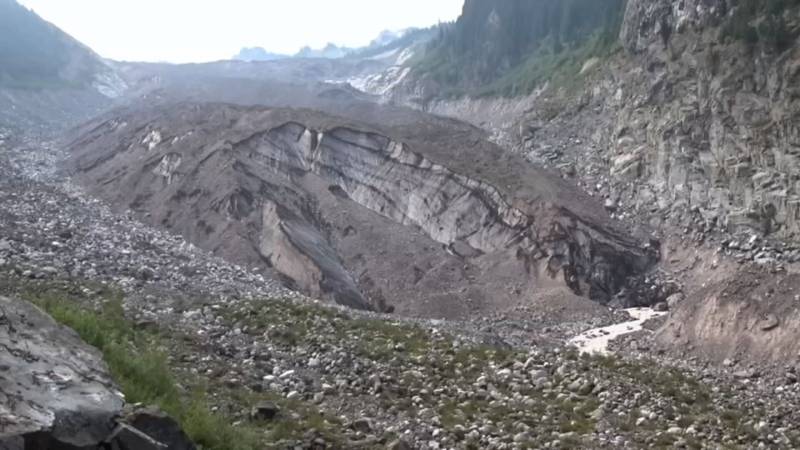
Photo from KIRO 7
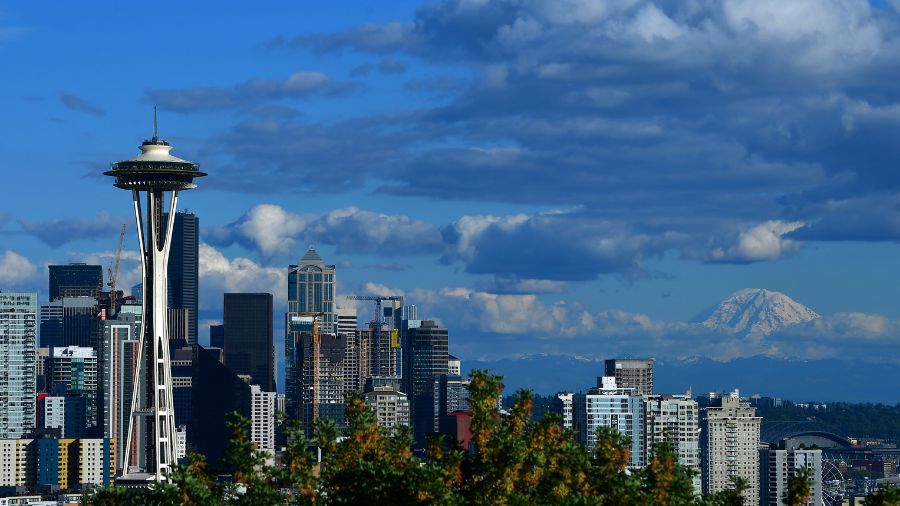
Mount Rainier is the most glaciated peak in the lower 48 states, as well as Western Washington’s most iconic landmarks. But, climate change is impacting the glaciers on Rainier and they’re receding at a concerning rate.
Glacier recession is something that Scott Beason, the park geologist at Mt. Rainier National Park, is keeping a close eye on.
Follow this link to read additional stories from KIRO
“Some of the glaciers like the Stevens Glacier has been removed from our inventory this year, some of the other glaciers — the Van Trump, the Pyramid Glaciers — are also in kind of a critical state, and we’re worried about losing them in the next decade or so,” Beason said.
The Muir Snowfield is one of the most popular routes used by hikers and climbers, providing an up-close look at what climate change is doing to Rainier’s glaciers. Usually, hikers and climbers would be able to walk up the snowfield, but in recent years, crampons are necessary because of the exposed ice.
This has made things more difficult for mountaineers.
“As we’re seeing more and more of the glacier recession, sometimes that makes the climbing more difficult,” Alpine Ascents International Director Jonathon Spitzer said. “The glacier is drastically receding up towards the mountain and what we call the firm line and that line is where the seasonal snow melts away from the glacier. That line has typically been around 7, 8, 9,000 feet and as the seasonal snow melts throughout the season we’re seeing that line getting higher and higher and higher.”
Now, those heading up to Camp Muir face hard, bare, glacial ice.
“Just imagine you’re at a hockey rink, you take that hockey rink to 30 degrees — imagine your crampons sticking to that versus if you were just walking at the ski area, and so that’s the difference between the glacial ice and the seasonal snow,” Spitzer said.
Beason said this glacial recession is apparent all over the mountain.
“Especially in its lower end, it’s becoming fragmented,” Beason noted. “The snow is melting out, the land underneath it is showing up through the ice and the snow and both that and the Nisqually Glacier are retreating pretty dramatically.
“The Nisqually lately has been retreating about one meter every ten days,” he added. “This is just climate change before our eyes.”
It’s having a much wider impact than on just the mountain itself.
“This mountain affects the rivers; it affects aquatic organisms not only at the park but all the way down to the Puget Sound. The rivers that drain from Mt. Rainier go to Commencement Bay; they go down to the Cowlitz River; these are big systems, and they all start here,” Beason said.
If you’re looking forward about a century from now, Beason predicts, there’s going to be less water available for producing hydroelectric power, which provides roughly two-thirds of Washington’s electricity.
“Twenty years from now some of these glaciers — like the Pyramid Glacier, the Van Trump Glacier — some of these other ones, like the inner the flat glaciers, some of these smaller glaciers that start lower down on the mountain are going to be gone,” Beason said.
And with rising temperatures these changes could happen quicker than expected.
“The Van Trump [glacier] is definitely the next one that’s going to be disappearing,” Beason said.
As the glaciers weaken and recede, Beason is concerns about what’s happening inside the glacier as well.
Spitzer said their guide service has had to create new routes and bring in more ladders because the glaciers are so broken up.
They also had to pause operations for the first time ever in 2021.
“There are these voids or faces or cavities in the bottom of the glacier and water can get stored up in those and especially in these really hot periods of time, the glacier will actually… float a little bit because of all the water that’s down there, and then all that water can surge out catastrophically,” he said. “And that then leads to what is called an outburst flood, and then that outburst flood very easily picks up debris, turns it into a debris flow, where it’s that debris flow down in the river channel.”
This would cause major damage to the park, and at this point Beason said the only way to change this is to change global climate patterns, which is no small feat.
“Changing the way we drive — the type of carbon emissions that we produce – but, it’s going to take a while for the glaciers to respond in a positive way after this.”
Follow this link to read additional stories from KIRO