From Oval Office blowout to landmark minerals deal, how Ukraine’s diplomacy unfolded
May 8, 2025, 3:47 AM
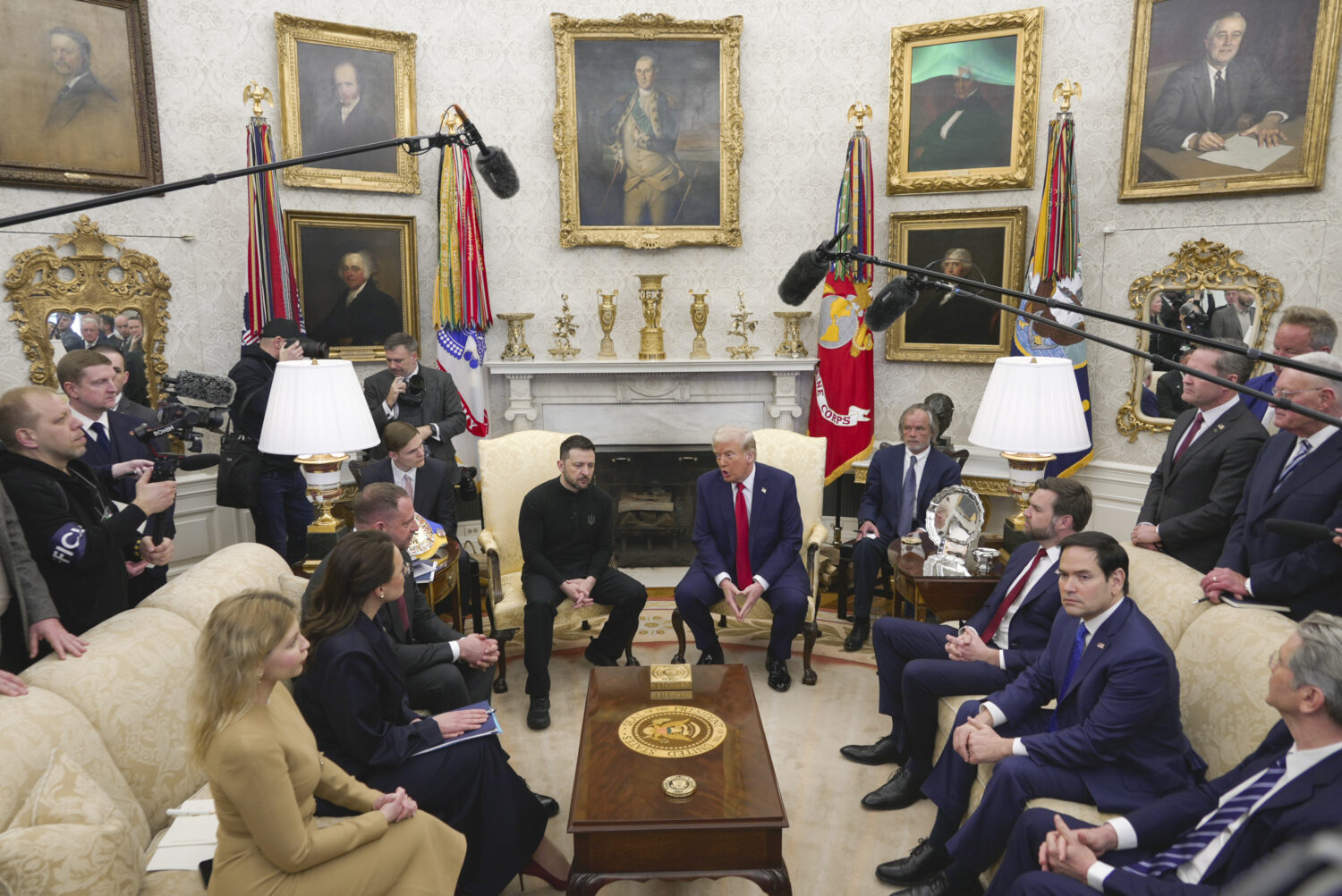
FILE - President Donald Trump, center right, meets with Ukrainian President Volodymyr Zelenskyy, center left, as Secretary of State Marco Rubio, seated from second right, and Vice President JD Vance listen at the Oval Office at the White House, Friday, Feb. 28, 2025, in Washington. (AP Photo/ Mystyslav Chernov, File)
Credit: ASSOCIATED PRESS
(AP Photo/ Mystyslav Chernov, File)

KYIV, Ukraine (AP) — Last fall, weeks before Donald Trump was elected U.S. president, Ukrainian President Volodymyr Zelenskyy floated a pitch that proposed, among other things, an economic deal that would allow Washington access to Ukraine’s largely untapped minerals and deepen strategic ties.
Under pressure from Western allies and amid global war fatigue, Zelenskyy saw that the days of Biden administration-era robust military aid might be numbered, and so the pitch was part of the Ukrainian leader’s so-called victory plan to end the Russia-Ukraine war. It was an offer that would appeal to Trump’s penchant for transactions-based diplomacy in hopes of ensuring a steady flow of future American support in return.
Seven months later, a landmark deal between Ukraine and the Trump administration on Ukraine’s mineral resources was inked. But the road in between was paved with mutual recriminations, a historic Oval Office blowout, “hundreds” of revisions, and finally, a chance meeting on the sidelines of Pope Francis’ funeral.
Last minute snags threatened to undermine the signing of the agreement, but in the end Ukraine secured a deal that, once set in motion, brings closer ties with the U.S. and a provides a vehicle for future military assistance. Ukraine’s parliament is expected to pass the agreement on Thursday, and other documents pertaining to the deal are being finalized.
“It seems to me that this is the first time in history that the United States considers Ukraine as a long-term strategic partner, economically,” Economy Minister Yuliia Svyrydenko said at a media briefing in Kyiv on Thursday, hours before the parliament vote.
Here’s a timeline of the deal’s conception and signing:
In response to rising pressure from Western allies and clear battlefield disadvantages, Zelenskyy outlines a so-called victory plan to end the war. The plan sought to strengthen Kyiv’s negotiating hand and proposed measures to boost its military potential, but also economic partnerships with Western allies.
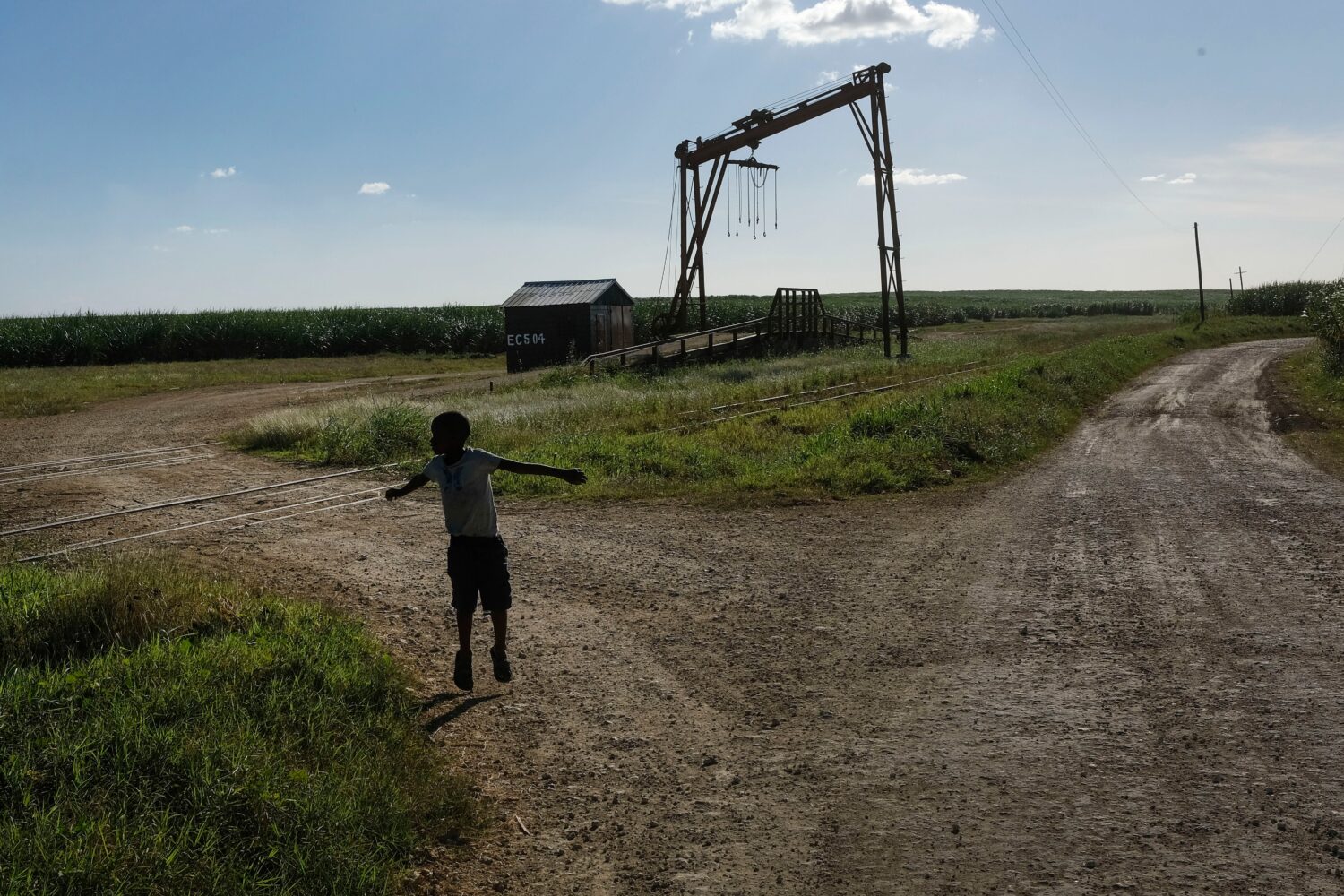
Ukraine is rich in natural resources, including critically important metals such as uranium, titanium, lithium, and graphite.
Zelenskyy pitches the plan to the White House during a visit to Washington in late September, and later in a meeting with Trump at Trump Tower in New York.
Giving American companies preferential access to Ukraine would serve as leverage against Russia as most mineral deposits are located very close to front-line areas. Having U.S. companies on the ground, the thinking goes, would cement Washington’s interests in Ukraine and serve as a de facto security guarantee. Critical minerals used to manufacture weapons, aviation and batteries would also give the U.S. access to reserves in a global market dominated by China.
Trump appears captivated by the idea and very soon after his inauguration in January starts touting the idea of getting Ukraine’s rare earth elemnts.
By February, the White House and Ukraine appear to have made significant progress toward reaching an agreement that would provide the U.S. with access to Ukraine’s rare earth minerals.
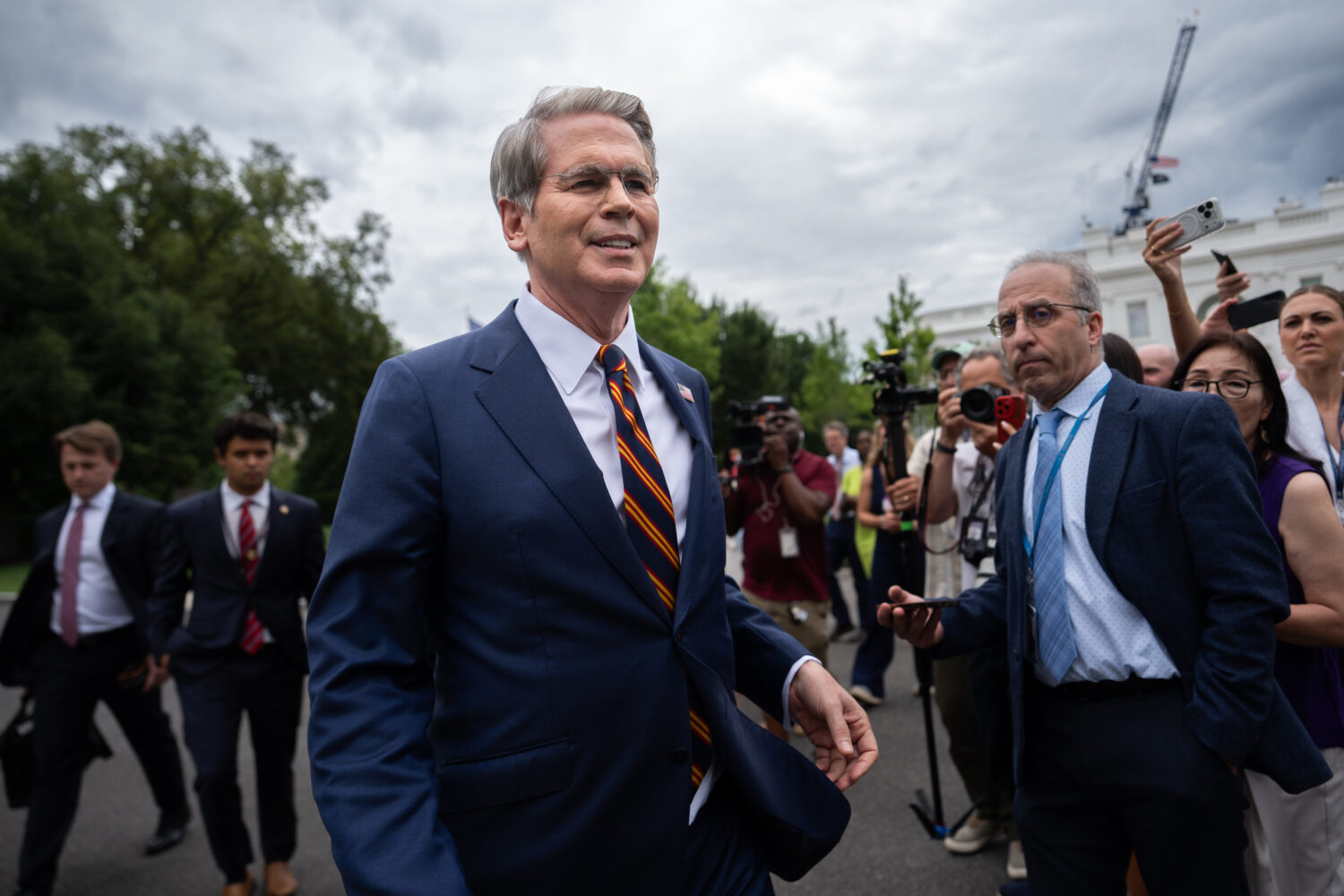
On Feb. 12, Treasury Secretary Scott Bessent arrives in Kyiv, becoming the first senior Trump administration official to visit and expecting Zelenskyy to sign the deal that day amid a push by Washington quickly end the war. But the Ukrainian president declines, saying elements of the draft didn’t align with his country’s constitution. The deal would have given the U.S. 50% rights to Ukraine’s minerals and mentioned nothing of security guarantees.
“I didn’t let the ministers sign … because in my view it is not ready to protect us, our interest,” Zelenskyy told The Associated Press at the Munich Security Conference in February.
Bessent later said in an interview with Tucker Carlson that Zelenskyy “blew up” the deal.
Zelenskyy shot back, saying Bessent’s approach had been disrespectful.
“My colleagues know that if someone taps their finger on an agreement and says, ‘You must sign now’ — I could only say to him, ‘Stop tapping your finger and let’s have a proper conversation,’” Zelenskyy later said in recounting the meeting in April to reporters in Kyiv.
The two sides agreed to a new draft later in February.
And on Feb. 28, Zelenskyy arrived in Washington with the intention of signing the revised version of the deal. But Zelenskyy insists on adding explicit U.S. security guarantees to the deal, saying that Russian President Vladimir Putin couldn’t be trusted to comply with a ceasefire deal. A shouting match breaks out in the Oval Office, and Trump berates the Ukrainian president for not demonstrating gratitude for American support.
“You’re not in a good position. You don’t have the cards right now. With us, you start having cards,” Trump shouted.
Zelenskyy leaves the White House with no deal and a deeply uncertain future with Washington. Shortly after, the U.S. pauses military aid and intelligence-sharing with Ukraine.
According to multiple Ukrainian and Western officials, results from ceasefire talks between Ukrainian and U.S. delegates in Jeddah, Saudi Arabia, on March 11 marked a turning point after the disastrous Oval Office meeting.
Ukraine agrees to a U.S. proposal for a full and immediate 30-day ceasefire, pending approval by the Kremlin, which had so far opposed anything short of a permanent end to the conflict without accepting any concessions. By piling conditions on both proposals for both full and partial ceasefires, Putin began testing Trump’s patience.
Meanwhile, technical discussions over the minerals deal resume. But the Trump administration introduces a new clause demanding that Ukraine reimburse the full amount of U.S. aid provided since the start of the full-scale invasion. Trump mentions a $500 billion figure as compensation, an amount many times more than the sum of aid provided.
Ukrainian officials continue lobbying for a more equitable structure that respects Ukraine’s strategic interests and state sovereignty. Zelenskyy spells out three core principles: The creation of a joint investment fund, 50-50 governance and the exclusion of debt repayment.
Intensive negotiations continue, requiring Ukrainian and U.S. officials to work across time zones. Each day ushers in proposals and counterproposals.
“There were likely hundreds of revisions and dozens of draft revisions,” a senior European official close to the talks said. “Every morning meant a new batch of edits for each side.”
Svyrydenko said on April 18 that the two countries signed a memorandum of intent before a possible fuller agreement later. A draft, dated April 17 and obtained by The Associated Press, called for creating a joint U.S.-Ukraine Reconstruction Investment Fund, incorporated as a partnership in Delaware.
The draft document was a version marked up by the United States and showed that the Trump administration could be willing to cede on some demands that Ukraine opposed.
The draft was notable because it called for the U.S. to make a significant initial cash investment in the fund, in addition to receiving credit in the form of equity that is equivalent to the billions in U.S. military assistance already spent. Earlier versions had the U.S. investing no additional capital in Ukraine while having exclusive rights to the country’s natural resources.
Then, a breakthrough moment came on April 26 in the form of a tete-a-tete between Trump and Zelenskyy in St. Peter’s Basilica at the sidelines of Pope Francis’ funeral. Zelenskyy described it as a turning point and “the best conversation” the two leaders have had to date.
The exchange paved the way for the signing of the minerals deal in Washington four days later, he said.
In the end, Zelenskyy didn’t get explicit security guarantees as part of the deal. Still, the final agreement was considered a victory for Ukraine after months of diplomatic work.
The signed deal crucially doesn’t call for Kyiv to reimburse the U.S. for the aid it has already received — a concession from Trump. That concession was
That concession was extracted after Ukrainians argued that recognizing past aid as debt retrospectively would go against agreements that Ukraine has made to obtain that aid with the U.S., European Union, International Monetary Fund and the World Bank, Deputy Economy Minister Taras Kachka said. Instead, Ukrainians argued for future military assistance to count as part of investment into the fund.
Bessent acknowledged that the agreement was a “tacit security guarantee because of the economic partnership.”
___
Illia Novikov in Kyiv, and Matthew Lee and Byron Tau in Washington, contributed to this report.