Texas will put warning labels on some foods, but its additives list has inaccuracies
Jun 24, 2025, 6:45 AM
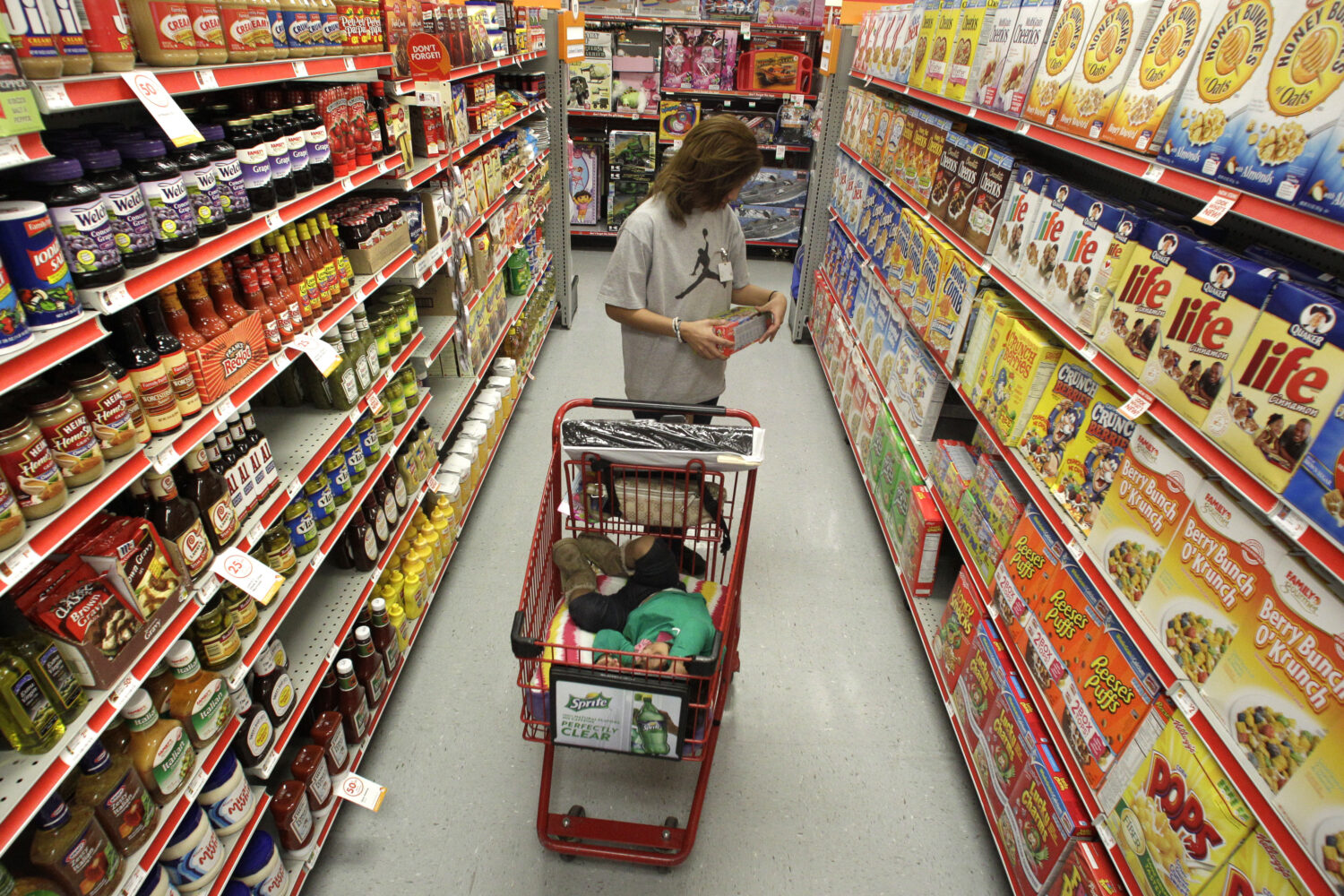
FILE - A woman looks at products in the aisle of a store as her daughter naps in the shopping cart in Waco, Texas, on Dec. 14, 2010. (AP Photo/Tony Gutierrez, File)
Credit: ASSOCIATED PRESS
(AP Photo/Tony Gutierrez, File)

DALLAS (AP) — A new Texas law promoting the Trump administration’s “Make America Healthy Again” agenda requires first-ever warning labels on foods like chips and candies that contain dyes and additives not allowed in other countries.
It could have far-reaching effects on the nation’s food supply, but a review of the legislation shows it also misrepresents the status of some ingredients that would trigger the action.
The law signed by Republican Gov. Greg Abbott on Sunday requires foods made with any of more than 40 dyes or additives to have labels starting in 2027 saying they contain ingredients “not recommended for human consumption” in Australia, Canada, the European Union or the U.K. But a review shows that nearly a dozen of the targeted additives are either authorized in the cited regions — or already restricted in the U.S.
The law, which will send the food industry scrambling to respond, is laudable in its intent, but could lead to incorrect citations and potential legal challenges, a consumer advocacy group said.
“I don’t know how the list of chemicals was constructed,” said Thomas Galligan, a scientist with the Center for Science in the Public Interest. “Warnings have to be accurate in order to be legal.”
The law, approved with wide bipartisan support, is part of a flurry of similar legislation this year by GOP-led statehouses as lawmakers align themselves with U.S. Health Secretary Robert F. Kennedy Jr.’s “Make America Healthy Again” agenda. Texas would be the first in the U.S. to use warning labels to target additives, rather than nutrients like sugar or saturated fat, to change American diets.
It will force food companies to decide whether to reformulate products to avoid the labels, add the newly required language, pull certain products from Texas shelves or oppose the measure in court.
It’s unclear how the list of additives was created. Inquiries to the office of the bill’s author, Republican state Sen. Lois Kolkhorst, were not immediately returned.
Regulators in Australia, Canada, the EU and the U.K. take a cautious approach to food additives: If a product’s safety is uncertain, it can be banned or restricted until it is determined to be safe. By contrast, the U.S. generally allows products on the market unless there is clear risk of harm.
Three additives targeted by Texas — partially hydrogenated oils, Red Dye No. 4 and Red Dye No. 3 — are not approved or have been banned in food by U.S. regulators.
Several of the other listed ingredients are allowed in all four of those regions, noted Galligan and representatives from the Consumer Brands Association, a food industry trade group.
Examples of those include: Blue Dye No. 1; Blue Dye No. 2; butylated hydroxyanisole, or BHA; butylated hydroxytoluene, or BHT; diacetyl; interesterified soybean oil; lactylated fatty acid esters of glycerol and propylene glycol; and potassium aluminum sulfate.
In addition, the legislation contains regulatory loopholes that could prevent certain ingredients from being labeled at all, said Melanie Benesh, an analyst with the Environmental Working Group, an activist organization that focuses on toxic chemicals.
For example, the food additive azodicarbonamide, known as ADA and used as a bleaching agent in cereal flours, is included on the Texas list. But under the Federal Code of Regulations, it may safely be used in food under certain conditions. That federal regulation likely exempts ADA from the state labeling law, Benesh said.
“The law, as passed, may not end up having the impact that legislators intended,” Benesh said.
Nutrition experts have long worried about the potential health effects of food additives, even as it remains unclear how much of a role processed foods have in driving chronic health disease.
Research has shown that requiring food label warnings can help steer consumers toward healthier choices and prompt industry to remove concerning ingredients. The U.S. Food and Drug Administration has proposed front-of-package labels that would flag levels of saturated fat, sugar and sodium.
“This represents a big win for Texas consumers and consumers overall,” said Brian Ronholm, director of food policy for Consumer Reports. “It’s a reflection of states not wanting to wait for the federal government to act.”
The law also creates a state nutrition advisory committee, boosts physical education and nutrition curriculum requirements in public and charter schools, and requires nutrition courses for college students and medical professionals doing continuing education.
Several states have been taking action to restrict dyes and additives in foods.
In 2023, California became the first state to ban some chemicals and dyes used in candies, drinks and other foods because of health concerns. The state expanded on that last year by barring several additional dyes from food served in public schools.
Other laws passed this year include one in Arkansas banning two particular additives from food sold or manufactured in the state and a West Virginia law includes a statewide ban on seven dyes.
Lawmakers in several states have passed measures this year banning certain additives from food served or sold at public schools, according to an Associated Press analysis using the bill-tracking software Plural. That includes Texas, where the governor last month signed a bill banning foods with certain ingredients from being served in school lunches.
“It’s a pretty dizzying time to be watching what’s happening, because usually policies that are not very industry friendly are opposed, particularly in red states,” said Christina Roberto, director of the University of Pennsylvania’s Center for Food and Nutrition Policy, “With RFK and the MAHA movement, it’s really turned things upside-down in some ways.”
At the federal level, Kennedy and FDA Commissioner Marty Makary have pledged to remove artificial dyes from foods and have pressured industry to take voluntary action. Some large food manufacturers have complied.
Health advocates have long called for the removal of artificial dyes from foods, citing mixed studies indicating they can cause neurobehavioral problems, including hyperactivity and attention issues, in some children.
The FDA previously has said that the approved dyes are safe and that “the totality of scientific evidence shows that most children have no adverse effects when consuming foods containing color additives.”
___
Aleccia contributed to this report from Temecula, Calif. Associated Press writer David A. Lieb reported from Jefferson City, Mo.
___
The Associated Press Health and Science Department receives support from the Howard Hughes Medical Institute’s Department of Science Education and the Robert Wood Johnson Foundation. The AP is solely responsible for all content.