Ranchers say expanding herds to take advantage of record retail beef prices isn’t so simple
Jul 30, 2025, 8:46 PM

MINNEAPOLIS (AP) — In a period when retail beef prices are at an all-time high and consumers are still willing to pay, South Dakota rancher Calli Williams would love to cash in. But it’s not so simple.
Williams and her husband, Tate, raise about 70 cow-calf pairs near Letcher in southeastern South Dakota, roughly 18 miles (29 kilometers) north of Mitchell. They own about 80 acres (32 hectares) and rent additional pasture.
Between the drought that hit cattle country hard over the last few years, still being maxed out on the grass available to feed their animals, and with land prices rising, she said, they simply can’t yet make the financial investments that they’d need to raise production.
“It is a goal of ours to expand,” she said. “I’m just not sure if that will be in the 10-year plan or even longer.”
Farmers and ranchers across the U.S. would love to take greater advantage of the high prices, but with the U.S. herd at record lows, they can’t meet the demand quickly. It’s basic biology.
“It takes three years to get more cows — between making a decision, having that gestation period, having the calf born, raising the calf until it, too, can have a calf,” said Michael Swanson, chief agricultural economist for the Wells Fargo Agri-Food Institute in Minneapolis.
The Williamses’ county was hard hit by drought over the previous few seasons. Because of the lack of their grass and uneconomically high hay prices, they had to sell all their young females last year that could have produced more calves for them this year, she said.
Their area has caught some rain lately, though. It has improved to just “abnormally dry” in recent U.S. Drought Monitor reports. But Williams said they’re simply playing catch-up.
Swanson said some of the main cattle areas in North America — from Saskatchewan and Manitoba in Canada down to Texas in the U.S. — are just naturally prone to drought. It’s often boom or bust.
Colin Woodall, CEO of the National Cattlemen’s Beef Association, said a lot of cattle country has had good rain this summer, but it’s a cyclical business.
“Sometimes we have good times, and sometimes we don’t,” Woodall said. “And we are just coming off what was a pretty significant negative hit to the cattle industry in ’19, ’20 and ’21, with the height of the pandemic. So we have a lot of producers who are still trying to pay off bills from those times.”
And Woodall said his members are still leery. They’re asking how long the better weather will last.
“We’re getting some good moisture now. But will it be that way in the fall? Will it be that way next year?” he said. “Because the last thing you want to do is pay to rebuild your herd and then just have to liquidate them again in six months to a year.”
Although it’s difficult to attribute any single weather event, such as a drought, directly to climate change, scientists say that rising temperatures stoked by climate change are increasing the odds of both severe droughts and heavier precipitation, which wreak havoc on people and the environment.
When extreme weather collides with tight margins, farmers and ranchers feel the squeeze.
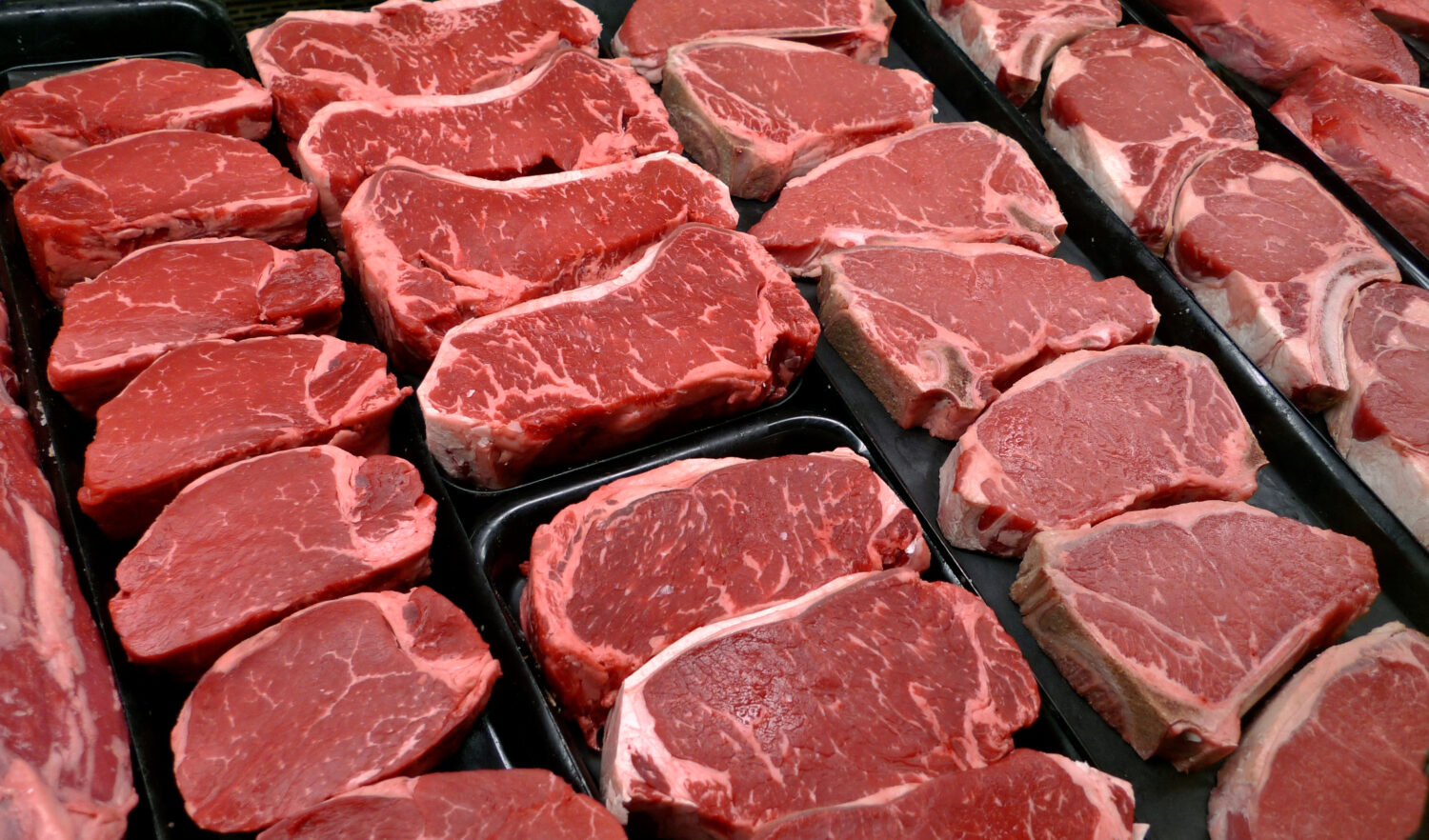
Retail beef prices have hit record highs with no relief for consumers in sight. Ground beef rose to an average of $6.12 per pound in June, up nearly 12% from 2024. The average price of all steaks rose 8% to $11.49 per pound.
And the average prices that producers receive for cattle and calves have increased from $1.51 per pound in May 2020 to $4.05 in May of this year.
The total U.S. cattle herd is the smallest it has been at midyear since the government began keeping those figures in 1973, and probably since the 1950s. There were few signs in the U.S. Department of Agriculture data released last Friday that producers have begun rebuilding herds.
As of July 1, the U.S. had 94.2 million cattle and calves, down from the last midyear peak in 2019 of nearly 103 million. Critical for the future supply, 2025 calf production is projected at 33.1 million head, down 1% from last year.
Derrell Peel, a livestock marketing specialist at Oklahoma State University, said if producers were planning to grow their herds, the USDA reports would have shown them keeping heifers — female cows that haven’t given birth yet.
While retail prices are high, consumers so far have been willing to pay them.
Glynn Tonsor, who leads the Meat Demand Monitor at Kansas State University, said taste is the most important consideration when shoppers choose proteins — and beef remains the favorite.
The late June report found that consumers were willing to fork out $17.62 a pound for rib-eye steaks and $8.82 for a pound of ground beef. That’s more than the $7.13 they’d pay for pork chops, $6.19 for bacon, or $8.55 for chicken breasts.
A major reason, Woodall offered, is that the beef industry has focused on the eating experience.
“The kind of beef that we are producing today is some of the highest quality, best tasting beef that we’ve ever produced in history here in the United States,” he said. “So, things such as USDA prime graded steaks that at one point in time you could only get in a restaurant, you can now get that in a grocery store.”
For consumers who balk at costs, the marketing specialist Peel said, pork and poultry are “abundant and quite favorably priced.”
The Williamses, who are both 34, built their TW Angus business from scratch. Tate Williams started buying cattle when he was in high school, and they bought their land in 2015. They sell bulls in the spring and keep heifers when they can. They also raise steers in their own feedlot and sell the meat directly to consumers.
“We would really like to expand our operation,” Calli Williams said. “We have a goal of being able to pass this on to the next generation,” Williams said, meaning their sons Jack, 7, and Tommy, nearly 4.
But recalling a friend’s words, she said ranchers are a resilient bunch.
“We’re optimistic that if Mother Nature — she wreaked havoc on us, whether that was a drought or a flood — that next year she’ll be kinder to us, “ she said. ”Or, if the markets weren’t on our side, we’re optimistic that the markets will be on our side next time.”