Takeaways from an AP analysis about longer delays in approving US disaster aid
Sep 9, 2025, 5:05 AM
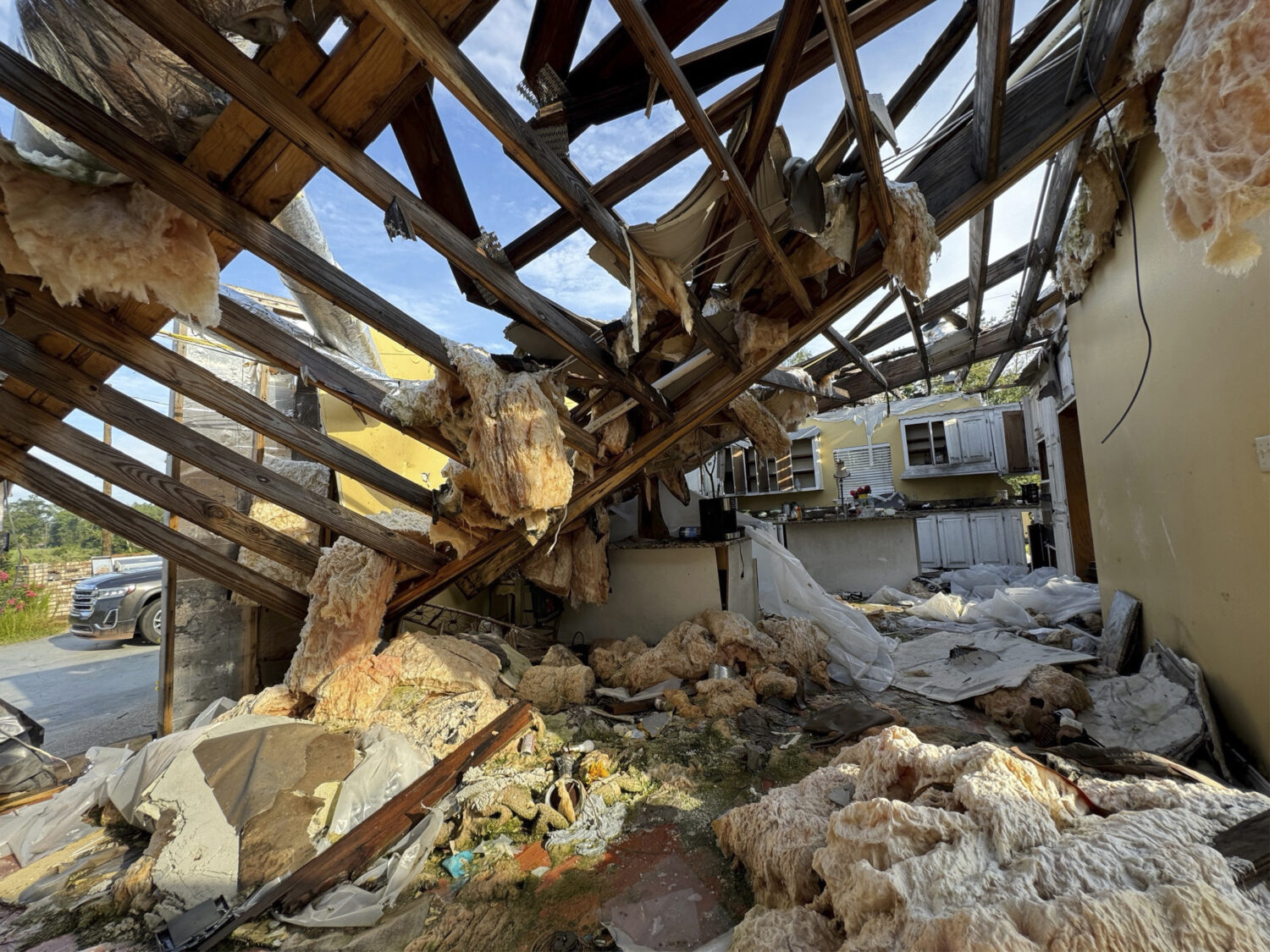
A collapsed roof and insulation cover what used to be Buddy Anthony's kitchen on Thursday, Aug. 14, 2025, in Tylertown, Miss. (AP Photo/Sophie Bates)
Credit: ASSOCIATED PRESS
(AP Photo/Sophie Bates)

TYLERTOWN, Miss. (AP) — Survivors of major natural disasters in the U.S. are having to wait longer to get aid from the federal government, according to a new Associated Press analysis of decades of data.
On average, it took less than two weeks for a governor’s request for a major disaster declaration to be granted by presidents in the 1990s and early 2000s. That rose to about three weeks during the past decade under presidents from both major parties. It’s taking more than a month, on average, so far during President Donald Trump’s current term, the AP found.
The delays mean individuals must wait to receive federal aid for daily living expenses, temporary lodging and home repairs. Delays in disaster declarations also can hamper recovery efforts by local officials uncertain whether they will receive federal reimbursement for cleaning up debris and rebuilding infrastructure. The AP collaborated with Mississippi Today and Mississippi Free Press on the effects of these delays for this report.
Americans expect government help after disasters. About three-fourths of people want the U.S. government to play a major role in providing aid to communities and helping them rebuild after natural disasters, according to a poll from The Associated Press-NORC Center for Public Affairs Research.
The Federal Emergency Management Agency often helps communities coordinate their immediate disaster response. But direct payments to individuals, nonprofits and local governments must wait for a major disaster declaration from the president, who first must receive a request from a state, territory or tribe.
Major disaster declarations are intended only for the most damaging events that are beyond the resources of states and local governments. In such cases, FEMA provides two general categories of aid, for individuals and public entities. Presidents can approve disaster aid for either or both purposes. Requests coordinated through a state are approved on a county-by-county basis, depending on the level of damage and need.
Trump has approved more than two dozen major disaster declarations since taking office in January, with an average wait of almost 34 days after a request. The average wait is up from a 24-day delay during his first term and is nearly four times as long as the average for former Republican President George H.W. Bush, whose term from 1989-1993 coincided with the implementation of a new federal law setting parameters for disaster determinations.
The delays have grown over time, regardless of the party in power. Former Democratic President Joe Biden, in his last year in office, averaged 26 days to declare major disasters — longer than any year under former Democratic President Barack Obama.
A powerful storm system that affected a wide swath of the southern, central and eastern U.S. provides one example of the recent delayed declarations. After tornadoes struck on March 15, Mississippi’s governor requested a federal disaster declaration on April 1. Trump granted that request 50 days later, on May 21.
On that same day, Trump also approved eight other major disaster declarations for storms, floods or fires in seven other states. In most cases, more than a month had passed since those requests and about two months since the dates of those disasters.
White House spokeswoman Abigail Jackson said in a statement that “President Trump provides a more thorough review of disaster declaration requests than any Administration has before him.” She said Trump wants to make sure tax dollars are spent wisely to supplement, not replace, state responses to disasters.
Others familiar with FEMA noted that its process for assessing and documenting natural disasters has become more complex over time, and disasters have become more frequent and intense in a changing climate.
The wait for disaster declarations has spiked as Trump’s administration undertakes an ambitious makeover of the federal government that has shed thousands of workers and reexamined the role of FEMA. A recently published letter from current and former FEMA employees warned the cuts could become debilitating if faced with a disaster on the scale of Hurricane Katrina, which struck 20 years ago.
When a tornado with winds up to 140 mph (225 kph) struck Tylertown, Mississippi, Buddy Anthony took shelter in his new pickup truck parked underneath a carport at his house. The tornado destroyed his home and damaged his truck. As he waited for aid from a federal disaster declaration, Anthony spent weeks sleeping in a used truck he bought as a replacement.
His house was uninsured, Anthony said, and FEMA eventually gave him $30,000. But if federal aid had been available sooner, Anthony said he wouldn’t have had to sleep so long in his truck before he could afford to rent a trailer home.
Historically, presidential disaster declarations containing individual assistance have been approved more quickly than those providing assistance only to public entities, according to the AP’s analysis. That remains the case under Trump, though declarations for both types of assistance are taking longer.
Unlike individual assistance programs that provide cash upfront, FEMA’s public assistance programs reimburse governmental entities only after their bills are paid — and only if they followed guidelines for hiring and documenting the work.
Because that process can take months or years, a delay in a presidential disaster declaration may have little effect on when a local government ultimately gets reimbursed. But delayed approvals still can carry consequences. Long waits can stoke uncertainty and lead local officials to scale back recovery efforts.
Walthall County, Mississippi, which includes Tylertown, initially spent about $700,000 cleaning up debris. But it suspended the cleanup for more than a month because the county couldn’t afford to spend anymore without assurance it would receive federal reimbursement under a disaster declaration. In the meantime, the rubble from splintered trees and shattered homes remained piled along the roadside, creating unsafe obstacles for motorists and habitat for snakes and rodents, county Emergency Manager Royce McKee said.
___
Lieb reported from Jefferson City, Missouri, and Wildeman from Hartford, Connecticut.
___ The Associated Press’ climate and environmental coverage receives financial support from multiple private foundations. AP is solely responsible for all content. Find AP’s standards for working with philanthropies, a list of supporters and funded coverage areas at AP.org.