‘The blob’ returns: Record Pacific Ocean heatwave threatens weather, marine life
Oct 2, 2025, 6:07 AM | Updated: 11:52 am

A heatwave map capturing the "blob," a marine heatwave, hitting the west coast of the U.S. and Canada. (Photo courtesy of the National Oceanic and Atmospheric Administration)
(Photo courtesy of the National Oceanic and Atmospheric Administration)
It’s back!!! The “blob” has returned. No, not the 1958 sci-fi film of the same name starring a young Steve McQueen in his first leading role. This “blob” is the marine heatwave that now spans much of the Northeast Pacific Ocean.
In August, according to the World Climate Service, the average North Pacific sea surface temperatures from north of the equator to the Gulf of Alaska were around 20 degrees Celsius, or 68 degrees Fahrenheit – the warmest on record, with records dating back to the mid-1800s.
“The last major event was in 2019, lasting into 2020,” retired Washington Climatologist Nick Bond said,
The World Climate Service noted that the 2019 event was the previous record for the warmest North Pacific Ocean waters at 19 degrees C. Another significant “blob” event started in 2013 and peaked in 2014-15.
RELATED STORIES


Weather impacts
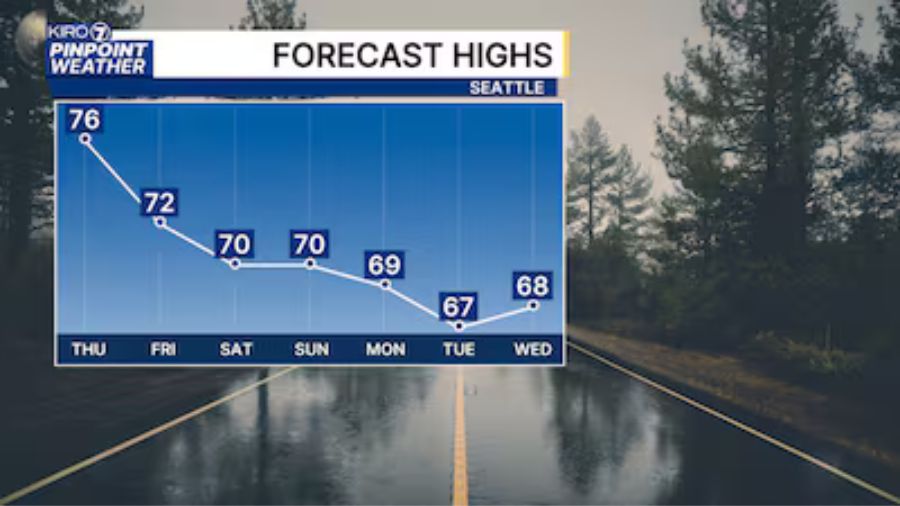
“Warm(er) water results in a tendency for warmer air temperatures, especially on the west side of the Cascades,” Bond said. “It is no coincidence that our worst (recent) snowpack on record was during the winter of 2014-15.”
The latest seasonal weather outlook indicates a tendency for La Niña to return this winter, with odds favoring a cooler and wetter winter than average, which typically results in a healthy mountain snowpack. Nick Bond highlights that ocean sea surface temperature guidance anticipates a cooling trend moving into the winter season, meaning a lower impact on moderating Western Washington temperatures.
Yet this fall, the “blob” could play a role in rain events.
“If we happen to get an atmospheric river from the southwest, it will mean quite high freezing levels and hence that much worse flooding,” Bond said.
Marine life impacts
The warmer ocean temperatures also impact the marine ecosystem. Cold-water plankton and salmon, for instance, struggle to manage the warmer water temperatures that, in turn, impact the marine food supply cycle. On the other side of the coin, tuna and sardines actually benefit from the warmer ocean temperatures.
During “blob” events, there is less low-level offshore flow from the Pacific Northwest toward the ocean that produces upwelling with colder water from below reaching the surface in the coastal region. The upwelling spreads more nutrients that sea life uses. When there is less upwelling, those nutrients fail to spread as usual, resulting in less available oxygen in the water. These factors and others result in a disruption in the overall marine ecosystem.
“Species that prefer colder water, such as salmon, tend to have poorer prey fields, leading to reduced survival as juveniles and eventually lower returns as adults,” Bond highlighted. “The first few months at sea are particularly critical for salmon. Warmer waters can also mean more predators, such as mackerel, that are often restricted to regions to the south.
“Finally, warmer water along our coast can be, but is not always, accompanied by more harmful algal blooms,” Bond added. “The tricky part here is that the plankton responsible sometimes produce the toxin, and sometimes not, and so the monitoring by NOAA and the Washington Department of Health is really important. When that toxin, domoic acid, reaches critical levels, commercial and recreational shellfish harvesting needs to be shut down right away, with major economic consequences.”
As this fall and winter unfold, weather and ocean authorities will be monitoring the evolution of the “blob” and its impacts on the region’s weather and ocean waters, including marine life.
Ted Buehner is the KIRO Newsradio meteorologist. Follow him on X and Bluesky. Read more of his stories here.