In Japan and South Korea, Trump will promote big investments. But the details are still not clear
Oct 23, 2025, 5:32 PM

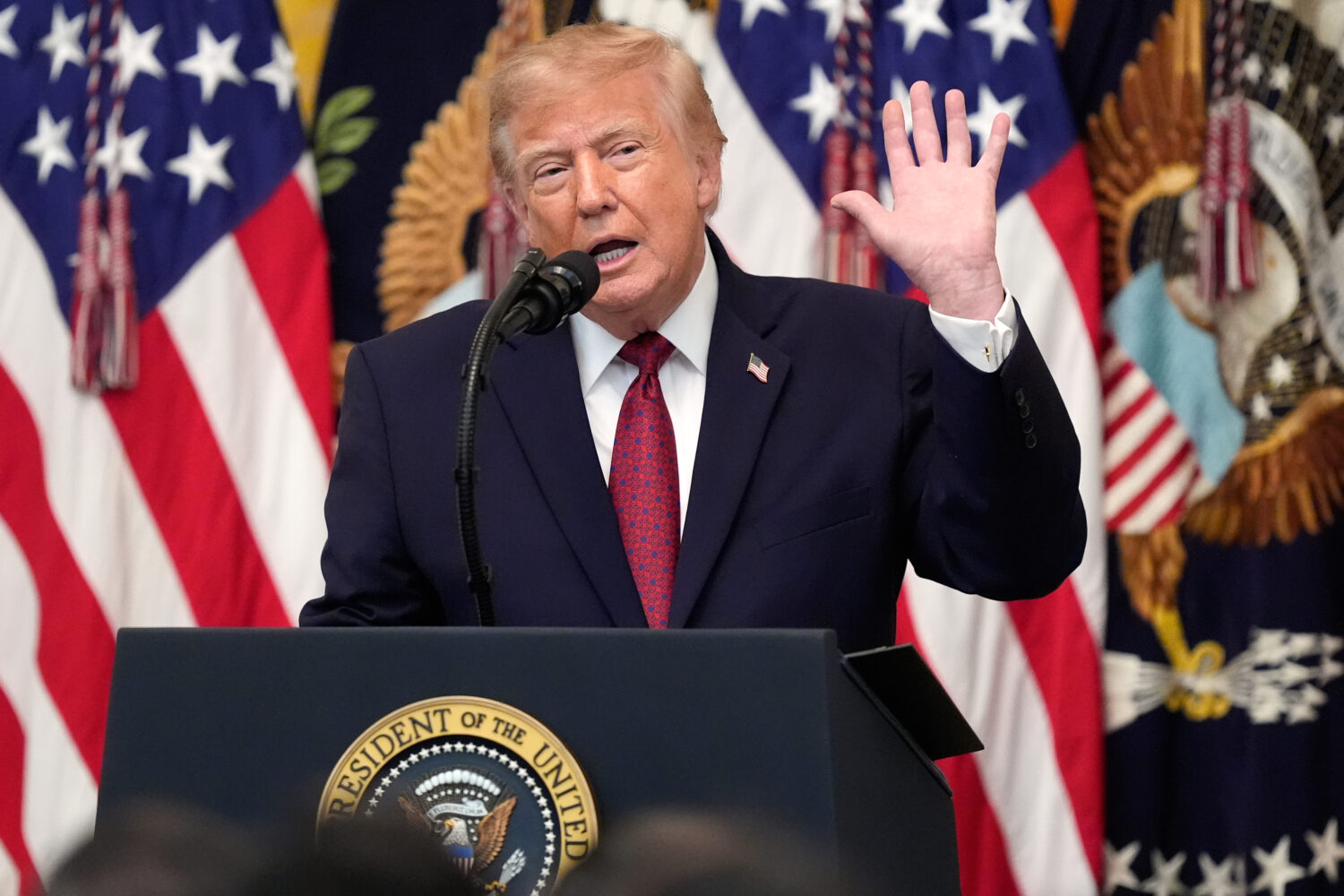
WASHINGTON (AP) — President Donald Trump is going to Japan and South Korea next week to promote an epic financial windfall — at least $900 billion in investments for U.S. factories, a natural gas pipeline and other projects.
Japan and South Korea made those financial commitments in August to try to get Trump to ratchet down his planned tariff rates from 25% to 15%. But as the U.S. president is set to depart Friday night for Asia, the pledges are more of a loose end than money in the bank for American industry.
Japan pledged $550 billion in investments, but it wants the money to benefit its own companies, making that a condition in a memorandum released in September. As of Monday, Japan has a new prime minister, Sanae Takaichi, who has expressed respect for Trump but is operating in an untested coalition government.
South Korea offered $350 billion — but wants a swap line for U.S. dollars to facilitate its investments and seeks to fund the transactions through loan guarantees. Otherwise, the commitment could sink its own economy.
The investment arrangements are unusual for trade frameworks, and Trump maintains that he will personally direct how the money is spent, enabling him to pick winners and losers. Weeks of talks have yet to produce any breakthroughs on how the investments would go forward even though both nations want to preserve their relationship with America.
Still, ahead of the trip, Trump was radiating optimism that his tariffs had forced investments to fuel what he believes will be an economic boom starting next year.
“We’ve done well, as you know, with Japan, with South Korea,” Trump told Republican senators Tuesday. “Without the tariffs, you could have never made the deal. I’ll tell you what. Tariffs equal national security.”
For Trump, the investments are also about demonstrating America’s strength before a planned meeting with Chinese leader Xi Jinping while he is in South Korea. U.S. Trade Representative Jamieson Greer on Monday described Trump’s strategy in part as “encouraging allied investment in America’s industrial future” to counter Chinese manufacturers.
But Japan and South Korea are also competing against China — which is pivoting aggressively into electric vehicles, computer chips and other technologies. There is a risk that mandating investment in the U.S. could weaken allies that are closer geographically to China, said Christopher Smart, managing partner at the Arbroath Group, a geopolitical strategy firm.
“They need to invest in their own countries,” said Smart, who was a senior economic aide in the Obama White House. He said Trump was “going to extract investment money” from the countries while also erecting “tariff walls” that could make it harder for them to sell goods in America, a rather lopsided view of how alliances work.
Few experts believe Japan and South Korea would agree with the Trump administration’s framing that their U.S. investments are a way to compete against China.
“It is really about lowering tariffs and avoiding Trump’s wrath,” said Andrew Yeo, a senior fellow at the Brookings Institution’s Center for Asia Policy Studies.
There is an expectation that Japan and South Korea both want to resolve any hurdles on the investments and will take steps to achieve “progress” in talks with Trump, said William Chou, a senior fellow focused on Japan at the Hudson Institute, a conservative think tank.
Chou pointed to Nippon Steel’s agreement to purchase U.S. Steel this year as an example of how Japan can work with the Trump administration. The president had initially opposed the merger, but later backed it with an agreement that gave the U.S. government some control over the acquired company.
Similarly, the memorandum of understanding on Japan’s $550 million investment would also give the U.S. government input on how the money would be spent. It provides for a committee led by Commerce Secretary Howard Lutnick to propose investments, giving Japan 45 days to respond, with the understanding that the deals would give preference to Japanese contractors and suppliers.
“Japan came through with the paperwork,” Lutnick said in a September CNBC interview. “They gave us $550 billion to invest for the benefit of America, build the Alaska pipeline, build nuclear power plants, make your grid better, do generic antibiotics in America.”
South Korea has yet to finalize a written agreement with the U.S. on the $350 billion investment, a problem as higher U.S. tariff rates still apply to its autos. South Korean officials have balked at U.S. demands for upfront payments, which they say would put the country at risk of a financial crisis. Instead, they have proposed delivering the investment through loans and loan guarantees.
Returning to South Korea on Sunday after talks in Washington, Kim Yong-beom, presidential chief of staff for policy, told reporters there had been progress, although he declined to provide specifics.
“We’re nearing an agreement that there should be mutually beneficial (deals) that the Republic of Korea can endure,” Kim said. “The U.S. fully recognizes and understands possible shocks on the foreign exchange market in the Republic of Korea.”
The proposed South Korean investment represents more than 80% of its foreign currency reserves. South Korea has proposed a currency swap with the U.S. to ease potential financial instability caused by the investment, but no agreement has been reached yet.
The Sept. 4 immigration raid by Trump’s government on a Hyundai auto plant in Georgia, causing the detention of more than 300 South Koreans, has also strained the relationship. It came less than two weeks after Trump met South Korean President Lee Jae Myung, and led to calls in South Korea to ensure that its workers operating in the U.S. have legal protections.
Since that raid, South Korea’s Foreign Ministry has said the United States has now agreed to allow in South Korean workers on short-term visas or a visa waiver program to help build industrial sites in America.
Lee has said South Korean companies will likely hesitate to make further investments in the U.S. unless it improves its visa system.
“When you build a factory or install equipment at a factory, you need technicians, but the United States doesn’t have that workforce and yet they won’t issue visas to let our people stay and do the work,” Lee said last month.
Trump has said his tariffs will spur new investments that ultimately will produce jobs for U.S. citizens.
“Without tariffs, it’s a slog for this country, a big slog,” Trump said Wednesday.
___
Kim reported from Seoul.