Private donors gave more than $125M to keep foreign aid programs going after US cuts
Oct 27, 2025, 5:06 AM
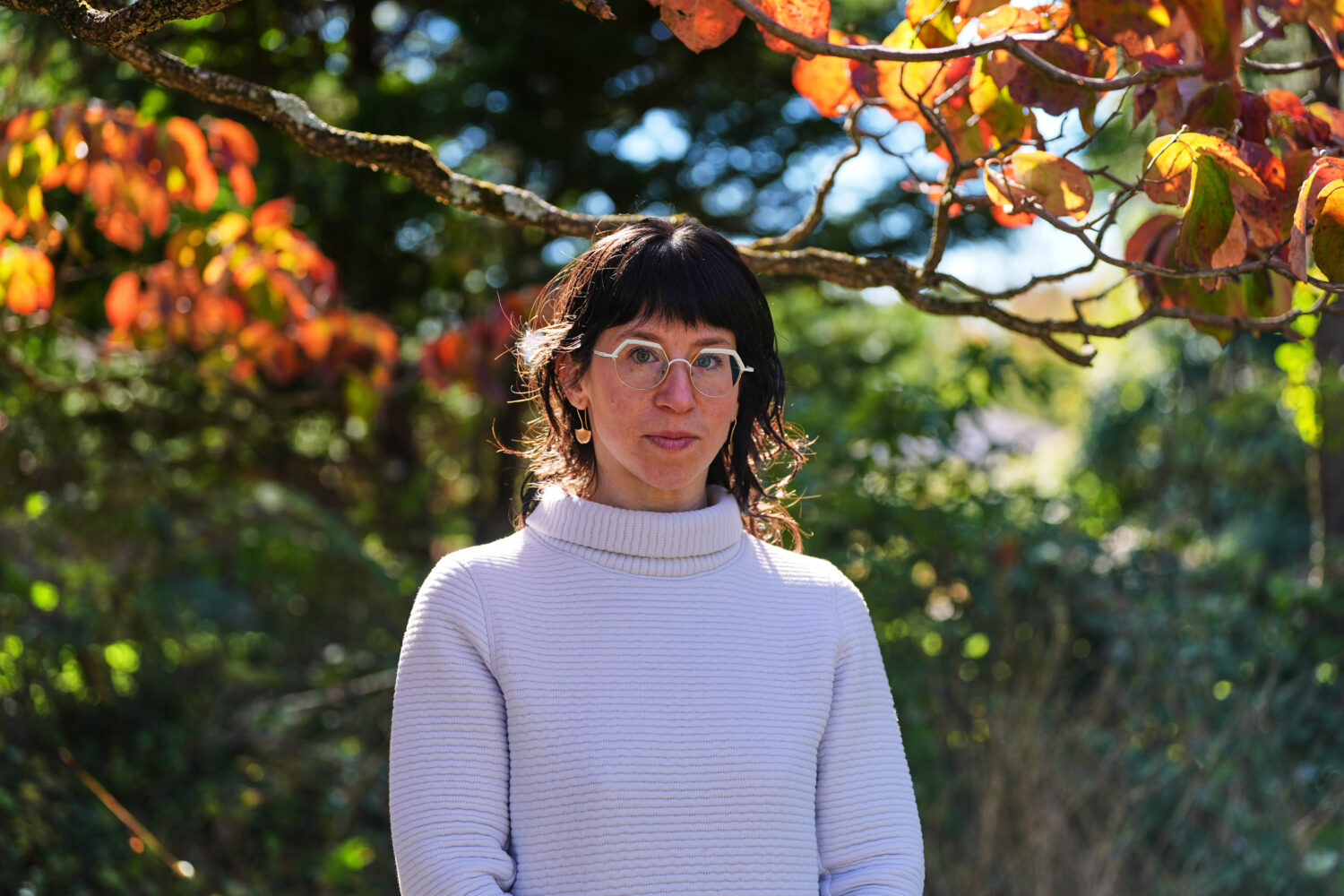
Sasha Gallant, a former employee of the U.S. Agency for International Development and current co-founder of the Project Resource Optimization Initiative, poses for a portrait, Friday, Oct. 17, 2025, in Cockeysville, Md. (AP Photo/Stephanie Scarbrough)
Credit: ASSOCIATED PRESS
(AP Photo/Stephanie Scarbrough)

NEW YORK (AP) — When the Trump administration froze foreign assistance overnight, urgent efforts began to figure out how to continue critical aid programs that could be funded by private donors.
Multiple groups launched fundraisers in February and eventually, these emergency funds mobilized more than $125 million within eight months, a sum that while not nearly enough, was more than the organizers had ever imagined possible.
In those early days, even with needs piling up, wealthy donors and private foundations grappled with how to respond. Of the thousands of programs the U.S. funded abroad, which ones could be saved and which would have the biggest impact if they continued?
“We were fortunate enough to be in connection with and communication with some very strategic donors who understood quickly that the right answer for them was actually an answer for the field,” said Sasha Gallant, who led a team at the U.S. Agency for International Development that specialized in identifying programs that were both cost effective and impactful.
Members of Gallant’s team, some of whom had been fired and others working outside of business hours, pulled together a list that eventually included 80 programs they recommended to private donors. In September, Project Resource Optimization, as their effort came to be called, announced all of the programs had been funded, with more than $110 million mobilized in charitable grants. Other emergency funds raised at least an additional $15 million.
Those funds are just the most visible that private donors mobilized in response to the unprecedented withdrawal of U.S. foreign aid. It’s possible private foundations and individual donors gave much more, but those gifts won’t be reported for many months.
For the Trump administration, the closure of USAID was a cause for celebration. In July, Secretary of State Marco Rubio said the agency had little to show for itself since the end of the Cold War.
“Development objectives have rarely been met, instability has often worsened, and anti-American sentiment has only grown,” Rubio said in a statement.
Going forward, Rubio said the State Department will focus on providing trade and investment, not aid, and will negotiate agreements directly with countries, minimizing the involvement of nonprofits and contractors.
Some private donations came from foundations, who decided to grant out more this year than they had planned and were willing to do so because they trusted PRO’s analysis, Gallant said. For example, the grantmaker GiveWell said it gave out $34 million it otherwise would not have to directly respond to the aid cuts, including $1.9 million to a program recommended by PRO.
Others were new donors, like Jacob and Annie Ma-Weaver, a San Francisco-based couple in their late-thirties who, through their work at a hedge fund and a major tech company respectively, had earned enough that they planned to eventually give away significant sums. Jacob Ma-Weaver said the U.S. aid cuts caused needless deaths and were shocking, but he also saw in the moment a chance to make a big difference.
“It was an opportunity for us and one that I think motivated us to accelerate our lifetime giving plans, which were very vague and amorphous, into something tangible that we could do right now,” he said.
The Ma-Weavers gave more than $1 million to projects selected by PRO and decided to speak publicly about their giving to encourage others to join them.
“It’s actually very uncomfortable in our society —maybe it shouldn’t be — to tell the world that you’re giving away money,” Jacob Ma-Weaver said. “There’s almost this embarrassment of riches about it, quite literally.”
The funds that PRO mobilized did not backfill USAID’s grants dollar for dollar. Instead, PRO’s team worked with the implementing organizations to pare down their budgets to only the most essential parts of the most impactful projects.
For example, Helen Keller Intl ran multiple USAID-funded programs providing nutrition and treatment for neglected tropical diseases. All of those programs were eventually terminated, taking away almost a third of Helen Keller’s overall revenue.
Shawn Baker, an executive vice president at Helen Keller, said as soon as it became clear that the U.S. funding was not coming back, they started to triage their programming. When PRO contacted them, he said they were able to provide a much smaller budget for private funders. Instead of the $7 million annual budget for a nutrition program in Nigeria, they proposed $1.5 million to keep it running.
Another nonprofit, Village Enterprise, received $1.3 million through PRO. But they were also able to raise $2 million from their own donors through a special fundraising appeal and drew on an unrestricted $7 million gift from billionaire and author MacKenzie Scott that they’d received in 2023. The flexible funding allowed them to sustain their most essential programming during what CEO Dianne Calvi called seven months of uncertainty.
That many organizations managed to hold on and keep programs running, even after significant funding cuts, was a surprise to the researchers at PRO. Since February, the small staff supporting PRO have extended their commitment to the project one month at a time, expecting that either donations would dry up or projects would no longer be viable.
“That time that we were able to buy has been absolutely invaluable in our ability to reach more people who are interested in stepping in,” said Rob Rosenbaum, the team lead at PRO and a former USAID employee. He said they have taken a lot of pride in mobilizing donors who have not previously given to these causes.
“To be able to convince somebody who might otherwise not spend this money at all or sit on it to move it into this field right now, that is the most important dollar that we can move,” he said.
Not all private donors were eager to jump into the chasm created by the U.S. foreign aid cuts, which happened without any “rhyme or reason,” said Dean Karlan, the chief economist at USAID when the Trump administration took over in January.
Despite the extraordinary mobilization of resources by some private funders, Karlan said, “You have to realize there’s also a fair amount of reluctance, rightly so, to clean up a mess that creates a moral hazard problem.”
The uncertainty about what the U.S. will fund going forward is likely to continue for some time. The emergency funds offered a short term response from interested private funders, many of whom are now trying to support the development of whatever comes next.
For Karlan, who is now a professor of economics at Northwestern University, it is painful to see the consequences of the aid cuts on recipient populations. He also resents the attacks on the motivations of aid workers in general.
Nonetheless, he said many in the field want to see the administration rebuild a system that is efficient and targeted. But Karlan said, he hasn’t yet seen any steps, “that give us a glimpse of how serious they’re going to be in terms of actually spending money effectively.”
____
Associated Press coverage of philanthropy and nonprofits receives support through the AP’s collaboration with The Conversation US, with funding from Lilly Endowment Inc. The AP is solely responsible for this content. For all of AP’s philanthropy coverage, visit https://apnews.com/hub/philanthropy.