Women farmworkers who built their own fight against sexual assault cope with Chavez allegations
Mar 21, 2026, 1:45 PM | Updated: Mar 23, 2026, 12:28 pm
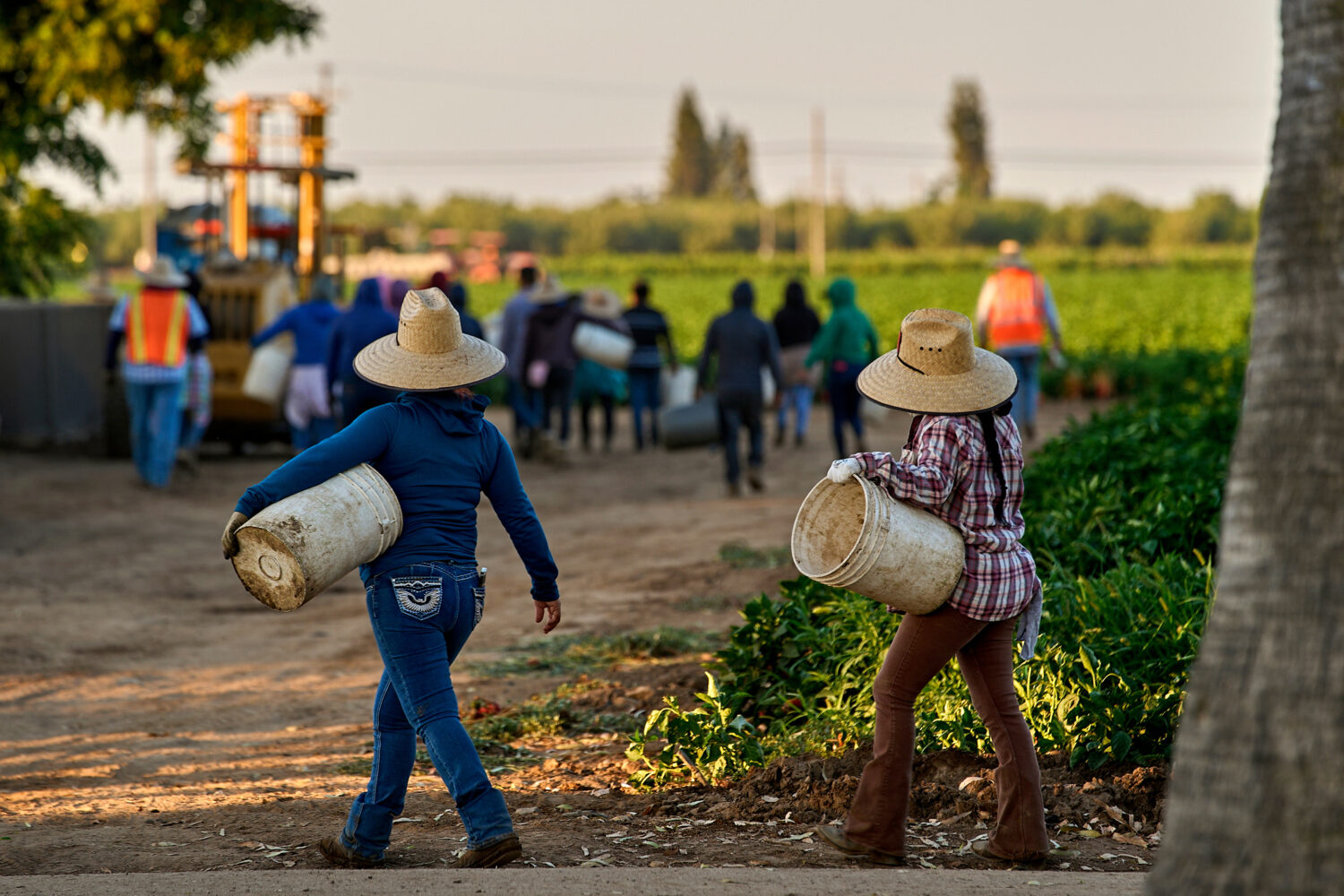
FILE - Migrant farmworkers head to pick crops on an early morning in Fresno, Calif., on July 18, 2025. (AP Photo/Damian Dovarganes, File)
Credit: ASSOCIATED PRESS
(AP Photo/Damian Dovarganes, File)

NEW YORK (AP) — Almost two decades ago, legendary labor rights activist Dolores Huerta joined Mónica Ramírez at a Chicago event to promote the Bandana Project, a campaign Ramírez had launched to raise awareness about sexual violence against women farmworkers.
Huerta spoke there about the need to educate women farmworkers about their rights and empower them to speak out about sexual exploitation that is both widespread and underreported among agricultural field workers. Little did anyone know at the time that Huerta herself had been sexually abused at the hands of icon César Chavez, who in 1962 co-founded the organization now known the United Farm Workers with Huerta.
The allegations against Chavez by Huerta and other women and girls show that the culture of fear and intimidation that enables sexual abuse in agricultural fields had also for many years existed within top ranks of the male-dominated labor movement that fought for farmworker rights.
At the same time, advocates like Ramírez say the decision by Huerta and other women to speak out — first revealing their allegations to the New York Times — is a powerful sign that things have changed since Chavez’s time. In the three decades since Chavez died in 1993, the network of grassroots organizations led by women farmworkers has grown, pushing for federal and state investigations into sexual abuse on farms and laws mandating sexual harassment training, as well as securing commitments from growers and produce buyers to adopt policies for women, among other gains.
To Ramírez, Chavez’s alleged abuse feels like a betrayal because she and other advocates admired him and credited him with inspiring the movement that galvanized their own organizing efforts. But his shattered legacy does not erase the gains women farmworkers and advocates have made on their own.
“It feels a little bit bewildering because so many of us have grown up looking up to César Chavez,” said Ramírez, founder and president of the advocacy group Justice for Migrant Women whose own parents were migrant farmworkers in Ohio. “But we have to remind each other that this is a long-standing movement that is made of many, many people, including women leaders.”
Some 25% of the country’s more than 1 million hired farm workers are women, according to government figures, although estimates on the population of agricultural workers vary. The prevalence of sexual harassment and abuse is difficult to quantify because it often goes unreported, but in field surveys conducted by groups Human Rights Watch, the Southern Poverty Law Center and the University of California-Santa Cruz, some 80% or more of women crop workers have reported some form of sexual harassment.
A watershed moment in building awareness came in 1999 when the U.S. Equal Employment Opportunity Commission, the federal agency that enforces anti-discrimination laws in the workplace, won a $1.85 million settlement against a major U.S. lettuce grower on behalf a California worker who was subjected to sexual advances by her managers and fired when she complained.
That case grew out of years of outreach efforts by EEOC investigator Bill Tamayo to farmworker labor groups, including Líderes Campesinas, a women-led group that had been organizing for years. Women described sexual abuse so prevalent that they often spoke of “fields of panties” because of what they had to do to get and keep their jobs.
Tamayo, who discussed his work in the 2013 PBS documentary “Rape in the Fields ” that helped draw attention to the issue, said Líderes Campesinas and other grassroots groups became the EEOC’s “eyes and ears” in the efforts to educate workers about their rights and file complaints. Since then, the EEOC has secured millions more in compensation from farmworkers who have reported sexual harassment or abuse.
Líderes Campesinas, which grew out of a Coachella Valley group that once advocated for a local elementary school to be named after Chavez, said its members are “heartbroken” for the survivors of abuse but that “the pursuit of social justice never was, nor ever will be attributed to one individual.”
It’s hard to say how much sexual violence against women farmworkers has eased as a result of government enforcement and growing outreach and educational efforts. Fear, isolation in the fields, language barriers, and immigration status continue to make farmworkers particularly vulnerable to exploitation. More than 40% of agricultural workers had no work authorization between 2020 and 2022, according to government estimates, and many are in the country on H2-A visas that are tied to their employment, increasing their fear of dismissal and deportation if they speak out.
Darlene Tenes, executive director of Farmworker Caravan, an advocacy group in California, said that during meetings, majorities of women still report being victims of sexual abuse, and that the Trump administration’s immigration crackdown has forced them to cancel education conferences and try to visit communities directly to quietly provide resources.
Still, in regions where the most robust legal protections and protective programs have been put into place, women farmworkers say things have started to improve.
Nelly Rodriguez said sexual abuse was “bread and butter” when she worked the fields decades ago, but she didn’t fully understand her rights until she joined the Florida-based Coalition of Immokalee Workers, which runs the Fair Food Program, a partnership with major produce buyers including Walmart and McDonald’s that pledge to source food from growers who have entered into a legally binding agreement to abide by a code of conduct.
That code of conduct includes sexual harassment training and a system for investigating complaints and holding perpetrators accountable. It also requires erecting moveable bathrooms near fields — a game changer for women who often are forced to accept rides from managers to faraway bathrooms and assaulted on the way, Rodriguez said.
For many women advocates, the biggest difference has been breaking the taboo in farm worker communities about even speaking about sexual abuse.
Maria Ines Catalan, who worked packing broccoli, cauliflower and lettuce in Monterey, California from 1988 to 1994, said it was a time of significant improvements for farmworkers who gained regulatory guarantees such as water and bathroom breaks. But nothing was ever said about the sexual abuse Catalan said was routine and that she herself endured, remembering how foremen in packing machines would pass by women in small spaces, touch them and call it an accident.
“You had to stay quiet,” she said.
That has changed.
“That is precisely what nonprofit organizations are currently doing: providing information, making farmworkers aware of their rights, and offering referrals — letting them know that they can now speak out,” Catalan said.
In her statement saying that Chavez raped her in the 1960s, Huerta, now 96 years old, said she kept her secret for so long because she feared that “exposing the truth would hurt the farmworker movement” but today, she understands that she is a “survivor — of violence, of sexual abuse, of domineering men who saw me, and other women, as property, or things to control.”
Patricia Campos-Medina, executive director of the Worker Institute at Cornell University, said the allegations against Chavez are a reminder that the labor movement “is not immune” to abuses of power and for her, it was especially painful that Huerta “had to keep that secret for that long so that she could keep her respectability within the movement.”
“You cannot expect the victim to be the one that holds the person accountable, because it takes a lot of personal courage,” Campos-Medina said. “I can imagine when she was trying to co-create this union with him, how much it would have cost her to speak up.”
When Ramírez first started her legal advocacy work in Florida in 2003, she said both men and women in the movement dismissed allegations of sexual abuse as “gossip” or insisted that with limited resources, they need to focus on bigger issues that affected the majority of workers.
But by the time the #MeToo movement erupted globally in 2017, farmworker women had been speaking out for years, albeit with much less notice. Alianza Nacional de Campesinas, a national organization that Ramírez co-led at the time, wrote an open letter of solidarity with Hollywood women that went viral and further thrust the plight of farmworker women into the national spotlight.
The “Dear Sisters” letter, as it is known, and the longstanding efforts by women-led farmworker groups, were a key driver behind the TIME’S UP Legal Defense Fund, which provides legal aid to low-income women who are victims of sexual harassment and abuse, said Jennifer Mondino, the director of the fund, run by the National Women’s Law Center.
Mily Treviño-Sauceda, a former farmworker and executive director of the Alianza Nacional de Campesinas, said she was angry when she heard about the allegations against Chavez. It made her think about her own experiences with sexual harassment and the countless stories she’s heard from other women the last three decades working on this issue and the backlash she and other advocates have received.
“We’ve been accused of so many different things and that has not stopped us,” she said.
Ramírez said she believes the #MeToo movement helped give victims, including Huerta, the language to be able to speak about abuse.
“Do I think it’s still a widespread problem? Yes. Do I think that there are many survivors who do not feel like they can come forward? Yes,” she said. “But farmworker women have exerted their power and shown their leadership on this issue, and I don’t want that to get lost.”
______
The Associated Press’ women in the workforce and state government coverage receives financial support from Pivotal Ventures. AP is solely responsible for all content. Find AP’s standards for working with philanthropies, a list of supporters and funded coverage areas at AP.org.