Inside a reporter’s 16-hour day covering the World Cup in Seattle
Jun 22, 2026, 12:45 PM | Updated: 1:03 pm
The alarm went off at 3:30 a.m.
I rolled out of bed while most of Seattle was still asleep and started the ritual every reporter knows well before a big assignment: checking and rechecking everything. Batteries. Laptop. Audio gear. Notes. Chargers. Then checking them all again.
The sun was just beginning to rise as I left the house a little after 4 a.m. It was one of those mornings where you’re tired but running on anticipation. Today wasn’t just another assignment. The FIFA World Cup had come to Seattle.
The drive downtown was quiet. That wouldn’t last.
As I approached Lumen Field, temporarily renamed “Seattle Stadium” for the tournament, it was immediately obvious this wasn’t a normal game day. Fan zones were set up around the stadium. Security was everywhere. Workers were already streaming through the gates.
And then there was the parking situation. The city wasn’t messing around.
Tow trucks lined the streets like an army waiting for orders. Every block seemed to have another one lurking nearby. Media members didn’t receive special parking privileges, so we were all left trying to figure it out ourselves. I even asked one tow truck driver if they might cut reporters a little slack.
Not a chance.
“Orders are to tow every car,” he told me.
So I gave up the hunt and paid for parking in a garage. It wasn’t cheap, but it beat spending the day wondering if my car would still be there when the game ended.
Early morning preparation
With about 30 minutes before my first live hit, I set up on the sidewalk outside the stadium. The city was waking up. Construction workers, event staff, volunteers, and early arriving fans all flowed toward the gates.
Soon enough, the chants started.
“USA! USA! USA!”
One of the highlights of the morning was meeting Ron, a fan who had traveled all the way from Melbourne, Australia. He had flown through Miami before arriving in Seattle and was soaking in the atmosphere.
Despite being surrounded by thousands of American fans, he was in good spirits.
“Everyone’s been super welcoming,” he told me. “We’ll see what it’s like when the fans get a bit rowdy.”
Fair enough.
After the first radio hit wrapped up, I took a moment to appreciate how completely the World Cup had transformed the stadium. Every visible “Lumen” logo had been covered up. For the duration of the tournament, this was simply Seattle Stadium. FIFA’s no-advertising rules had changed the look of a place Seahawks and Sounders fans know by heart.
The parking enforcement, meanwhile, remained relentless. Tow trucks continued hauling away cars throughout the morning. The message was clear: Park where you’re supposed to or pay the price.
Making my way inside Seattle Stadium
The media center sat high above the field on the 14th floor, offering a spectacular view of the action below. Journalists from around the world filled the room. Laptops clicked. Phones buzzed. Editors sent requests. Reporters chased interviews.
I grabbed a quick BLT for lunch and got back to work.
For many people, game day is about watching soccer. For reporters, game day is mostly writing. Writing stories. Updating social media. Filing reports. Recording interviews. Sending video. Revising headlines. Then writing some more.
Still, every now and then, I’d look out the window and remind myself that I was covering one of the biggest sporting events on the planet. The atmosphere inside the stadium was electric.
And when the final whistle blew, the United States had defeated Australia 2-0.
RELATED STORIES


Post-game madness
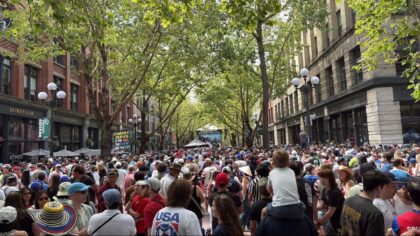
Thousands of fans poured out into the Seattle afternoon. American supporters celebrated the win. Australian fans, despite the loss, were still laughing, singing, and enjoying the experience. The streets around the stadium felt more like an international festival than a sporting event.
Part of me wanted to join them for a cold drink and soak it all in. But the workday wasn’t over. There were still postgame radio reports to record, web stories to write, social media posts to publish, and Monday’s coverage to prepare.
So, while the crowds celebrated, I headed back to the media center and opened the laptop once again. It had been an incredibly long day that started before sunrise and would end when the sun started to set. But standing outside Seattle Stadium as the last fans drifted away, I couldn’t help but think how lucky I was.
The World Cup had arrived in Seattle. And for one unforgettable day, I got a front-row seat.
Follow Luke Duecy on X. Read more of his stories here. Submit news tips here.