As Trump boosts nuclear power, regulators seek to eliminate a longstanding radiation safety rule
Jul 26, 2026, 6:00 AM
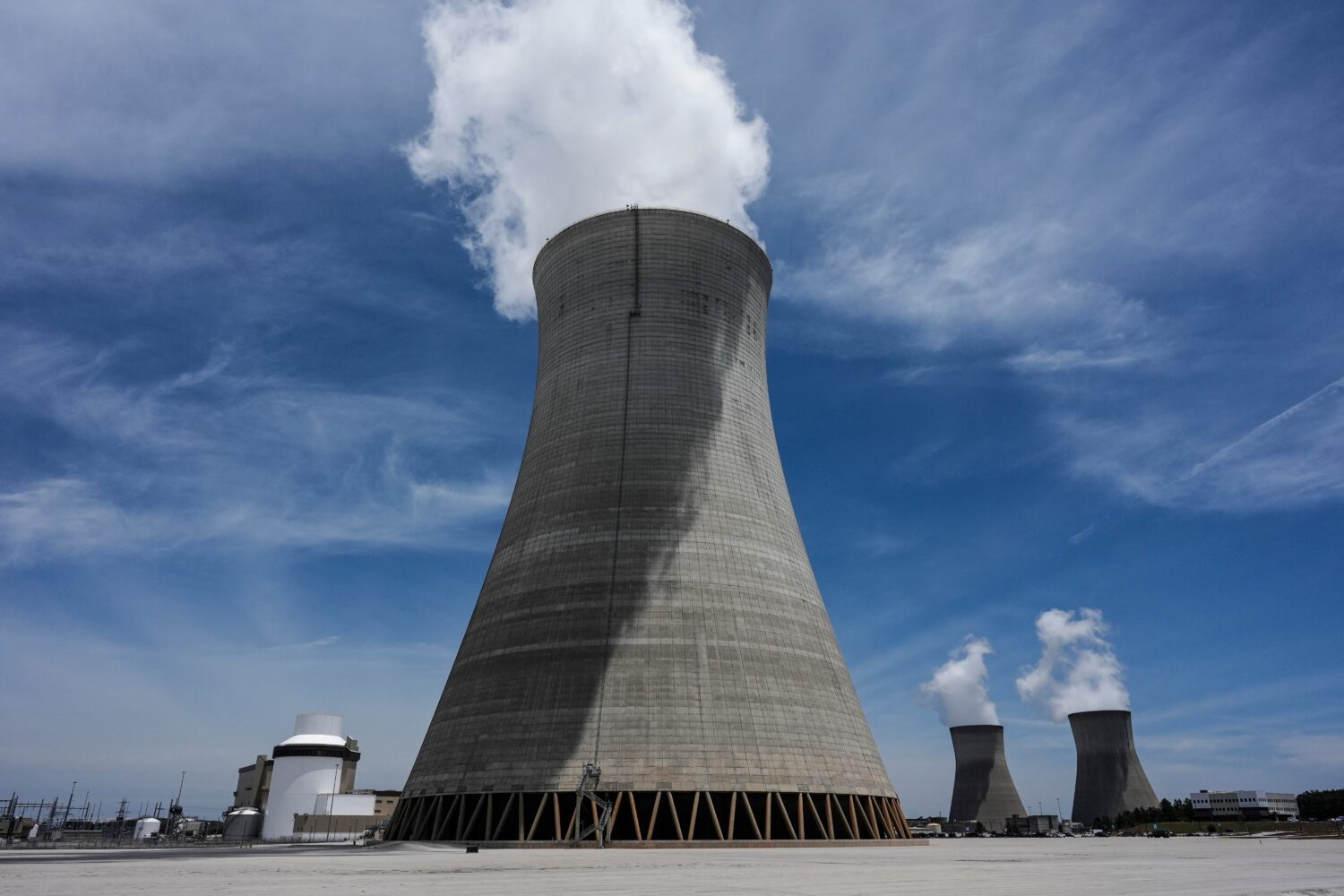
FILE - Cooling tower three with one and two in the background operate at the nuclear reactor facility at the Alvin W. Vogtle Electric Generating Plant, May 31, 2024, in Waynesboro, Ga. (AP Photo/Mike Stewart, File)
Credit: AP Photo/Mike Stewart
(AP Photo/Mike Stewart, File)

The Nuclear Regulatory Commission is proposing to eliminate a foundational safety principle that has for 50 years minimized the radiation people in the United States are exposed to and that has been adopted around the world.
Currently, facilities such as nuclear plants, hospitals or academic institutions that use radioactive materials must ensure radiation exposures are kept “as low as reasonably achievable” — the ALARA principle. The NRC proposal would abandon that philosophy while keeping a separate standard on maximum radiation exposure.
The two standards have worked together in radiation safety. Dose limits set the maximum amount of radiation the public and radiation workers can be exposed to, while ALARA kept radiation exposure as low as practical under those limits. Research shows radiation exposure increases a person’s chance of getting cancer, a risk that increases as the dose increases.
The dose limits are not changing. But the NRC, which regulates civilian nuclear energy technologies and radioactive materials, now wants to replace ALARA with a “graded approach” that includes several actions facilities must take depending on the potential dose of radiation to workers. More rigorous radiation protection measures would be required when approaching dose limits to ensure they aren’t exceeded.
This comes as President Donald Trump attempts to quadruple domestic nuclear energy production because of surging electricity demand amid a data center and artificial intelligence boom. Reforming the NRC is one way Trump is trying to speed up nuclear reactor development. He instructed the federal agency in an executive order last year to “ adopt science-based radiation limits.”
The Energy Department, which oversees national energy policies, has already stopped using ALARA. The NRC expects to finalize its radiation protection regulations in the coming months.
NRC Chairman Ho Nieh said the commission is not lowering the bar on safety.
“We’re just removing the ambiguity,” he said in a call with reporters. “But the standard for exposure to workers and the public, those are not changing. We’re just putting in place greater clarification.”
Nieh doesn’t expect major changes within the nation’s existing fleet of large, traditional reactors. But companies designing and building new, smaller reactors could move faster with a clearer picture of the radiation protection requirements, he said.
The NRC said radiation exposure limits are set well below levels associated with health effects, and it expects remaining standards and industry practices to keep radiation doses far below the limits. There’s incentive to do so — it’s more expensive and time-consuming to work in areas with higher radiation because access must be restricted and more surveys are required.
The nuclear industry’s trade association agrees with the NRC.
“We will always continue to look at what can we do to reduce the dose to workers, and maintain our doses to the off-site public as low as possible,” said Doug True, chief nuclear officer at the Nuclear Energy Institute. “It’s not like we’re just going to throw open the doors and let everything run up to the limits.”
ALARA created a “moving target” for regulation, said Justin Friedman, a nuclear energy consultant who previously spent three decades at the U.S. Department of State. Getting rid of the rule would allow NRC scientists to make more rational decisions about appropriate levels of manageable risk, he added.
Edwin Lyman, director of nuclear power safety at the Union of Concerned Scientists, cautions that some parts of the NRC proposal could raise permissible radiation doses in certain cases, while still staying below the cap. Lyman highlighted a proposed revision to radionuclide emissions standards, in particular.
Radiation exposure to the general public is limited to 100 millirem per year. A typical dose of radiation from a chest X-ray is 10 millirem.
The NRC wants to increase its radionuclide emissions standards from a conservative 10 millirem per year dose to 25 millirem per year, based on a hypothetical person living in a house at the property line for a nuclear plant.
The NRC says actual doses to the public would remain far lower because, in reality, people live farther from nuclear sites and benefit from dispersion in air and water.
The NRC should improve, rather than eliminate, ALARA, Lyman said, to protect the public and workers. ALARA has become a political target because some people mistakenly believe radiation exposures have to be as low as possible no matter the cost, Lyman said. In reality, it allows tradeoffs.
Katy Huff, a former U.S. assistant secretary for nuclear energy, said in some cases, the requirement may be challenging to regulate. Additional clarity would improve the regulatory environment without harming the public, added Huff, a professor and department chair at the University of Wisconsin-Madison.
However, Huff said, she thought the NRC was going to clarify what reasonable means in ALARA without scrapping it. She said she’s open to being convinced the graded approach will be just as effective.
The National Council on Radiation Protection and Measurements, chartered by Congress to provide independent scientific guidance, has not formally weighed in yet. Council president Kathryn Higley said she personally likes some things in the 180-page document and thinks others are problematic.
The NRC should look at the whole picture for managing risk, she said. For instance, if a worker at a nuclear power plant were to enter an area where airborne radioactive materials are present, in keeping with ALARA, they might wear full personal protective equipment with respirators, said Higley, professor emeritus at Oregon State University. That makes them move slower, potentially subjecting them to heat stress that could hurt them more than a low dose of radioactivity, she said.
A concern with the proposal, Higley said, is that it maintains the current occupational dose limit for adult radiation workers at 5 rem, or 5,000 millirem, per year. With ALARA in place, the average dose to workers has been well below that cap.
The International Commission on Radiological Protection recommends an occupational dose of 2 rem per year on average. The NRC previously found it wasn’t justified to match that, because workers were exposed to less than that and changing regulations is costly.
Higley said the U.S. may need to align with the international community if ALARA is going away.
___
The Associated Press’ climate and environmental coverage receives financial support from multiple private foundations. AP is solely responsible for all content. Find AP’s standards for working with philanthropies, a list of supporters and funded coverage areas at AP.org.