Colombia’s earthquake is déjà vu for Venezuelans. The government response is anything but
Aug 12, 2026, 11:03 PM
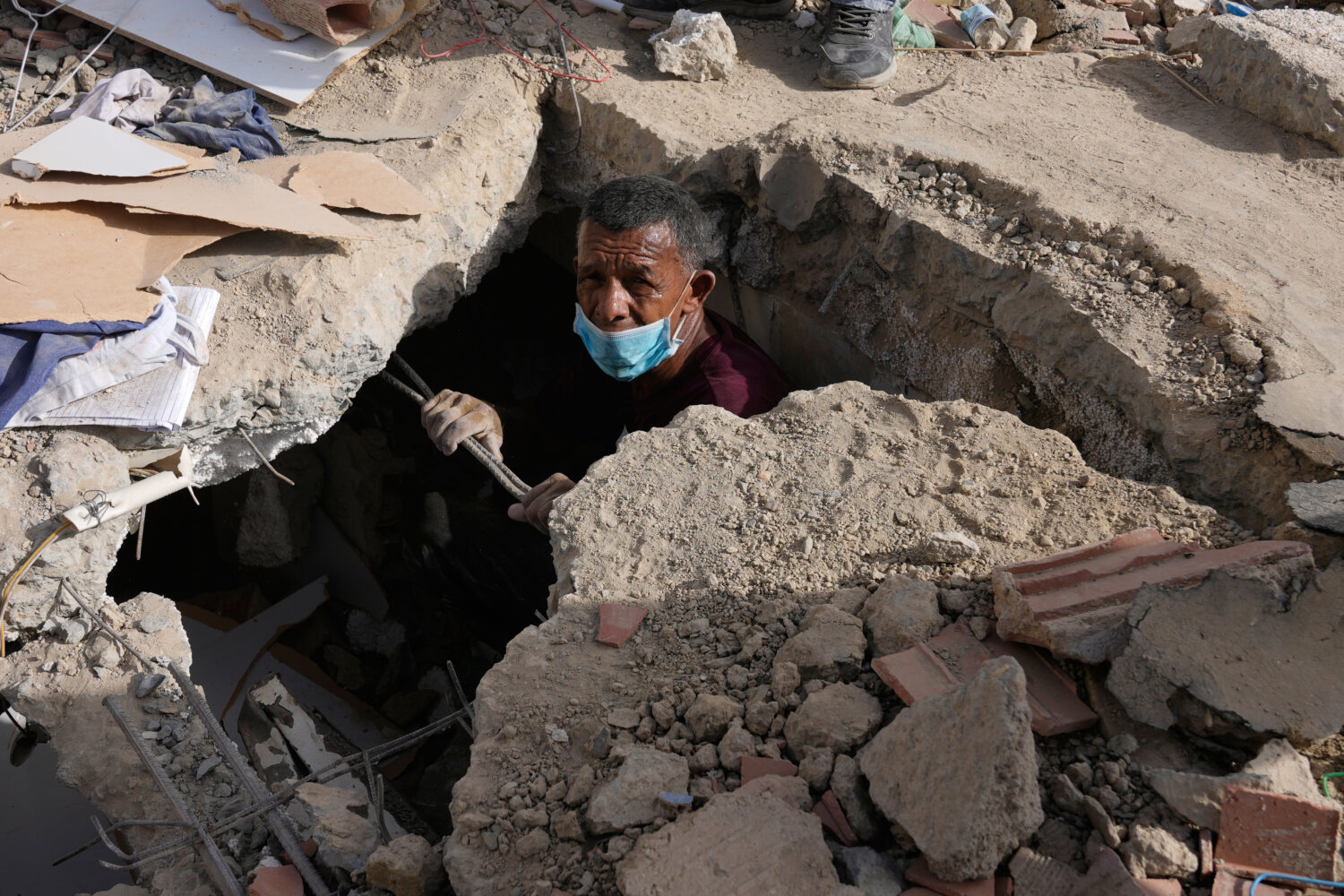
FILE - Franklin Fuentes searches for missing relatives in the collapsed building where they lived two days after earthquakes struck La Guaira, Venezuela, June 26, 2026. (AP Photo/Ariana Cubillos, File)
Credit: AP Photo/Ariana Cubillos
(AP Photo/Ariana Cubillos, File)

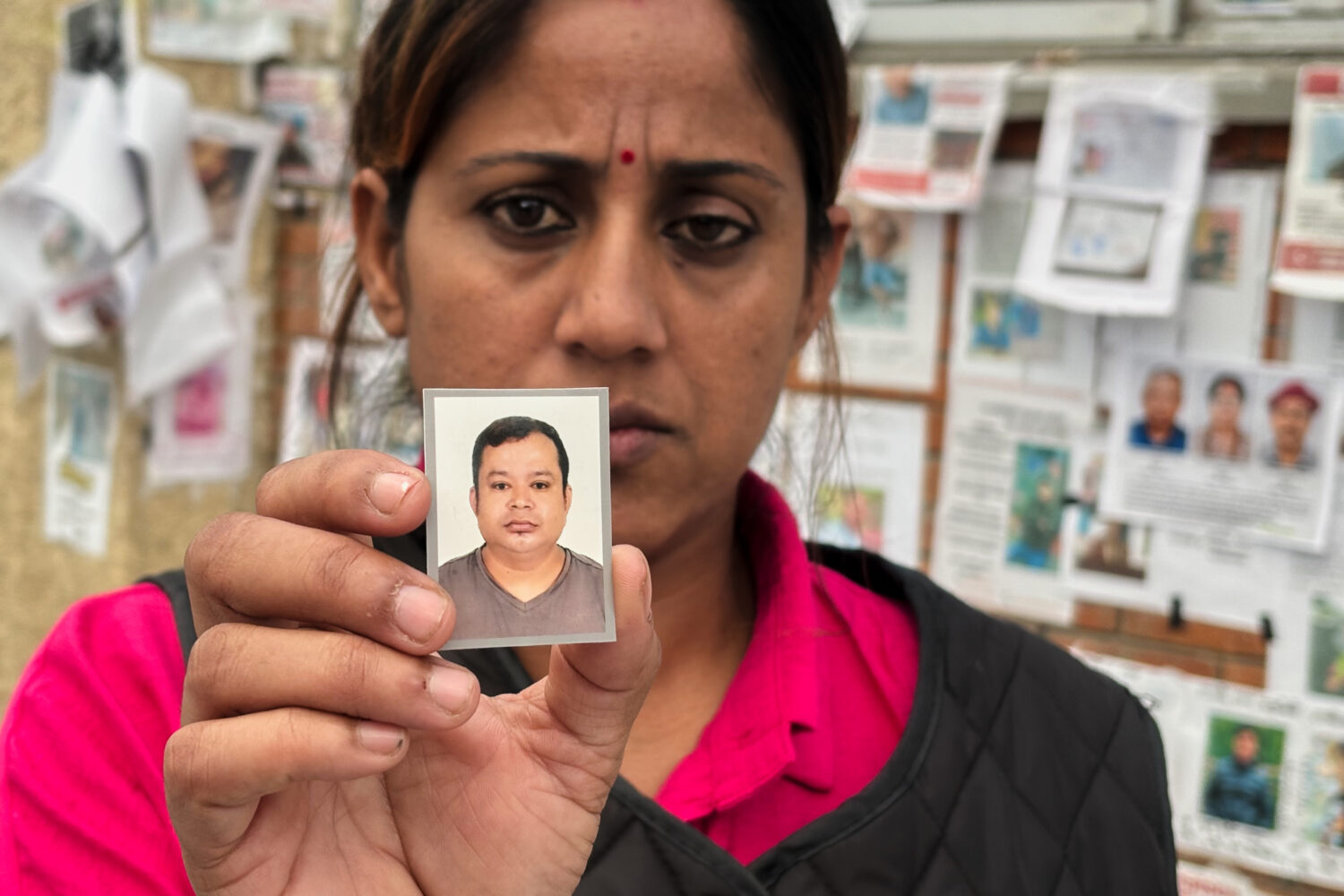
BUENOS AIRES, Argentina (AP) — For the second time in two months, the ground was shaking in South America. Once again, families flooded social media with pleas for help finding missing loved ones under flattened buildings. Once again, governments across political divides and continents pledged aid.
But in many ways, the contrast between Colombia’s 7.4-magnitude earthquake on Monday and Venezuela’s back-to-back temblors on June 24 could not have been more stark.
In Venezuela, acting President Delcy Rodríguez waited nearly four hours before addressing the nation. In Colombia, newly inaugurated President Abelardo de la Espriella announced an emergency command post to oversee rescue efforts barely an hour after the earthquake struck. For weeks, Venezuelan civilians were clawing through rubble by hand. Hours after the earthquake in Colombia, rescue teams were searching for survivors with cranes and excavators.
In Venezuela, Rodríguez relied on rescuers from around the world to fill critical gaps in the state’s response. Colombia has so far declined foreign crews except for those from the United States, saying it has enough personnel and has requested humanitarian supplies instead.
The contrast is a reminder of the differences between the neighboring nations — their political systems, resources and the strength of their institutions — and a demonstration of how those can take on life-or-death importance in catastrophes.
“The differences between an authoritarian regime and a democratic system can be seen clearly in the institutions and in their capacity to respond to an emergency,” said Ronal Rodríguez, a Venezuela specialist at Colombia’s Rosario University. “Crises are also political opportunities.”
De la Espriella, a conservative former criminal defense lawyer with no previous political experience, was sworn in as president in Colombia’s third-largest city, Cali, less than 72 hours before the earthquake toppled buildings there and across the country’s far-flung provinces — the very regions he’d pledged to prioritize on the campaign trail.
Even before the earthquake, the political novice was navigating a fraught transition from predecessor Gustavo Petro, Colombia’s first leftist president, who at first refused to recognize de la Espriella’s narrow victory and alleged electoral fraud.
Their feud derailed Colombia’s formal handover process, leaving key agencies — including the national disaster management agency — in the hands of officials de la Espriella attacked as a candidate.
But humanitarian workers say the government’s earthquake response has transcended those tensions, reflecting the resilience of Colombia’s democracy.
“All the institutions have worked,” said María José Torres Macho, the United Nations’ top official in Colombia. “Our ability to be working with them has not been affected by the change of government.”
Just an hour after the quake, de la Espriella posted a video saying he would “personally assume leadership” of the disaster response. “You’re not alone,” he told Colombians in the country’s hard-hit coffee-growing region.
Hours later, he was in Bogota, coordinating with government officials and relief agencies. Within 36 hours, he had toured disaster zones in the western cities of Quibdo, Cali and Pereira and dispatched ministers further afield.
“There is an entire system that means that even when you change the person at the top, the institution keeps functioning,” said Ana Karina García, director of Fundación Juntos Se Puede, a Venezuelan migrant aid group based in Colombia.
Still, Colombia’s response has not been without controversy. De la Espriella’s rejection of rescue teams from around the world has raised questions about his handling of foreign aid, with China’s ambassador complaining on social media that he did not even know which Colombian official was responsible for coordinating international assistance.
Rugged terrain, poor infrastructure and communication disruptions have slowed casualty reports from the hardest-hit areas. The government’s national toll of at least 265 dead and 500 missing lags far behind counts from local authorities, while an independent database lists over 4,100 as unaccounted for.
Despite Rodríguez’s nearly two decades at the highest levels of Venezuela’s government, she struggled to project authority over the disaster response.
Hours before Rodríguez took to the airwaves to declare a national emergency, her interior minister, Diosdado Cabello, called state television with damage reports — a sign of their competing claims to power within the ruling party.
Later, when Rodríguez gave the government’s initial casualty toll, she reported just 32 dead, a count that didn’t include the epicenter of La Guaira, site of the worst destruction. Many of La Guaira’s victims lived in government-built housing complexes thrown up cheaply during the oil boom of the early 2000s, part of the self-declared socialist party’s vast subsidized housing program that became a pillar of its political patronage system.
Rodríguez remained ensconced in Caracas for a full day before visiting La Guaira and assessing the damage. The government updated the death toll daily in the week that followed without offering a figure for missing people, fueling concerns of a vast undercount as civilians struggled to recover the dead without heavy machinery.
Now, more than six weeks after the quakes, a widely cited opposition-run database lists 29,000 people as unaccounted for. Government officials update the death toll once a week; as of Monday it stood at 6,301.
Years of political repression deepened Venezuelans’ distrust of the official earthquake response.
“It was very difficult for citizens to access important information about the emergency, get themselves to safety and know where to seek help,” said Gabriel Bastidas, a Venezuelan journalist based in Argentina who runs Monitoreamos.com, an independent news website critical of Venezuela’s governing political movement that’s among dozens of media outlets blocked in the country.
But even if Venezuela’s response had been perfect, the aftermath might still have looked very different from Colombia’s: The twin quakes struck densely populated La Guaira around nightfall, complicating reconnaissance, while Colombia’s hit largely rural areas in daylight.
Experts caution that it often takes weeks for a full picture to emerge after a disaster of this magnitude. Colombia is only days into its response, with thousands still missing.
Still, many Venezuelans marvel at how the Colombian government has drawn on resources that years of economic crisis and mass migration under former President Nicolás Maduro have hollowed out in their country.
“From the very beginning, we saw the news media broadcasting live from the sites of the catastrophe; mayors, governors, health secretaries, emergency officials providing details about the dead and missing,” Bastidas said.
Juan Mogollon, a 28-year-old Venezuelan living in Orlando, Florida, learned from a TV broadcast Monday morning that his 16-year-old cousin, José Juan Vivas, and the boy’s grandparents were trapped in the ruins of their apartment building in Cali. Vivas, a U.S. permanent resident, was living there with his grandparents, who settled in Colombia after leaving Venezuela.
Having watched people back home plead for rescuers and equipment after Venezuela’s June earthquakes, Mogollon feared the worst.
Yet within a few hours, he said, footage from the collapse site showed excavators, cranes and other heavy machinery, along with firefighters flown in from Bogota. Security forces deployed dogs and drones equipped with thermal cameras to identify victims across stricken towns.
“They are prepared, they have the equipment, they have the protocols, they know what to do,” Mogollon said, still anxiously waiting to hear if his relatives survived. “That’s the least we should expect as citizens in every country, you know? That’s the difference between my country and Colombia right now.
___
Associated Press writer Astrid Suárez in Bogota, Colombia, contributed to this report.