Temporary protections for about 200,000 Salvadoran immigrants are in limbo as deadline nears
Sep 9, 2026, 7:57 AM
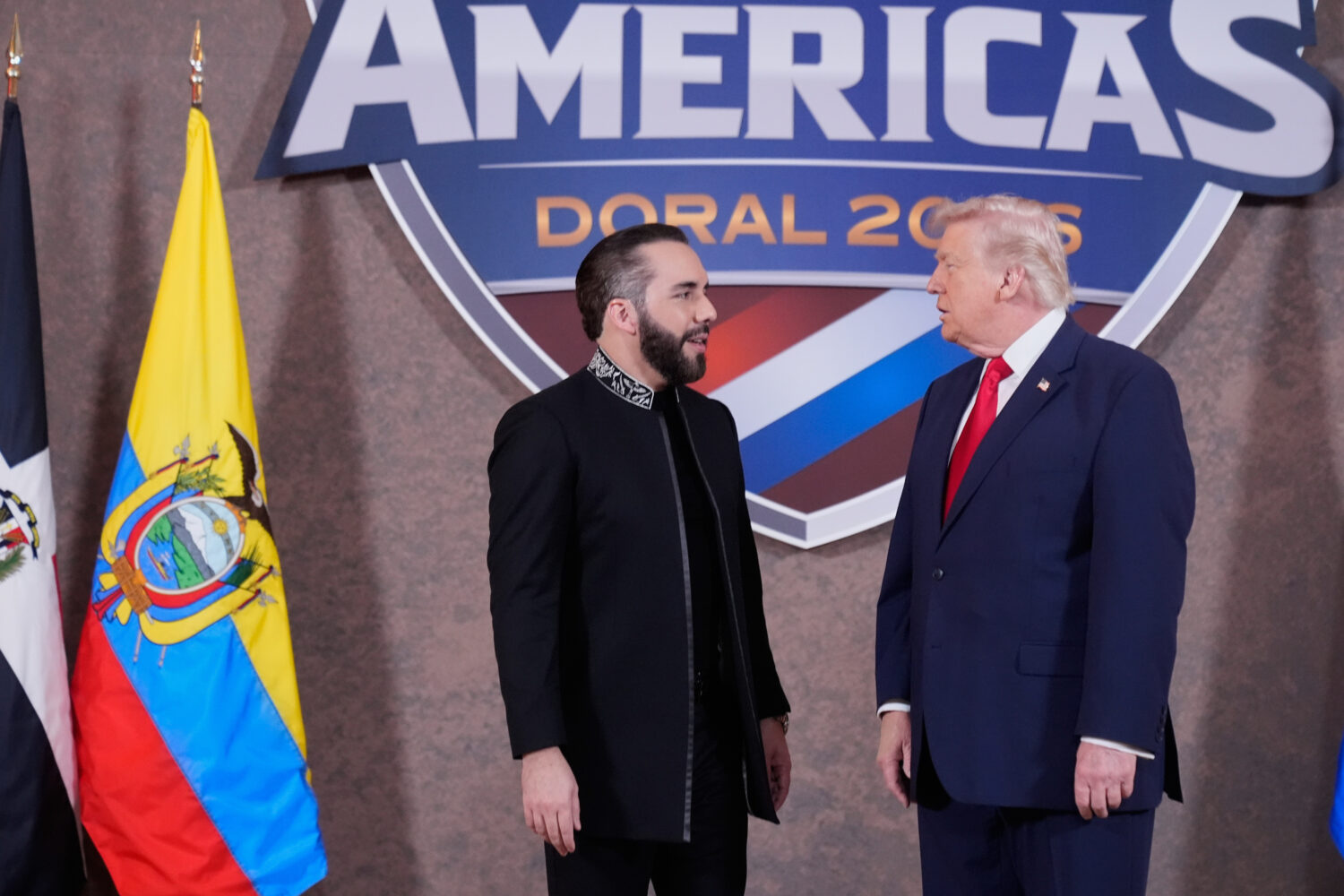
FILE - President Donald Trump greets El Salvador's President Nayib Bukele, left, at the Shield of the Americas Summit, March 7, 2026, at Trump National Doral Miami in Doral, Fla. (AP Photo/Mark Schiefelbein, File)
Credit: AP Photo/Mark Schiefelbein
(AP Photo/Mark Schiefelbein, File)

MIAMI (AP) — Temporary legal protections for about 200,000 immigrants from El Salvador was in limbo Wednesday as a deadline neared for the Trump administration to decide if they should end, as it has done for hundreds of thousands from Venezuela, Haiti and other countries.
The Temporary Protected Status designation expires Wednesday but the statute does not give a specific time for when that happens. If the Department of Homeland Security takes no action, protections are automatically extended for six months. This rare reprieve happened in May, when the protections were automatically extended to about 11,000 Lebanese, allowing them to stay and work in the U.S. for another 180 days.
About 200,000 people from El Salvador have lived in the U.S. since 2001 under TPS, which allows people already in the country to remain with work permits for renewable periods of up to 18 months, if the secretary of homeland security determines conditions are unsafe for return. They are eligible for work permits.
During President Donald Trump’s second term, Homeland Security has ended TPS for more than 1 million people from 14 countries, including El Salvador, Venezuela, Haiti, Honduras, Nicaragua, Afghanistan and Syria. Only about 103,000 from three countries remain protected with termination dates in October for Ukraine and Sudan, and November for Lebanon.
The Trump administration obtained a major victory when the Supreme Court ruled in June that Homeland Security acted within its authority by ending TPS for about 350,000 Haitians and 6,000 Syrians. The impact of the decision extends far beyond Haitians and Syrians, potentially affecting nearly 1.3 million people from 17 countries on TPS.
TPS was created by Congress in 1990 to prevent deportations to countries suffering from natural disasters or civil strife.
It was granted to El Salvador following two devastating 2001 earthquakes that left hundreds of thousands of people homeless. Just before leaving office, President Joe Biden extended TPS for El Salvador for 18 months to Sept. 9, 2026.
The vast majority of Salvadoran TPS holders have children born in the U.S. Many have lost their jobs and fear being detained, separated from their American family members, and deported to a country they barely know.
El Salvador, once one of the most violent places in the world, has become one of the safest countries in the Americas since Salvadoran President Nayib Bukele ordered mass arrests in 2022. In April 2025, the State Department upgraded El Salvador’s travel advisory to its highest level, citing a drop in violent crimes and murders.
Bukele has been an ally of Trump’s policy of mass deportations and was one of the first countries to receive deportees and held them at a mega prison in El Salvador also known as CECOT.
Human rights groups and advocates have denounced mass and arbitrary arrests, torture, and disappearances in the Central American nation’s prison system.
Trump received Bukele at the White House in April of 2025 and invited him to participate in a military coalition to fight against drug trafficking and organized crime. Less than a year later, in July of 2026, Trump and Bukele met again in Washington, the Salvadoran president has not publicly stated whether he requested an extension of TPS from the Trump administration.
In 2019, during the first Trump administration, Bukele asked Trump to extend TPS. It remained because there were lawsuits.
Salvadorans in the U.S. sent $9.9 billion in remittances to El Salvador last year, representing 24% of country’s gross domestic product, according to El Salvador’s central bank.