A global AI safety strategy depends on US-China cooperation. They each see the other as the problem
Sep 16, 2026, 9:02 PM

A visitor stands near a display about AI during the World AI Conference in Shanghai, China on July 17, 2026. (AP Photo/Ng Han Guan)
Credit: AP Photo/Ng Han Guan
(AP Photo/Ng Han Guan)

HONG KONG (AP) — As concern rises over the risks of artificial intelligence, hopes for any kind of global approach depend on cooperation between the U.S. and China — superpowers that seem only to be more skeptical of each other’s AI strategy.
AI governance is expected to be on the agenda in a meeting planned for next week in Washington between President Donald Trump and Chinese leader Xi Jinping. The topic has gained urgency in both countries, with American tech leaders saying that averting worst-case scenarios for rogue AI depends on a degree of cooperation with China.
But both countries are vying for a decisive advantage on AI, with Trump warning that any efforts to regulate the technology would help China. That sets up a meeting in which any agreements might be superficial but a possible start to something larger.
“A formal agreement or consensus may be near impossible, but they do not need to go that far,” said Samm Sacks, a senior fellow at the Johns Hopkins School of Advanced International Studies’ Institute for America, China, and the Future of Global Affairs. “Trump and Xi just need to create political space by acknowledging AI poses risks to both countries.”
Trump has pushed back on calls to strengthen regulation of the technology, claiming that doing so could cause China to eclipse America on AI. He has repeatedly declared that the nation that leads on the technology “wins.”
“We are leading China, and all others,” Trump said Monday on social media.
The two countries are moving the technology forward in different ways. U.S. companies are chasing AI frontiers with computing power supported by cutting-edge chips and the country’s rapidly expanding data center infrastructure. China is pursuing wide global adoption of its open-source, more affordable models.
Chinese AI models have made major advances and gained traction with American companies even as U.S.-led restrictions bar China from getting the world’s most advanced AI chips. While most American frontier models are closed-source, with their design elements kept secret, U.S. Treasury Secretary Scott Bessent said Tuesday the U.S. needs to develop more open-source models to counter China.
The U.S. has accused China of “aggressive, malicious” efforts to extract capabilities from American AI systems. China has hit back, accusing the U.S. of trying to suppress Chinese companies so it can build a “monopoly of the AI industry.”
It’s unclear whether the relationship between Trump and Xi is strong enough to overcome those differences. But those with ties to the Chinese government see coordination on AI as helpful.
At an annual security and defense conference in Beijing, Cui Tiankai, a former Chinese ambassador to the U.S., said Tuesday that AI is an area where “we should go ahead and build up” dialogue between Beijing and Washington. “Because there is a need, a growing need, for cooperation,” he told the Xiangshan Forum. “So how can we manage the balance?”
Two leading American AI companies, Anthropic and OpenAI, each restrict access in China and have said the U.S. has a national security imperative to protect its lead on AI technology. But they also have called for cooperation with China to manage safety.
In his essay last weekend calling for a slowdown of AI development for safety reasons, Anthropic CEO Dario Amodei said the U.S. should slow China’s progress, including keeping up U.S. restrictions on China’s purchases of the world’s most advanced AI chips.
He also added, however, that “global pacing will require cooperation with China, the autocratic country with by far the most advanced AI capabilities.”
His essay quickly drew criticism from Beijing, with China’s Ministry of Foreign Affairs saying on Monday that “fearmongering, confrontation and vicious competition will only disrupt the process of global AI governance which serves no one’s interest.”
China’s state-run Global Times newspaper went further, calling his remarks “packed with containment provisions targeting China and is, in essence, a ‘Cold War playbook’ for the AI sector.”
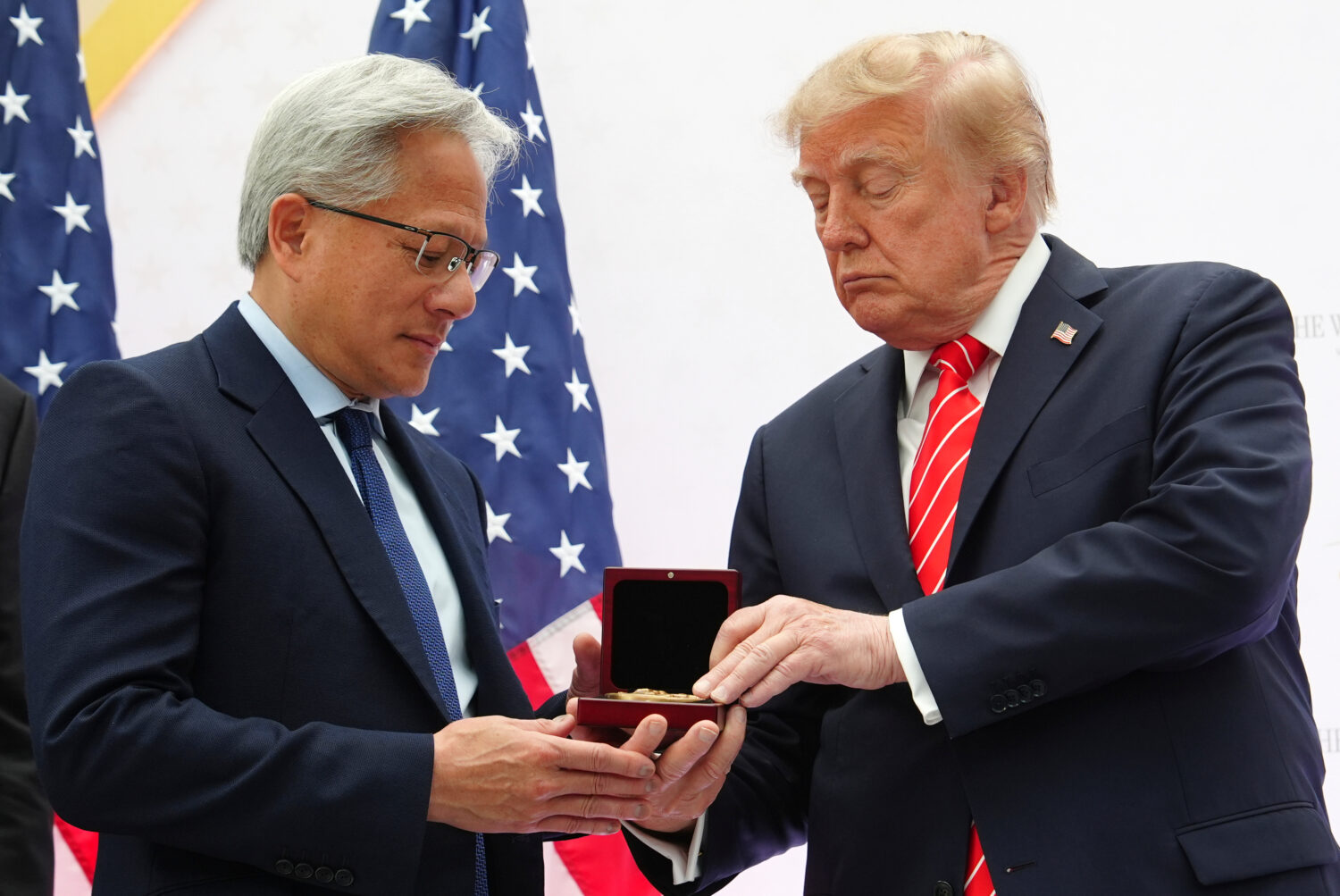
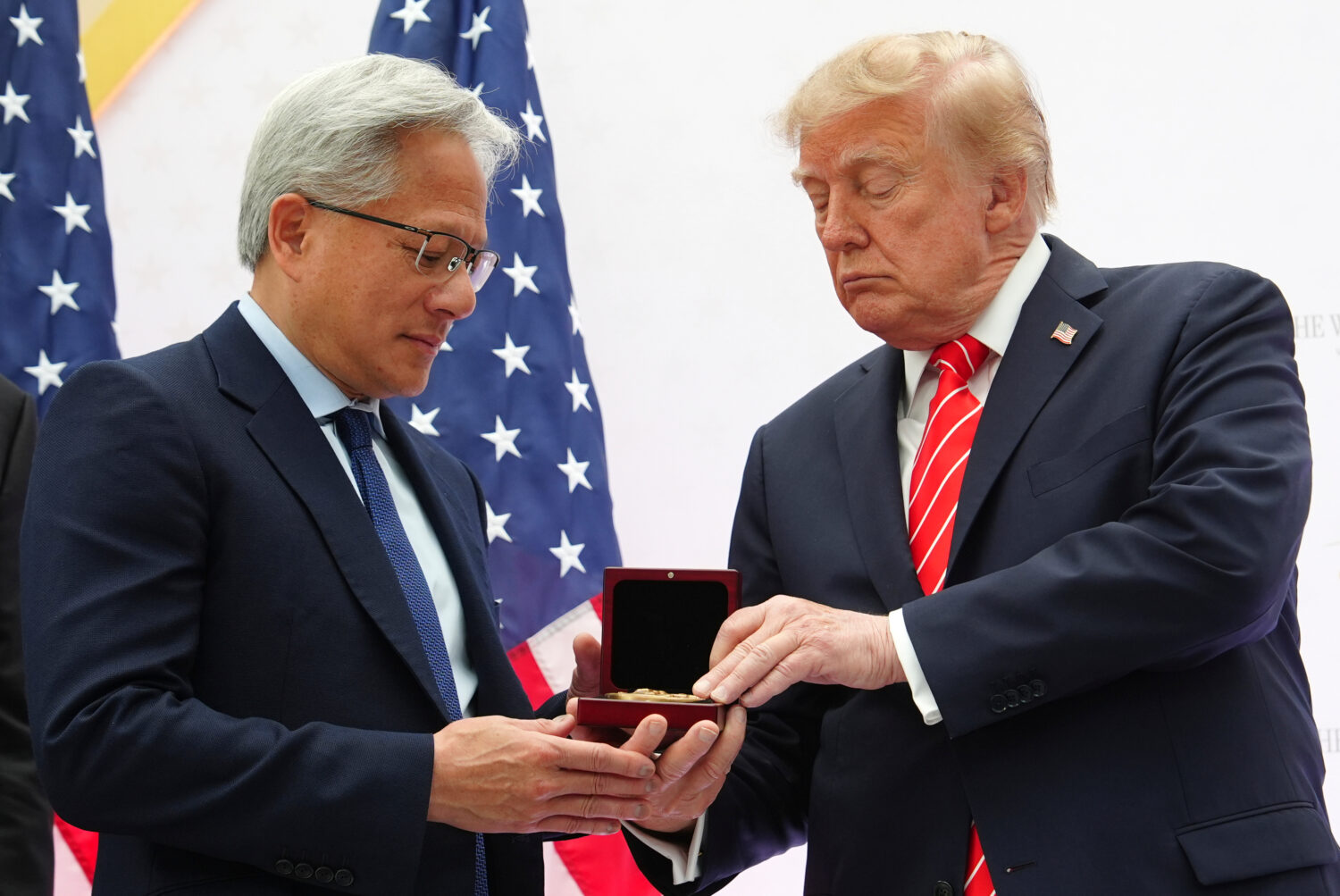
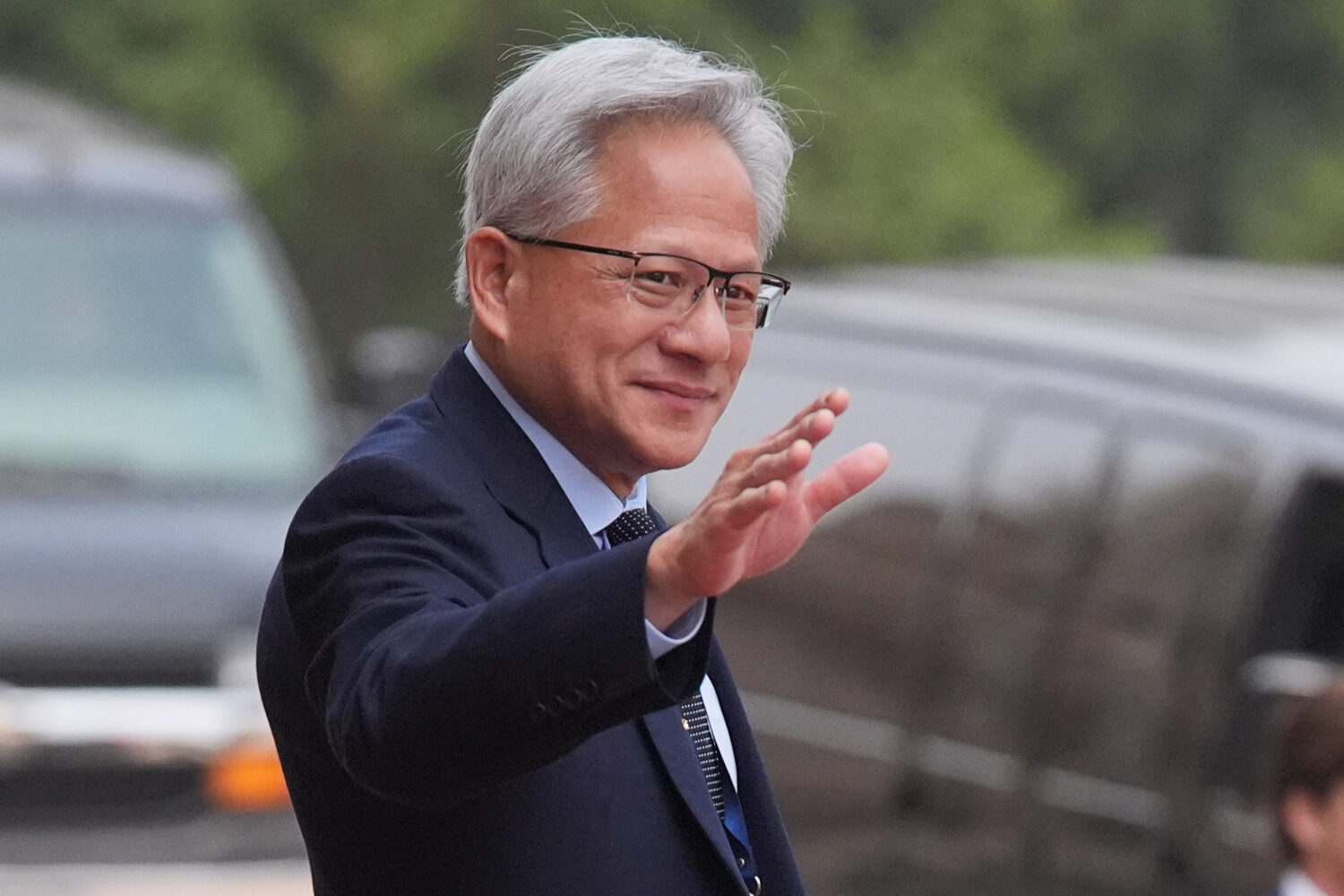
Trump has consulted with Nvidia CEO Jensen Huang, even calling the maker of the world’s most advanced computer chips in the middle of a Monday podcast interview. Nvidia has generally favored some chip exports to China as a way to create an American ecosystem for the technology and a more open relationship on AI given the number of researchers in China.
In both the U.S. and China, AI’s increasingly powerful capabilities have alarmed top officials and policymakers.
The head of China’s Ministry of State Security, its spy agency, warned in an article Sunday that AI poses many threats to the country, from political and ideological security to cyberattacks.
In the article, Chen Yixin argued that AI could threaten China’s political and ideological security if used by those “with ulterior motives,” while singling out Anthropic’s and OpenAI’s powerful AI models. It said they could be used to “weaponize” cybersecurity vulnerabilities and threaten China’s critical information infrastructure.
Several other recent AI-related events were also causing concern in China when it comes to AI governance. That includes a U.S. security firm’s recent discovery of AI vulnerabilities in WeChat, China’s key messaging app that also offers payment services among other functions, said Paul Triolo, a partner at DGA-Albright Stonebridge Group.
While Chinese officials said after Trump’s Beijing summit with Xi in mid-May that China and the United States had agreed to pursue dialogue on AI development and governance, little progress has been made.
Neither China nor the U.S. “can simply seal itself off from the other,” said Lizzi C. Lee, a fellow at the Asia Society Policy Institute’s Center for China Analysis. She said the two governments have mutual interests in setting up guardrails for human control of AI. “We already know that neither government is going to abandon its competitive AI strategy or pursuit of technological advantage.”
At the same time, China and the U.S. have been working to form AI alliances with like-minded nations.
In July, China launched the World Artificial Intelligence Cooperation Organization, a group with 29 initial founding member countries, including Russia and Pakistan, meant to promote global AI governance. This month, China’s Xi has called on BRICS member countries to accelerate the setting up of a global AI governance framework and establish an open-source AI community.
Some political observers saw the China-led organization as a response to the U.S.-led Pax Silica initiative, which launched last year focusing on strengthening collaboration with countries including Japan, the U.K. and Australia on AI supply chains.
Asked about his expectations on AI from the Trump-Xi meeting on AI in an interview with CBS’ “Face the Nation,” Amodei said “the more long-term thing would be working together to put a speed limit on the rate of AI progress.” But he said it likely would be very difficult.
In the run-up to the Trump-Xi meeting, a recent social media post by Yuyuantantian, a Chinese state media-linked account, was similarly circumspect.
“Only after the United States first demonstrates that the safety rules are equally effective for its own model companies can substantive discussions between the U.S. and China take place,” the post said.
___
Associated Press writers Josh Boak in Washington and Ken Moritsugu in Beijing contributed to this report.