Treasury yields ease and stocks rise after inflation report wasn’t as bad as expected
Sep 29, 2026, 7:59 PM
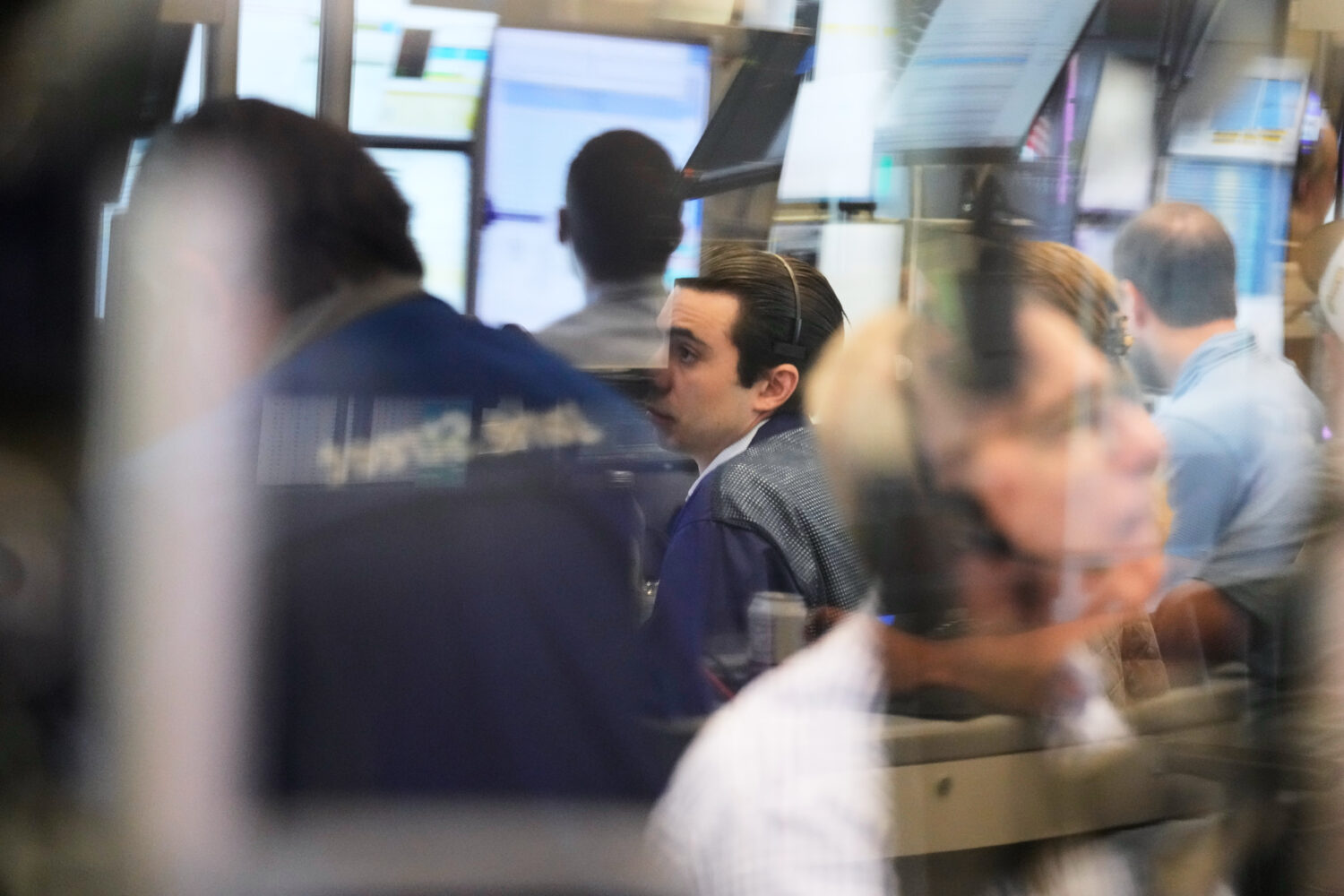
Traders work on the floor at the New York Stock Exchange in New York, Monday, Sept. 14, 2026. (AP Photo/Seth Wenig)
Credit: AP Photo/Seth Wenig
(AP Photo/Seth Wenig)

NEW YORK (AP) — Some of the pressure that’s ballooned in the bond market is easing after a report said inflation across the United States wasn’t as bad last month as economists expected. The better-than-expected data Wednesday helped Treasury yields pull back a bit, a day after the 10-year Treasury yield touched its highest level since 2002. That in turn helped U.S. stocks to stabilize. The S&P 500 rose 0.3% and is close to finishing September with a small gain. The Dow Jones Industrial Average rose 62 points, and the Nasdaq composite was 0.4% higher. The yield on the 10-year Treasury eased to 5.23%.
THIS IS A BREAKING NEWS UPDATE. AP’s earlier story follows below.
U.S. futures are edging lower as oil prices resume their climb and high bond yields continue to pressure stocks.
Futures for the S&P 500 dipped 0.1% on Wednesday. Dow Jones futures declined 0.2% and Nasdaq futures dropped 0.3%.
Oil prices are now hovering between $90 and $100 per barrel as the U.S. war with Iran drags on, contributing to stubborn inflation. That has meant investors are asking more when they buy U.S. debt, pushing down the price for Treasurys while pushing their yields to their highest levels in 24 years.
Benchmark U.S. crude gained 1.2% to $90.42 a barrel. Brent crude, the international standard, rose 1.4% to $97.49 a barrel. Both cost about $30 more per barrel than they did at this point last year.
The 10-year Treasury eased back to 5.24% after briefly topping 5.27% Monday. Those are close to levels last seen in 2007, before the financial crisis and Great Recession sent yields toward zero. The 30-year Treasury yield fell to 5.57% on Wednesday, a level not paid out to investors since 2004.
Treasury yields have been rising for a range of reasons, from worries about inflation to Washington’s massive debt load to signs that the U.S. economy remains solid despite its many challenges. That pressures the economy because higher yields make borrowing money more expensive for everyone, while also undercutting prices for stocks and other investments.
There will be another look at inflation and economic growth Wednesday when the U.S. release data on consumer spending for August, and the third estimate for economic growth in the second quarter.
In July, the Federal Reserve’s preferred measurement for inflation, the personal consumption expenditures price index, rose 3.7% from a year ago, the same as in June.
U.S. inflation rates have remained stubbornly above 3% most of the year, well above the Fed’s target rate of 2%. Wall Street expects the central bank to raise its benchmark interest rate again at its next meeting in October.
“While it is easy to focus on the macroeconomic headwinds of bond yields and oil, the underlying U.S. economy remains remarkably resilient,” said Tina Teng, market analyst at Moomoo, a global financial technology and online brokerage company.
Shares of Boeing rose more than 2% before the market open Wednesday as the company said that it received a multi-billion dollar contract from the U.S. Navy for its F/A-XX fighter jets.
In Europe, France’s CAC 40 fell 0.6% to 7,988.68, while the German DAX declined 0.3% to 25,316.62. Britain’s FTSE 100 rose 0.1% to 10,644.65. Asian markets were mostly higher.
In currency trading, the U.S. dollar declined to 157.06 Japanese yen from 157.27 yen. The euro cost $1.1357, up from $1.1347.
___
Yuri Kageyama is on Threads: https://www.threads.com/@yurikageyama