Halloween costumes have a spooky environmental impact. Swaps are a way to reduce waste and recycle
Oct 23, 2026, 6:30 AM
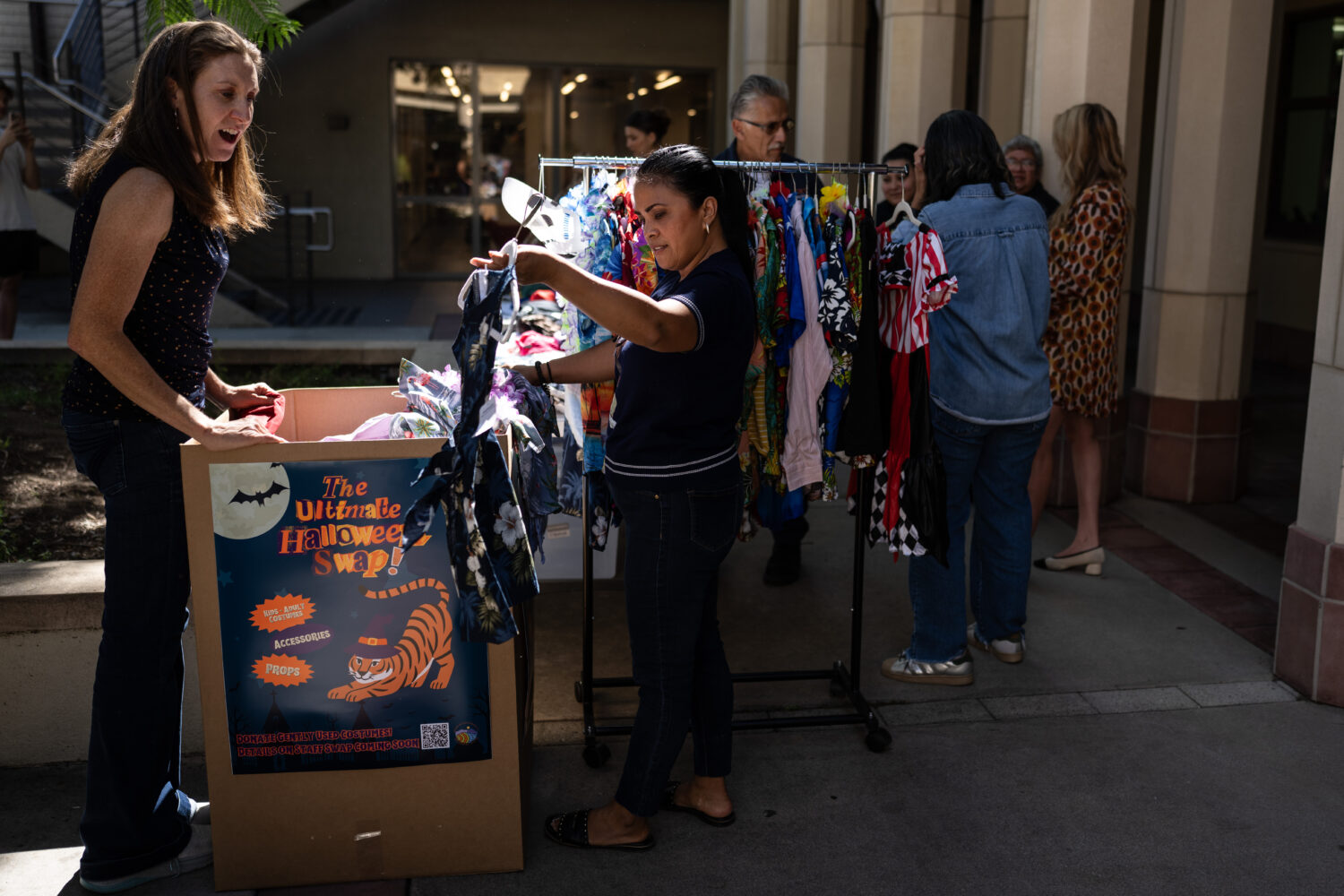
People gather at a Halloween costume swap at Occidental College in Los Angeles, Friday, Oct. 16, 2026. (AP Photo/Jae C. Hong)
Credit: AP Photo/Jae C. Hong
(AP Photo/Jae C. Hong)

LOS ANGELES (AP) — Braddock Sandoval perused tables with wigs, a Darth Vader mask, a black tutu and other items and garments on an unusually sizzling day in Los Angeles. He found a Hawaiian flower necklace and a shark costume and tried them on.
The chemistry professor at Occidental College heard about a campus swap where he could pick out a free Halloween costume with the goal of keeping it from being thrown away. Curious and in need of one, he swung by to see what he could find.
“I think there’s too much cheap plastic waste in this world. So the idea that people are recycling costumes is fantastic, both for budgets, like me, but also just for the planet,” Sandoval said with a laugh. He planned to attend a Halloween dance party dressed as a great white shark eating a tourist — a costume inspired by the freebies he found at the swap.
Every Halloween, costumes get their big moment. But every year, millions end up in a landfill after a single use, and many are made from synthetic plastics that don’t easily break down, contributing to environmental pollution. In Southern California and across the country, Halloween costume swaps and thrift stores are keeping costumes from going to waste. People can donate clean costumes and pick a new one, reducing waste and the resources and emissions required to make new ones.
This year, the textiles, according to the Environmental Protection Agency. When shopping sustainably, experts say, keep three principles in mind: Reduce. Reuse. Recycle.
Shelie Miller, a University of Michigan professor who studies the environmental impacts of products, said Halloween costumes, like fast fashion, are often made cheaply from plastic materials. They tend to fall apart, she said, and are “not really intended to stick around for a very long time.”
And there are other environmental impacts.
Clothing accounts for 4% to 10% of global carbon emissions, she said, while textile dyeing contributes about 20% of wastewater emissions from industrial sources worldwide.
Synthetic fibers used in clothing, including many costumes, can shed microplastics during washing and end up in water sources, she said. Microplastics have been found in the ocean, air, food and water, as well as a range of human tissues. Growing evidence suggests they can pose risks to human health. Many of these materials are made from oil, which emits pollutants when burned, driving climate change and fueling extreme weather.
“The process of making these, the Halloween costumes, it’s incredible,” said Zach Bowersox, a senior lecturer in political science at Washington University in St. Louis who teaches a class on fast fashion and the environment.
Rather than being stitched together, costumes are often heat bonded, with the plastic melted at the edges to join pieces. “After the season, they’re not meant to even be thrifted or returned, they’re just meant to be thrown away. And that’s where most of them end up, it’s in the landfill. Something like 80% of those suits end up in the landfill,” Bowersox said.
Miller said there are many ways to enjoy Halloween without buying a one-off costume.
“Whenever we buy anything, we’re not just buying the one thing, we’re buying all of the environmental impacts of everything that went into making that product,” Miller said. “So whenever we’re using any sort of single-use product, whether we’re talking about single-use plastic or single-use costumes, we really have to be thinking about is this really how we want to spend our time, money, resources, and is there a better way?”
Sustainable fashion advocate Lexy Silverstein founded the Ultimate Halloween Swap last year after realizing how much money and material went into a costume that might be worn only a few hours before being dumped.
As an avid Halloween fan who loves donning costumes, she was forced to reflect on her own consumption and waste.
“That’s a lot of costumes that I’m buying and wearing once and getting rid of,” she told herself. And she began thinking of other seasons that encourage people to buy new things, like back-to-school time.
Last year, the swap collected hundreds of costume donations, including 10 boxes from the LA Clippers basketball team. It was such a success that she decided to do it again and has since expanded across Southern California, including at Occidental College where Sandoval found his shark suit.
Now, Silverstein is hoping to organize swaps for back-to-school, prom season, winter coats and other high-consumption, single-use times of year.
Washington University in St. Louis has its own version going. Its thrift store is stocked with clothes and items collected during student move-outs when many items get left behind, including Halloween costumes and accessories. For the second year, it organized an on-campus pop-up where the campus community could buy used Halloween costumes for a low price.
Cassie Hage, the university’s assistant director at the Office of Sustainability, said this year’s selections included Austin Powers and kiwi outfits, a demon from the hit TV show “Stranger Things” and matching platypus onesies that delighted a group of friends who stumbled upon them.
“They were kind of dancing around” in them, she said. “That was just a really fun moment to watch.”
Thrifting, attending clothing swaps and raiding friends’ and family members’ closets are all ways to avoid buying new costumes. You can assemble a Halloween costume from clothes and accessories you or a friend already own, or modify existing pieces to create a new look.
Silverstein also suggests renting costumes by looking through websites like Facebook Marketplace, Depop and Poshmark.
If you have to buy something, Bowersox suggests buying costumes or accessories made of plant-based materials such as cotton or linen. Licensed products can cost more, he said, but can offer greater transparency over how and where they’re made.
Alison Linder, assistant sustainability coordinator at Occidental College, which has a thrift store of its own with Halloween costumes in stock, encouraged people to organize their own swaps with neighbors, friends or school classmates.
“It’s just as easy as asking your friends for a loan and offering to share what you have,” she said. “And just by doing that simple thing, you save money and you’re helping the environment.”
___
The Associated Press receives support from the Walton Family Foundation for coverage of water and environmental policy. The AP is solely responsible for all content. For all of AP’s environmental coverage, visit https://apnews.com/hub/climate-and-environment