A rare open Senate seat turns Iowa into a costly battleground featuring Josh Turek and Ashley Hinson
Nov 2, 2026, 1:53 PM
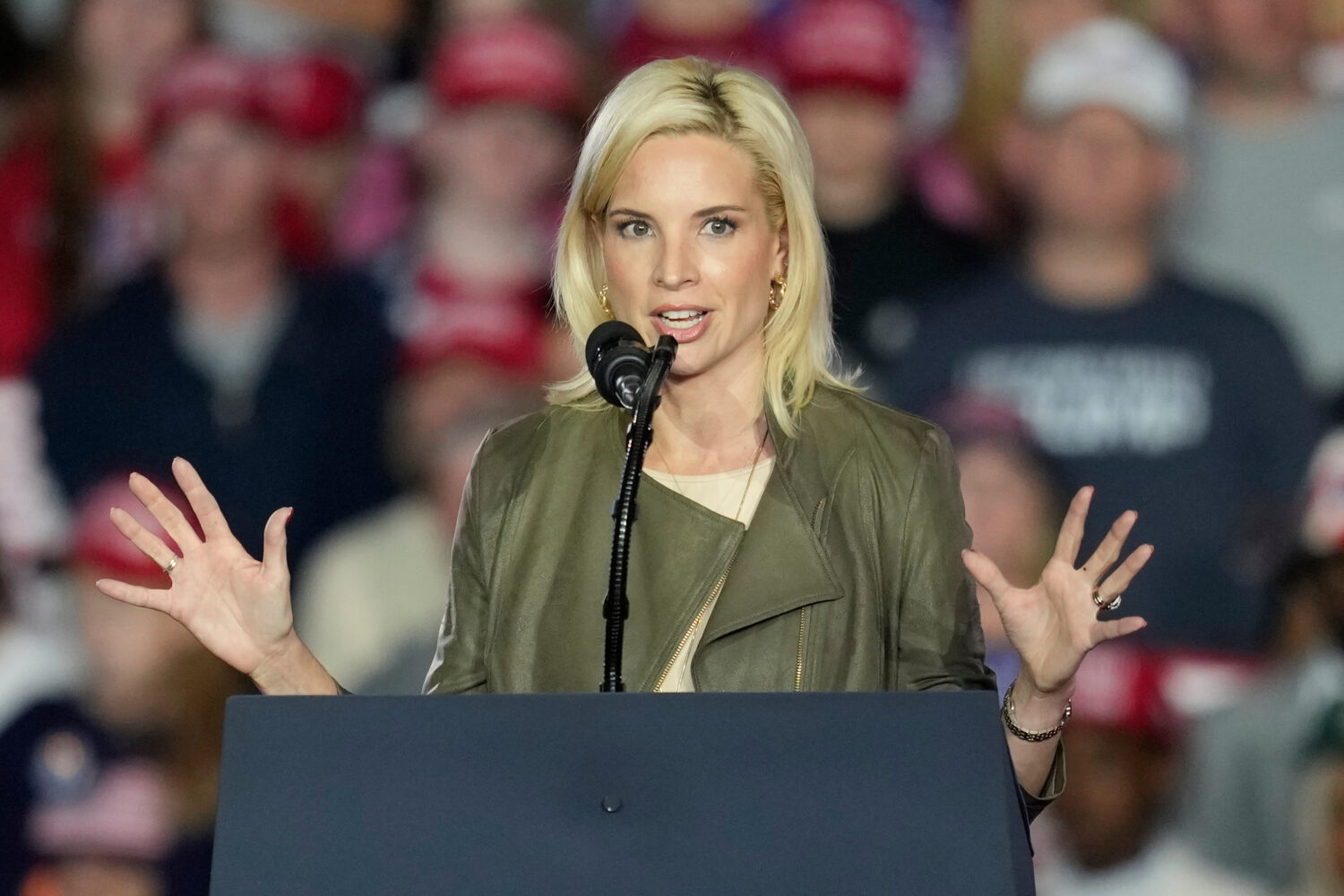
Senate candidate Rep. Ashley Hinson, R-Iowa, speaks during a campaign rally at the Five Flags Event Center, Sunday, Nov. 1, 2026, in Dubuque, Iowa. (AP Photo/Charlie Neibergall)
Credit: AP Photo/Charlie Neibergall
(AP Photo/Charlie Neibergall)

DES MOINES, Iowa (AP) — A rare open U.S. Senate seat in Iowa will help determine control of the chamber in Tuesday’s midterm elections as Democrats try to harness frustration with rising prices, the Iran war and tariffs that have caused turmoil in the state’s dominant agricultural industry.
Democrat Josh Turek and Republican Ashley Hinson are running to replace retiring two-term Republican Sen. Joni Ernst, and the campaign has drawn hundreds of millions of dollars in advertising.
While Iowa has been reliably red since President Barack Obama won the state during his 2012 reelection campaign, it has reemerged as a political battleground this year as President Donald Trump’s popularity has waned in his second term. The retirements of Ernst and Republican Gov. Kim Reynolds made for the first cycle without incumbents seeking the top-of-the-ticket seats since 1968, breathing new life into Democrats’ efforts to reverse years of electoral failure in the state.
Rob Sand, the state auditor, is the Democratic nominee for governor running against Republican candidate Zach Lahn. Iowa Democrats invested in an expansive and well-financed ground game this cycle to counter Republicans’ advantages and appeal directly to a frustrated electorate.
In the Senate race, Libertarian Thomas Laehn is also on the ballot. He could complicate Hinson’s effort by winning the votes of some conservative voters.
For three decades, Iowans sent a bipartisan pair to the Senate, including Republican Sen. Chuck Grassley and Democratic Sen. Tom Harkin. However, Ernst won Harkin’s seat when he decided not to seek reelection in 2014.
Turek, a two-term state representative and former Paralympian, wants to follow in Harkin’s path. Born with spina bifida, believed to be a result of his father’s exposure to chemicals during the Vietnam War, Turek credits Harkin’s work to enact the Americans with Disabilities Act for his own achievements.
Even with a challenging midterm environment for Republicans, Democrats were up against a significant statewide voter registration disadvantage as the electorate has increasingly voted red in recent years. Republicans almost entirely control state government and exclusively make up Iowa’s federal delegation.
Hinson is serving her third term in the U.S. House. She had been a state representative after working as a news anchor for a local broadcast station in northeast Iowa.
Hinson was quickly endorsed by Trump and Republican leaders when she launched her bid on the same day as Ernst’s retirement announcement.
Obama endorsed Turek after his primary win.
Hinson launched her campaign last year promising to be Trump’s “top ally” in the Senate. Almost a year later, she instead focused her message on being “Iowa’s best bipartisan fighter.”
She’s one of several Republicans who sharpened that message in the final months of the campaign, especially as the war in Iran dragged on and gas and diesel prices ballooned. In September, after House members were sent home, Hinson said Iowans “shouldn’t have to foot the bill” for the war.
Hinson did not, however, join two fellow Iowa Republicans in battleground districts — U.S. Reps. Zach Nunn and Mariannette Miller-Meeks — in voting with Democrats earlier in September on a resolution intended to halt Trump’s ability to continue military action without lawmakers’ approval.
She said the resolution was not the way to allow Trump to bring the war to an immediate and successful end.
Republican-aligned groups poured money into Iowa in the final weeks of the election to help Hinson. The White House, too, has kept its attention on Iowa with visits to the state from the president, vice president and Cabinet officials throughout the campaign.