Where is the legal line between free speech and marches?
Jun 3, 2017, 7:22 AM
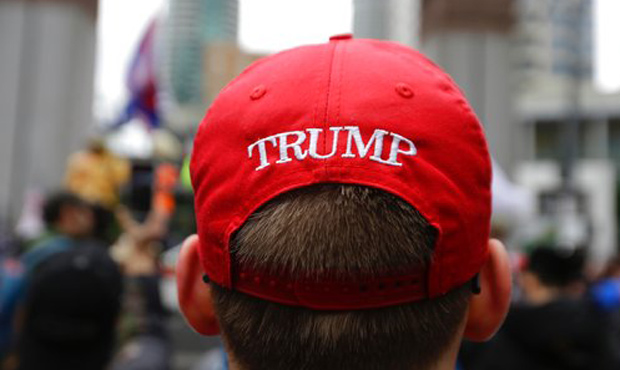
A Trump supporter takes part in a May Day protest in Seattle. (AP Photo/Ted S. Warren)
(AP Photo/Ted S. Warren)
From May Day marches to pro-Trump rallies, public demonstrations are getting tense in the Northwest. It’s partially why Portland’s mayor asked an alt-right group to cancel its rally in the wake of a recent fatal attack by a white supremacist.
But can the government halt a public demonstration under free speech laws in the United States?
“It’s tricky,” said KIRO Radio legal expert Rob McKenna. “In Portland, you had a horrifying incident involving a white supremacist who killed two people, and then you have these other groups that are trying to hold rallies to exercise their First Amendment rights.”
RELATED: March Against Sharia demonstration comes to Seattle
Portland Mayor Ted Wheeler not only asked the organizers of the June 2 Trump Free Speech Rally to cancel their event, he also asked the federal agency that provided the permit for the demonstration to revoke it. That agency denied Wheeler’s request. An opposing demonstration has already been organized to counter the pro-Trump event. The ACLU has since stepped up and argued that the government cannot cancel the event protected by the First Amendment.
“You have to give credit to the ACLU,” McKenna said. “They are coming in, although they don’t believe in the views of these far right groups, they believe in their right to speak and to assemble.”
There is one caveat.
“There’s a judgment call that local officials and law enforcement have to make,” McKenna said. “If they think violence is imminent, they can use that as a basis to revoke a permit or not issue a permit to begin with.”
“They would have to have pretty good evidence that the organizers of the rally are attracting people who plan to commit violence,” he said. “They could look to social media or other communications that indicate the participants plan to use this particular event to commit violence. But it has to be pretty strong evidence.”
Strong enough to stand up to the First Amendment‘s protections of free speech and the freedom to assemble.
“At the same time, it’s freedom to peaceably assemble,” McKenna said. “If you have good enough evidence that organizers and participants do not plan to be peaceful, that could be a basis for revoking a permit and blocking the rally.”
Joey Gibson, the organizer of the Portland rally, promotes that his event is meant to be filled with peace and love.
Listen to Rob McKenna’s full conversation about free speech rights with KIRO Radio’s Dave Ross here.
Follow @http://twitter.com/Mynorthwest