Mike McGinn proposes to ‘hold the line’ on Seattle taxes
Jul 6, 2017, 6:57 AM | Updated: 10:49 am
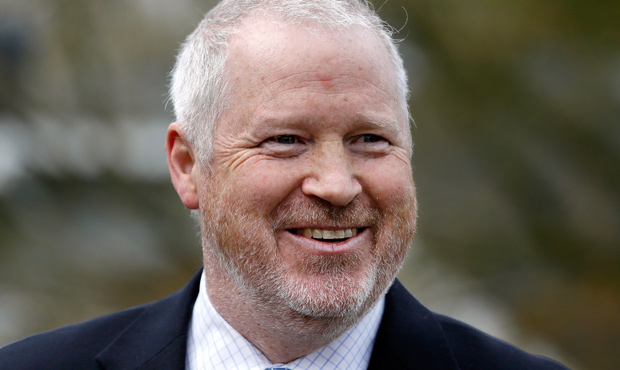
Mike McGinn is running for Seattle mayor for a second time, after Ed Murray won the last election between the two. (AP)
(AP)
If there is one number to remember from mayoral candidate Mike McGinn’s recently announced vision for Seattle taxes, it’s $40 million.
That’s the highest amount McGinn proposes to reduce city spending. It’s also the maximum amount of money he believes can be raised through an employee tax on businesses, and the amount he says can be taken in by increasing the business and occupation tax on the city’s largest corporations.
“We know that something has to be done now to relieve the taxpayers of the burden they’ve shouldered for too long,” McGinn said on his candidate blog. “The answer to all of our problems can’t continue to be tax increases on the very people who need the most help and who make this city thrive.”
RELATED: Seattle’s mayoral candidates make elevator pitches
McGinn argues that a “relatively secure” family pays 5 percent of their income while Seattle’s poorer families pay about 15 percent. He notes the city’s general fund grew by $250 million over the past three years. In response, he promotes a series of “tax fairness” proposals:
- No increases in sales taxes by the city
- Property taxes only rise with inflation
- Cut unneeded spending and redirect city priorities to reduce spending by $30-40 million
- Start new business taxes, such as a $100 per employee tax on companies with more than 50 employees (he estimates it could raise $30 million to $40 million annually)
- Raise exemptions for the business and occupation tax while increasing the rate on large corporations to take in an additional $30 million to $40 million annually
Seattle taxes and the candidates
McGinn also says he will work on and “test the implementation” of other ideas such as an income tax or a municipal bank. The city is currently working on an income tax, something that is illegal according to state law. But proponents of the tax aim to fight for it through the state’s court system. He also mentions taxing wealth and capital gains, and the formation of a municipal bank.
McGinn is not the only candidate to talk about Seattle taxes or similar ideas. He was one of three candidates cited as a front-runner in the race for Seattle mayor, according to recent polls. Also in the lead are Jenny Durkan and Bob Hasegawa.
Hasegawa has said “no more regressive taxes,” and has promoted some of the same ideas that McGinn has put forth. For example, he has also called for the formation of a municipal bank. That bank, according to Hasegawa, would invest in, and fund, things such as public housing, transit, and sidewalks.
On her website, Durkan largely addresses property taxes. She proposes to lower property taxes for older and low-income residents, as well as landlords who provide affordable housing.
While she hasn’t been listed as a front runner until recently, Nikkita Oliver had the most donors despite not raising the most money (Durkan has currently raised money from 207 more people than Oliver). On her website, Oliver mentions taxes as a means of protecting displaced communities in Seattle. She proposes a freeze on property taxes for long-time residents. She also proposes “progressive tax structures and luxury taxes on corporations” to fund affordable housing.
McGinn suggests a possible tax on speculators in Seattle. That’s something Cary Moon also lists on her campaign website to deter corporate and non-resident real estate speculation. Moon also mentions implementing a tax on luxury real estate as well as a capital gains tax on people earning more than $250,000 to fund transit and clean energy jobs.
Candidate Jessyn Farrell wants to implement a progressive tax structure should she become mayor. She favors a tax on capital gains and supports Seattle’s current effort to pass an income tax and take it to the courts.
Follow @http://twitter.com/Mynorthwest