
Ron really missed the boat on this blog
Jan 25, 2018, 7:10 AM | Updated: 8:37 am
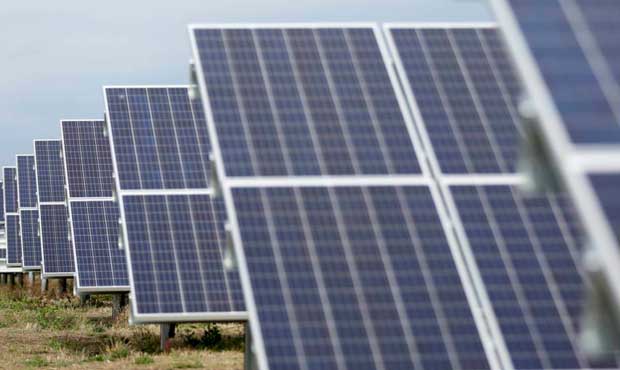
(Anna Reed/Statesman-Journal via AP)
(Anna Reed/Statesman-Journal via AP)

My colleague Ron Upshaw penned an editorial critical of a move by the Trump administration, imposing hefty tariffs on oversize washing machines and solar panels.
“Obviously, there are legitimate reasons to place tariffs on imports,” Ron notes. “The reasoning on this one just seems thin and petty. Help me out here, what am I missing??”
I love ya, but, with respect, you’re missing quite a lot.
The article is critical of the tariffs but doesn’t begin to explain why they’re in place and I fear it’s an overreaction because he doesn’t particularly like the President. Instead, the focus of the piece shifts to the reality we live in a global marketplace where American consumers frequently purchase products made outside of the country:
“What’s the upside of moves like this? So people who want to install solar power now have to pay 30 percent more to buy the same panels? Or maybe they now choose to buy American-made solar panels?
Is this how we “Make America Great Again?” We pretend that we don’t live in a global marketplace anymore? We just act like it’s 1965 and that the United States can control the price of whatever it wants?
I’m not an economist, but this constant drumbeat that somehow we are all getting screwed by other countries with horrible deals is really starting to wear thin with me. We live and shop globally now more than ever.”
This conflates mostly unrelated issues and is being instituted precisely because we shop globally; it’s not acting like we don’t exist in a global marketplace. These tariffs were put in place to help American businesses and punish companies cheating the trade system.
For example, Korean washing machine makers were accused of violating trade rules. We impose a high tax on the products from Korea, so, these companies shipped the products to the U.S. from Vietnam and Thailand, under dramatically lower taxes, dumping large quantities of the products into the country, at very low prices (since they’re avoiding the taxes).
The consequence (aside from poorly made washing machines literally exploding)? It hurt American manufacturers, like Whirlpool, that were being undercut by companies cheating the system. Indeed, the U.S. International Trade Commission unanimously found that these moves hurt domestic washing machine producers and recommended the tariffs.
On the solar panel front, two American companies made similar allegations against foreign companies which they believe hurt their domestic business.
The Trump tariffs are meant to level the playing field since not all companies wanted to follow the law; should American workers be screwed by a foreign company unwilling to pay taxes? I thought the Left wanted companies to pay their fair share and not allow corporations to avoid taxes.
Beyond that, the tariffs are meant to encourage these foreign companies to open plants in this country. In fact, the two washing machine companies accused of cheating announced they’re building factories in South Carolina and Tennessee, which USA Today reports will create 1,600 American jobs.
Now, none of this is guaranteed to protect American jobs, though it should be noted that they have bipartisan support. Democratic Senator Sherrod Brown called the tariffs “welcome news” that “will help level the playing field, and show anyone who tries to cheat our trade laws that they won’t get away with it.” Republican Senator Rob Portman similarly praised the move, saying “If other countries are not following the rules of trade they have to be held accountable.”
But Ron writes:
“Surely it doesn’t take an advanced degree to understand that arbitrarily raising prices on foreign-made goods just makes everything more expensive for American citizens. Oh, and there’s also the chance that other countries like China will retaliate and put even bigger tariffs on US exports.”
It is not arbitrary by any stretch of the imagination and it’s based on the recommendations of the Trade Commission. And, yes, it’ll make companies offering low prices – by breaking trade laws – charge more; but the alternative is to allow them to break the law. That is unacceptable.
Is this a perfect plan? I doubt it. Countries like China may, in fact, retaliate, but it’s not a zero-sum game where we have no power. And our take on the tariffs is quite subjective, which is why it has bipartisan support and criticism. But to toss it aside as petty and random betrays the context in which the decision was made.
It is also exactly what the President campaigned on: these types of protectionism policies were a cornerstone of his trade policy campaign promises. Ron asks, “Is this the kind of thing that you were hoping for when you chose the red team?” The answer is yes: of course it’s what his voters signed up for and it’s what many Republicans and Democrats support.
Follow @https://twitter.com/jasonrantz

-
 Tune in to Seattle Red AM 770 weekdays at 3-7pm to The Jason Rantz Show.





