
Rantz: Seattle files permit for homeless camp they’re trying to keep secret
Mar 4, 2019, 5:42 AM | Updated: 10:31 am
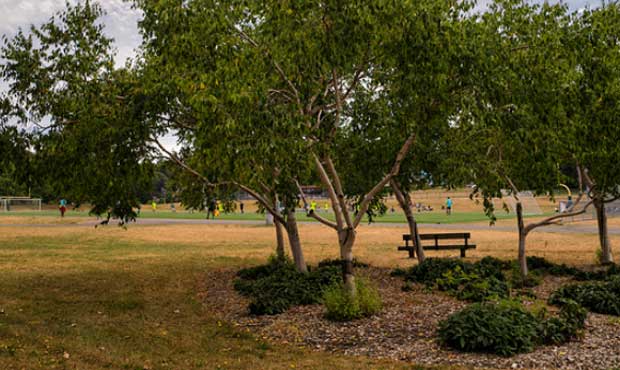
Genesee Park and Playfield. (City of Seattle)
(City of Seattle)

Mayor Jenny Durkan’s office is moving forward with an overnight parking lot for homeless car owners at Genesee Park, despite a promise to engage the community before decisions have been made. This is not the first time Durkan’s office has violated the community’s trust on an encampment plan.
Last week, after reports of the lots surfaced, two city sources told me Genesee Park was selected for the parking lot pilot program, even before Durkan was briefed on the plan.
At the time, Durkan’s office, through Communications Director Mark Prentice, explained no site had been chosen and they would first conduct community meetings, writing “the City will begin community engagement as it moves forward on any potential sites.”
This appears to be a lie.
The Jason Rantz Show on KTTH learned a permit application was filed for the parking lot encampment on Feb. 2, 2019 by Ralph Neis of the Low Income Housing Institute (LIHI), the organization that would handle the encampment on behalf of the city.
The Building & Land Use Pre-Application permit explains the encampment on the north parking lot:
Temporary use as an emergency encampment to provide overnight parking for homeless individuals living in their vehicles. The project will serve up to 30 vehicles. This 4-week permit is valid from (enter date of issuance) to (enter date 4 weeks after issuance).
There is also a follow-up Construction Permit under review for the same site and project. Still, Prentice claims “No site or sites have been selected.”
When asked if the city received permits for any of the other potential car lots, Prentice ignored the question and repeated an earlier talking point that, “We are evaluating multiple potential locations and no decision has been made prior to community engagement.”
Earlier reports indicated other sites were discussed as potential homes for the encampments, but none, as of March 2, showed any permits filed on their behalf. When asked if the city applied for the other spots, after I showed him a screenshot of the permit application, Prentice chose not to answer.
This project is unfolding almost identically to the South Lake Union tiny home village, which the city pretended wasn’t decided, though several slip-ups by the Department of Neighbors proved they had decided on the project before the community engagement meetings. Much like with Genesee Park, the permits for the village were filed and plans drawn before any community meetings. At the second meeting, which was supposed to hear feedback on their proposal, the city announced they were moving forward with their plans regardless of what was said, brushing off criticism.
Ari Hoffman, a Seattle City Council candidate in the district, ripped the city’s secret plans in a Facebook post last week:
More lies. Enough is enough. This program was tried in 2016 and failed. This is not the first time the city has hidden a project like this. They also hid the South Lake Union Low Barrier Tiny Home Village. People belong in shelters not in vehicles or on the streets. There is already a line of RV’s on Genesee. Needles are already found in this parks nearby. The parking lot is feet from the walking trail that connects Link Light Rail Columbia Station to Stan Sayres Memorial Park, and feet from the playground. there are 3 schools nearby plus the play fields that host schools from all over the city. There are homes nearby that have already been broken into by the people in the tents in the meadows. As if that wasn’t enough this site is also a health hazard and therefore not appropriate for a facility like this.
It’s hard to imagine how Durkan’s office could fumble these rollouts any worse, but it’s lead by a pattern of keeping constituents in the dark, while pretending no decisions have been made. Durkan’s administration routinely claims it’ll hold off on these types of projects until it consults with the neighbors, but documents and sources usually indicate officials already made a decision.
Why can’t they just be honest from the start and save themselves the bad press and community anger? If they don’t have to engage the community before the projects, then they should stop lying about their intent. And if they don’t like it when they’re forced into community engagement, change the rules.
They could neutralize a significant portion of the anger if Durkan’s office would just be honest. It’s almost like they work hard to create more controversy than necessary. Durkan surrogates often work behind the scenes with reporters, offering “off the record” conversations that, in my experience, end up giving details that are either misleading or flat-out contradicted by city sources. Then the surrogates seem frustrated or angry that you didn’t trust their lies or mistakes to begin with, followed by a period of silence before a new story pops up and we go down the same road of disingenuous misinformation as before.
As of now, they’re moving forward with the plan, but will still hold community engagement meetings. These haven’t yet been scheduled, as far as I can tell, though Durkan administrators usually announce the meetings via a blog post hidden deep on a city site that no one visits. But if my experience as a neighbor in the South Lake Union tiny home village debacle is repeated, the city will host two meetings, dismiss concerns during the first meeting, then announce their intent in the second one. They will claim to make minor tweaks to the program based on feedback, but the tweaks will be the details they’ve already decided, but hadn’t yet been leaked.
Listen to the Jason Rantz Show weekday afternoons from 3-6 p.m. on KTTH 770 AM (or HD Radio 97.3 FM HD-Channel 3). Subscribe to the podcast here.
Follow @https://twitter.com/jasonrantz

-
 Tune in to Seattle Red AM 770 weekdays at 3-7pm to The Jason Rantz Show.






