Ferguson seeks major disaster declaration after Spokane wildfires
Sep 28, 2026, 6:40 PM
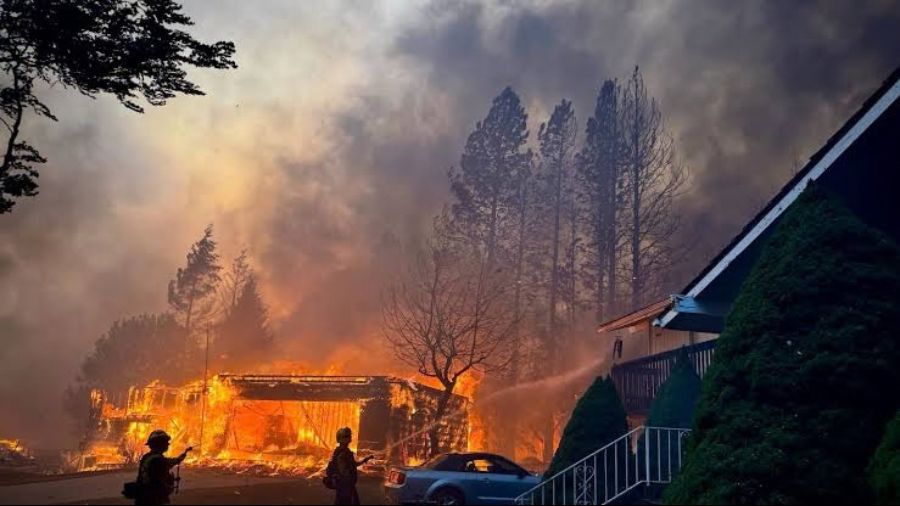
Firefighters fight blazes from the Spokane wildfires. (Photo courtesy of KIRO 7)
(Photo courtesy of KIRO 7)
Washington Governor Bob Ferguson has requested a federal major disaster declaration that could unlock an estimated $128.9 million for wildfire survivors and community recovery efforts in eastern Washington.
The request to President Donald Trump follows fires in late July and early August that destroyed 649 homes and damaged more than 2,500 others across four counties and the Spokane Tribe of Indians, according to the governor’s office.
Ferguson is seeking $11.2 million in FEMA individual assistance for eligible survivors in Benton, Okanogan, Spokane and Stevens counties and the Spokane Tribe. Another $117.7 million would help cover debris removal and emergency response costs in 11 counties.
“No state, no county, no city can handle a disaster of this scope on its own,” Ferguson said.
Spokane County accounted for 615 of the destroyed homes.
Among those who lost their homes was Adam Morrison, who escaped with his wife, daughter, and pets. He described returning to a neighborhood that looked like a “post-apocalyptic movie.”
“We’re not viewing that as a movie,” Morrison said. “We’re living it both on that day and every day since.”
Sherry Merritt lost the home she had lived in for more than 45 years after an officer warned that flames were at her back door.
“We had no time to gather anything but our medicine,” Merritt said.
Breanna Kamere said her home is still standing but is unlivable. She and her four children face uncertainty over temporary housing.
“We could be facing another temporary move right before the holidays,” Kamere said.
If individual assistance is approved, residents could apply directly to FEMA. Aid would help with eligible recovery expenses but would not fully cover losses.
Ferguson also announced plans to seek sales and use tax rebates for rebuilding.
The federal request has bipartisan support from Washington’s congressional delegation.
Read more of Aaron Granillo’s stories here.
Follow @https://twitter.com/aaronkirofm