Goats airlifted from Olympic Peninsula to North Cascades are mysteriously dying, per Tulalip Tribes
May 2, 2024, 1:21 PM | Updated: 1:24 pm

A team has spotted more goats in the area than in the past, adding that many goats have naturally recolonized the area. (Photo courtesy of KIRO 7)
(Photo courtesy of KIRO 7)
Mountain goats that were airlifted from the Olympic Peninsula to the North Cascades are mysteriously dying, according to The Tulalip Tribes.
Airlift goats
Several agencies, including the National Park Service, The Washington State Department of Fish and Wildlife, Forest Service and local tribes translocated 325 mountain goats to increase the animals’ population in northern Washington and to remove the non-native animals from the Peninsula that were destroying endemic plants.
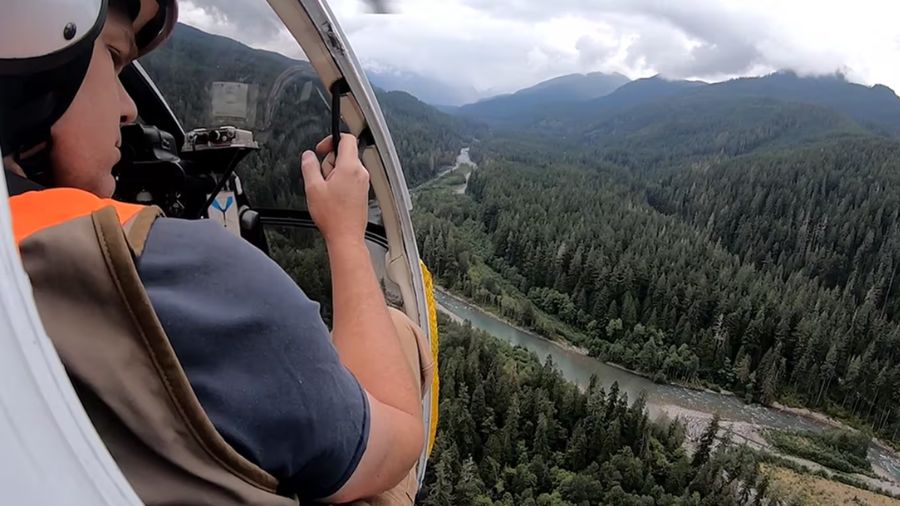
Several agencies and local tribes translocated 325 mountain goats to increase the animals’ population in northern Washington and to remove the non-native animals from the Peninsula that were destroying endemic plants. (Photo courtesy of KIRO 7)
Planning for the project began in 2014, said Patti Happe, a retired wildlife branch chief of Olympic National Park, and translocation efforts started in 2018.
The last of the four operations ended in 2020.
A total of 381 mountain goats were captured in the Peninsula, Happe said, 325 were released in the North Cascades, 16 were taken to local zoos, while the remaining ones died.
Some goats died due to health issues, she said.
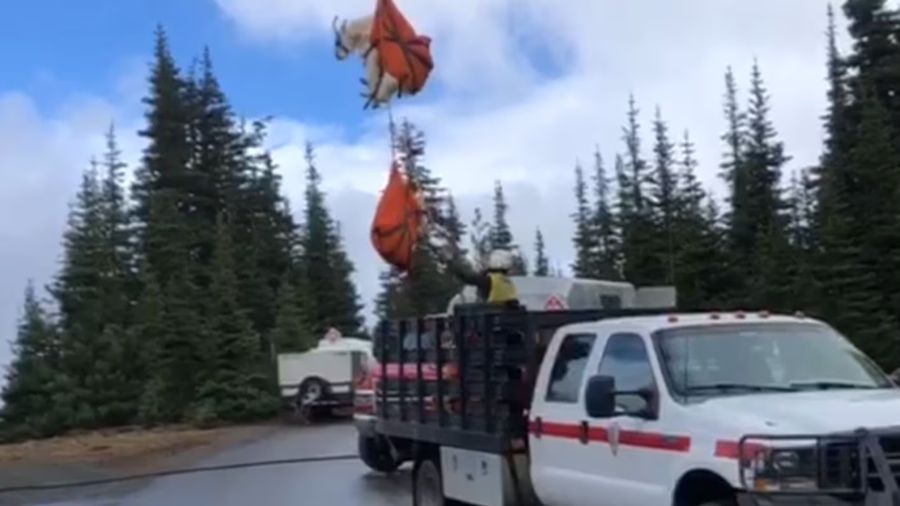
A total of 381 mountain goats were captured in the Peninsula, 325 were released in the North Cascades, 16 were taken to local zoos, while the remaining ones died. (Photo courtesy of KIRO 7)
A number of the goats airlifted to the North Cascades were 10 years old, she said, and successfully reproduced in their new environment.
According to Dylan Collins, assistant wildlife biologist with The Tulalip Tribes Natural Resources Department, the average life span of a wild goat is around 10-12 years.
KIRO 7 News asked Happe how much money was used to fund the efforts.
She did not provide an answer.
Happe said she did not believe the efforts were a failure because the agency’s main goal at the time was to remove the non-native animals, which were harming the environment, and to give the goat population in the North Cascades a jumpstart.
KIRO 7 News reached out to the Washington State Department of Fish and Wildlife to get more details.
“Fewer than 3,000 mountain goats likely reside in Washington currently, the majority of those in the Cascade Mountains from the Canadian border south to around Mount Adams,” the agency said.
A spokesperson for the agency said the recent decline is in the North Cascades is likely due to more severe winters and especially winters that are preceded by severe drought.
“In general, climate change is impacting alpine and montane environments, and species like mountain goats that inhabit these landscapes, more rapidly than other ecosystems,” a spokesperson added.
KIRO 7 News also reached out to the Stillaguamish Tribe, which is also tracking the mountain goats. We’re still waiting to talk with a biologist.
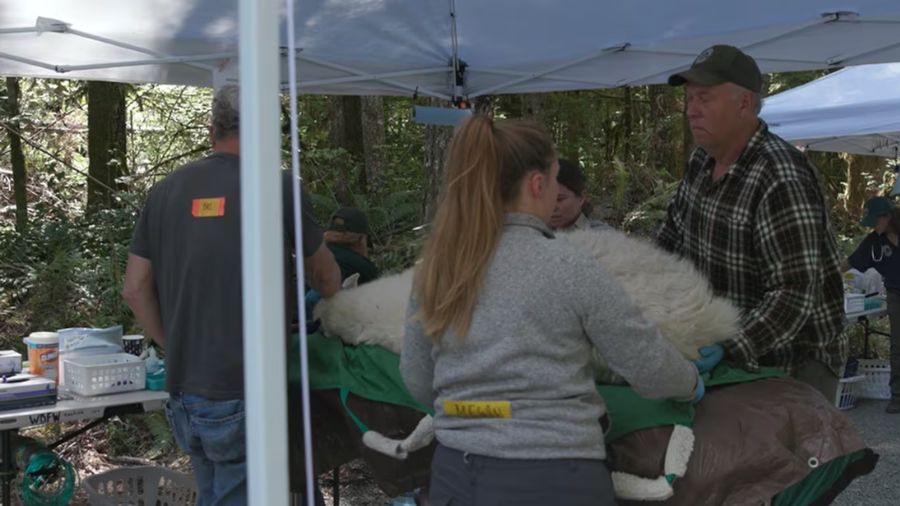
Biologists with The Tulalip Tribes have been tracking 115 of the airlifted mountain goats through their GPS collar technology. (Photo courtesy of KIRO 7)
Tracking goats by the Tulalip Tribes
Biologists with The Tulalip Tribes have been tracking 115 of the airlifted mountain goats through their GPS collar technology.
Only three goats have been found as of Tuesday, Collins told KIRO 7 News.
“I think our goats in the North Cascades are definitely in trouble,” he said. “We’re very concerned about the steady decline of goats that we had been observing.”
The goats were initially placed in the Peninsula to increase hunting opportunities in the area, Collins said, however, the population of the non-native animals began skyrocketing.
“There are a lot of endemic plants on the Olympic Peninsula meaning that they occur nowhere else in the world so they’re pretty rare and they’re also not adapted to having that intense grazing effect that the goats are having there. And the goat population there really grew significantly more than anybody was expecting,” he said.
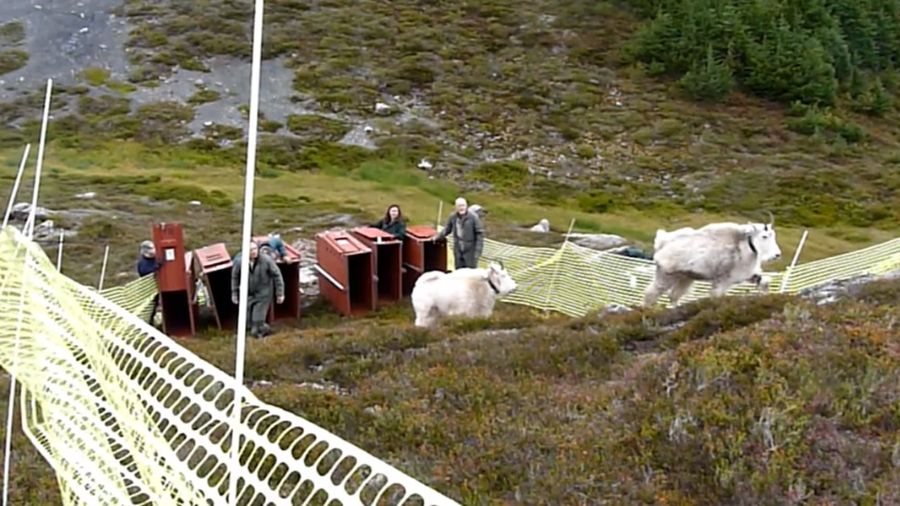
The goats were initially placed in the Peninsula to increase hunting opportunities in the area, however, the population of the non-native animals began skyrocketing. (Photo courtesy of KIRO 7)
Collins told KIRO 7 News that native mountain goats in the North Cascades have been steadily decreasing for more than a decade.
“In the 60s and 70s, there were some severe overharvesting of mountain goats throughout the state and that caused a lot of our populations to crash and even today, some of those populations haven’t recovered,” he said.
“In the 1940s, there were over 80 goats detected there, and last year, we only counted four. We haven’t counted more than 10 in the last couple of years,” he described White Chuck Mountain in the North Cascades.
The Tulalip Tribes’ main goal was to restore the native animals’ population in the treaty area of Tulalip, but the results were not promising, Collins said.
“It was a huge disappointment. We get texts every single time when one of our collars dies. If it doesn’t move in a certain amount of hours, it sends a mortality single. We’re steadily getting texts every day almost,” he said. “The deaths just continue to happen.”
The tribe recently lost three goats in December and January, he said.
KIRO 7 News asked Collins if his team had been able to find the dead goats to determine the reason behind the mysterious deaths.
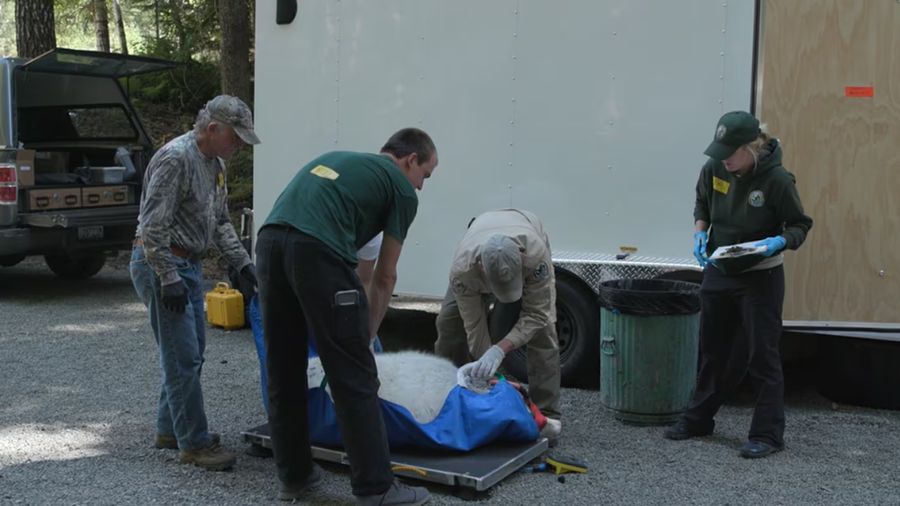
The tribe recently lost three goats in December and January. (Photo courtesy of KIRO 7)
“For the vast majority of the goats, we just are never going to ever get to them. They die on very rugged slopes and even with a helicopter, we won’t be able to access them,” he said.
But his team was able to find a few goats, which had different causes of death.
“There was no single cause for all of these. Some of these appear to be in pretty good health. Some of them look like their body condition deteriorated or a little bit older. One or two were predation events. But by the time we got there, it was impossible to tell if they died from natural causes or just simply scavenged on by something like a bear afterwards,” he said.
While it’s not clear what’s causing the mysterious deaths, Collins said there are several possible factors to consider, including climate change, disturbance from humans and habitat loss.
KIRO 7 News asked Collins if he believes the efforts were a failure.
“I don’t think it’s a failure. We’ve been able to learn a lot from this and being able to combine the mortality data that we have with our translocated goats in addition to what we’re seeing on the decline of our counts on the native goats on our helicopter survey, I think those are validating each other and we’re missing huge numbers of goats and this is a big issue, whether the goat was native or translocated from the Olympics,” he answered.
A team has spotted more goats in the area than in the past, adding that many goats have naturally recolonized the area. (Photo courtesy of KIRO 7)
South Cascades
Collins told KIRO 7 News his team has seen contrasting data near Mt. St. Helens where mountain goats are doing fairly well.
His team has spotted more goats in the area than in the past, adding that many goats have naturally recolonized the area.
“There are some insights we need to gain from areas like that with what the goats are doing well and figure out what exactly is going on in that landscape and how we can replicate that in the North Cascades,” he shared.
New technology
The Tulalip Tribes, along with other tribes, are planning to use new technology to help track the remaining mountain goats.
Biologists will use camera traps, which capture movements in the wild, along with thermal imaging.
The new technology may uncover some missing data, Collins said.
“We’re trying to see if we’re missing goats on our normal helicopter survey. For example, if they’re hiding under the cover of some trees, we may miss them. However, the thermal imagery from a drone might be able to pick them up,” Collins added.
A leader with the Stillaguamish Tribe shared a document that outlined details of the tribe’s new project to monitor the goats.
The monitoring effort will focus on how climate change and other stressors have impacted the goats by using thermal imaging drones and science. This project will take place in the Mt. Baker and Snoqualmie National Forests on the western slopes of the North Cascades Range.