How condensation is warming your beer
May 2, 2013, 10:41 AM | Updated: May 3, 2013, 9:59 am
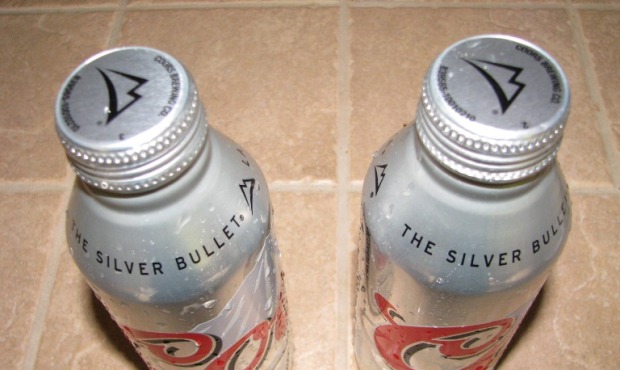
It won't take long for those little condensation droplets to form on the outside of your favorite can or bottle when it heats up, but those drops don't just make the can or bottle slippery, they warm your drink and a lot more than you might think. (Chris Sullivan/KIRO Radio)
(Chris Sullivan/KIRO Radio)


With the weather pushing 80 degrees in places this weekend, I’m sure a lot of you are going to be enjoying a nice cold drink outside. But before you pop the top, you had better take some steps to keep the icy, cold goodness from warming up too soon.
It won’t take long for those little condensation droplets to form on the outside of your favorite can or bottle when it heats up, but those drops don’t just make the can or bottle slippery, they warm your drink and a lot more than you might think.
University of Washington Atmospheric Sciences Professor Dale Durran actually did the math. “It’s 9 degrees Fahrenheit,” Durran said. “It’s very counter-intuitive that just a hair’s width of water condensing on the outside edge of a 12-ounce can would be enough to raise its temperature 9 degrees Fahrenheit, if that heat all went into the can.”
Here’s the science. When the water vapor condenses on the can and turns from a vapor back into a liquid, that transformation releases heat. That’s where the warming comes from.
But Professor Durran wasn’t done. He wanted to know if the warming varied by temperature or humidity. He and fellow UW Professor Dargan Frierson started experimenting, first using a small UW bathroom. But they soon realized they needed something a little more sophisticated. “We discovered an old environmental chamber way back in the basement of the Atmospheric Sciences Building that dated from the 60’s,” he said. “It was perfect.”
Professor Durran enlisted some help and started running all the variables in a series of experiments. “It turns out that in very moist conditions the condensation in the can heats that can more than twice as fast as in the very dry conditions,” he said. “The condensation is doing a lot to heat your cold beer up on a very hot, muggy day.”
Think of it this way: Your can of Coors Light heated up much faster while tailgating at LSU a few years ago than it did when the Tigers visited Seattle.
On a humid day in Saudi Arabia, Professor Durran said a 12-ounce can of beer can warm 16 degrees in 5 minutes from condensation alone.
He and his team only tested cans and not bottles. “We’re not really doing beer-warming research, even if that’s a disappointment some,” he joked. “We thought the example was dramatic enough.”
He said bottles would warm up a little slower because glass is denser than aluminum.
You’re probably wondering why Professor Durran went down this path, since he admits he’s not studying beer warming. He is studying condensation in the atmosphere and how it applies to weather and climate change.
And he thought this rather relatable experiment would be a good way to teach others about his research and get students to understand better why weather behaves the way it does.