How rainy Seattle could become the country’s oasis
Oct 26, 2015, 7:39 AM | Updated: 9:31 am

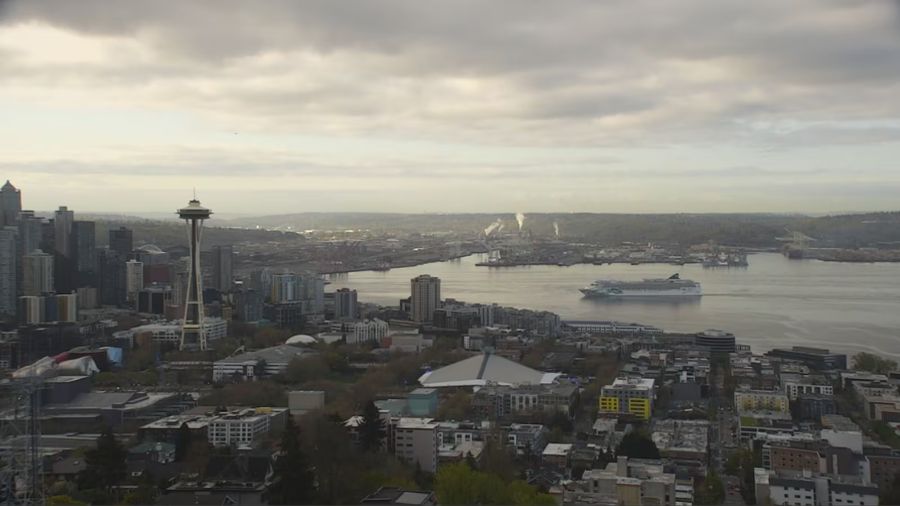
The Puget Sound region is expected to be shielded from many of the impacts of climate change, like heat waves and widespread drought, making it an ideal refuge for those retreating from chronic floods and hurricanes. (KIRO RADIO/Jillian Raftery)
(KIRO RADIO/Jillian Raftery)
Over the last 10 years, the Puget Sound area population has grown by 12 percent. It’s set to jump another 13 percent by 2020, according to census research done by the Puget Sound Regional Council.
Over the next roughly 85 years, climate scientists predict the seas will rise two to three feet, threatening low-lying coastal areas with flooding. Average temperatures could soar up to 15 degrees. Hurricanes and lightning storms could hit harder and more often.
The good news, says University of Washington Atmospheric Scientist Cliff Mass, is that the Olympic Peninsula will largely be shielded from sea level rises, and the Puget Sound likely won’t have as severe problems with drought and heat waves.
Related: Seattle neighborhoods could be sitting in sewage by 2050
“Each part of the country has its issues, but we’re fortunate that even though we will probably have less snowpack, we’ll have equal or more precipitation,” Mass said. “So we’ll have the precipitation and the temperatures won’t warm as quickly.”
In a blog post a year ago, Mass asked if conditions get so bad, would our region become an oasis for the rest of the country?
University of Washington grad student Alison Saperstein spent the last year on that question, researching all the factors involved in what gets people moving. She says we probably won’t see a big population influx, at least not right away. That’s because people are fairly adaptable.
“People don’t move from place-to-place strictly because of environmental factors or climate,” she said. “There are very few groups of people that can actually decide where they’re going to live purely based on the climate.”
Initially, many people will try to cope with increasing temperatures by buying air conditioners. Cities could be designed differently to deal with the heat, or levees built to keep back floodwaters.
But if conditions continue to worsen, there are groups of people that are more likely to move.
“For instance, farmers, because of flooding or drought, they might not be able to sustain their livelihood in particular areas with climate change impacts,” Saperstein said. “And so those people may decide they have to move to another place either to seek a different type of employment or to find agricultural work in another location.”
There’s already one example of mass migration caused by climate and weather factors. The Dust Bowl in the Midwest sent hundreds of farmers to the West Coast to start a new life.
Even in the case of the Dust Bowl, however, factors like family ties, job availability, and government policies influenced where people moved. So Saperstein emphasized that the Pacific Northwest isn’t the only destination many would consider, and there should be more research to find out who will migrate, when and why, in order to get a better handle on exactly where those people will go.
But Saperstein said there will be people who can’t move: so-called “trapped populations” who don’t have the money to relocate or can’t get a job elsewhere.
Years down the line, though, if heat waves continue to devastate the Southwest, or floods wipe Florida off the map, people who couldn’t move because they were too poor or couldn’t find work elsewhere may have no choice but to retreat to milder weather. It’s likely those people will be acting out of desperation, with few resources.
With a large influx of people, many different challenges could present themselves, like finding housing for everyone. A strain on social services is possible for those with the least resources. Management of natural resources like food, water and other utilities would certainly be forced to adjust due to the changing population.
It sounds much like the Syrian migration crisis in Europe, which Saperstein said could be a good comparison.
“When we look at this issue, I think a lot of people think just about numbers of people and they assume that we’ll just have a larger, more congested region,” she said. “When really what we want to ask is what do we want the overall makeup of our city to be? Do we want to be a resilient community that is adaptable to climate change impacts and that welcomes people that need a place that’s safe? And are we ready to serve all the people that come to our region?”
That means Washingtonians will have to do some soul-searching and prepare for the changes that might be coming.