Divisions emerge among Iranian-Americans in Washington over military strikes, regime change
Mar 3, 2026, 2:01 PM | Updated: 3:18 pm
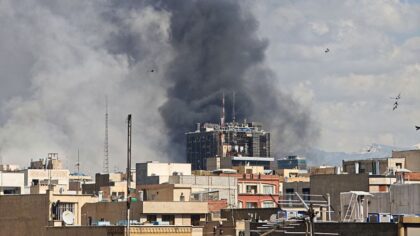
As U.S. and Israeli military strikes on Iran intensify, Iranian-Americans in Washington are expressing sharply divided views over the use of force and what the future of Iran’s leadership should look like.
Protests opposing military action were held over the weekend in Seattle, Bellevue, and other cities, part of larger demonstrations across the country calling for a peaceful resolution without further escalation. Many Iranian-Americans said they fear the consequences of another prolonged conflict in the Middle East, including Democratic Washington State Representative Darya Farivar.
“I want to stay as positive as I can. But history has told us that this will not end well,” Farivar told KIRO Newsradio, following the death of Iran’s religious cleric, Ayatollah Ali Khamenei, over the weekend. “That man was the personification of evil, truly. And I appreciate why they see hope in that. And I also know deep down that to take out a leader does not mean that you take out the entire leadership structure and the regime structure.”
At the same time, a more hardline contingent within the community has voiced support for U.S. President Donald Trump and the joint U.S.-Israeli strikes, arguing that force may be necessary to weaken or remove Iran’s ruling clerical leadership.
“We asked for military intervention, not just people in the United States, but people in Iran,” Homeira Bakhtiari, who moved to the U.S. two decades ago, told KIRO 7. “Asking and crying for help and asking for the return of Reza Pahlavi to take power after this regime.”
Older Iranian Americans eye return to monarchy
Some older Iranian Americans in Washington, particularly those who fled the 1979 revolution when the Islamic Republic replaced the monarchy, said they would welcome a restoration of the former royal structure, including the son of the former Shah of Iran, Reza Pahlavi, who has positioned himself with the Trump administration as a potential transitional leader.
In an interview that aired Sunday on “60 Minutes,” Pahlavi said he would be willing to serve temporarily, overseeing a transition until free elections could determine Iran’s future government. During the interview, correspondent Scott Pelley pressed Pahlavi about criticism of his father’s rule, including allegations that the monarchy relied on secret police, torture, and political repression.
In response to an apparent rise in support of Pahlavi among Iranian Americans in Washington, Farivar said, “I find it really hard to believe that the son of the former Shah of Iran understands what democracy looks like, how to bring peace, and how to bring freedom to Iran when he has personally benefited from the monarchy.”
While there appears to be broad agreement among many Iranian-Americans that the country’s ruling religious leaders should no longer hold power, there is far less consensus on how that change should occur or who should lead next.
Younger Iranian Americans favor democracy
Younger Iranian-Americans, many of whom grew up in the United States, often favor a more representative democratic system rather than a return to monarchy.
After strikes began over the weekend, Trump and Israeli Prime Minister Benjamin Netanyahu publicly urged the Iranian people to rise up and topple the Islamic Republic.
University of Washington professor of Persian Studies, Dr. Aria Fani, said many Iranians have watched similar interventions unfold in countries such as Iraq, Afghanistan, Libya, and Syria and remain wary.
“It is just Groundhog Day in America,” Fani explained. “That’s what it feels like every day, a new war. Brand new excuses. And this time will be different. This time will be different.”
Fani, who has been in touch with fellow Iranian-Americans and Iranian citizens within the country’s borders since the military attacks, said the idea of Iranian citizens overthrowing the Islamic Republic regime is near impossible.
“Let’s just say if a foreign country were to bomb us, you know, the Capitol and Congress … Is that the end of the U.S. government? I mean, this is like a fantastical pie-in-the-sky type logic,” he said.
Fani also said most Iranians want the U.S. and Europe to lift sanctions that have been in place since the 1970s, leading to five decades of prolonged economic disparities and struggles inside Iran.
“This government is extremely corrupt, extremely violent, but also because, since the very moment this country was formed 47 years ago, Iran has never lived a single day without U.S. intervention, economic sanctions that have devastated the economy,” Fani explained.
RELATED STORIES


Uncertainty reopens old wounds
With questions swirling about the extent of damage to Iran’s leadership structure, some describe the current moment as a perceived power vacuum, though it remains unclear how much control the ruling establishment has truly lost.
For Iranian-Americans in Washington and across the country, the uncertainty has reopened long-standing wounds and revived old debates about revolution, reform, and the risks of outside intervention.
In the meantime, Farivar explained ongoing missile and air strikes, combined with a full travel ban on Iranians to the U.S. that went into effect Jan. 1, are creating immediate obstacles for Iranians.
“They can’t get in touch with their family members in Iran. They don’t know if they’re alive. They don’t know if they have made it,” Farivar said. “So many people are talking about the impacts of this travel ban. They are actively preventing Iranians from being able to escape the country, to the United States, to reunite with their families.”
She is also concerned about the looming price tag for the war. So far, estimates reach into the hundreds of millions of dollars. And she fears ongoing action might turn into safety concerns here in Washington.
“It cannot be overemphasized that war is extremely expensive and our taxpayers are going to suffer and are going to fund it,” Farivar said. “I’m deeply, deeply concerned about backlash on, not just the Iranian community, but also the Afghan community and anyone who’s perceived to be Iranian or Muslim.”
Follow Luke Duecy on X. Read more of his stories here. Submit news tips here.