Judges on the fence about cameras recording their federal courtrooms
Nov 19, 2013, 6:35 AM | Updated: 10:03 am

Seattle District Court Judge Robert Lasnik has no worries that cameras would influence performance in court. "In reality, I've never seen that to be true. I was a prosecutor in some very high profile cases. I was a trial judge that had cameras in the courtrooms and I never really saw that." (AP Photo/File)
(AP Photo/File)

Video cameras are commonplace in courtrooms in Seattle and across the nation, with one significant exception. They’re banned in most federal courts, including the U.S. Supreme Court. But now, cameras are on trial in Seattle.
It seems as though cameras are everywhere these days. Why not in federal court? Some argue cameras are disruptive or that they would diminish the gravitas, the decorum of the federal judiciary.
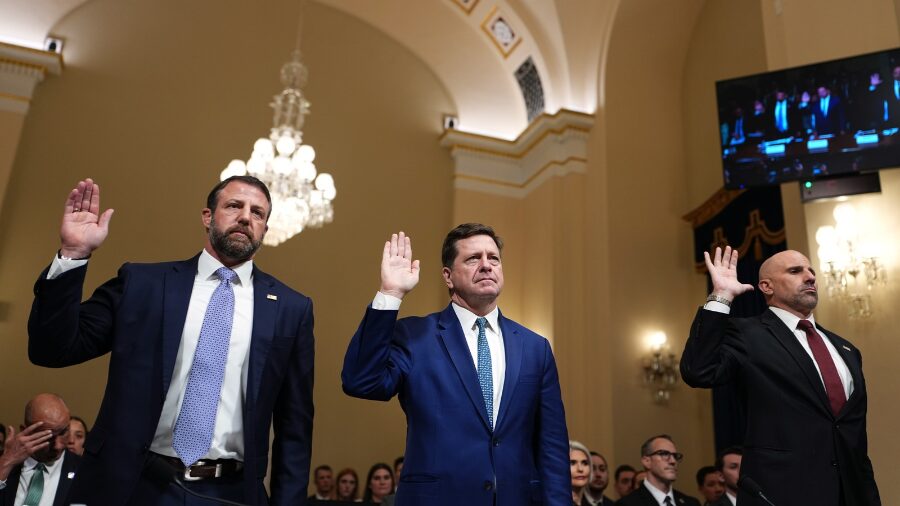
The U.S. Supreme Court is unanimously opposed to allowing cameras in their courtroom or in district courts. Justice Stephen Breyer says the nine ‘Supremes’ are caretakers of an institution.
“And the last thing any of us wants to do is make it worse as an institution,” says Breyer.
Justice Anthony Kennedy is fearful that judges would be tempted to pander to the camera.
“There would be considerable reluctance to introduce a dynamic, where I would have the instinct one of my colleagues asked a question because we’re on television,” says Kennedy.
Seattle District Court Judge Robert Lasnik has no worries that cameras would influence performance in court.
“In reality, I’ve never seen that to be true. I was a prosecutor in some very high-profile cases. I was a trial judge that had cameras in the courtrooms and I never really saw that.”
Seattle is among 14 federal district courts across the U.S. that are testing video cameras during civil proceedings, with the consent of all parties.
“Clearly the public’s trust in almost all government institutions is at an all time low,” admits court administrator Bill McCool. He says cameras promote trust through transparency and open government.
“I think the public really has a right to know what’s going on in their court proceedings and in their court system,” says McCool. “I mean, we’re accountable to the public for the public funds that we spend. The media is of course an important part of getting the information out to the public. But I think openness extends not to the media but to anybody that wants to be involved in the court system.”
One of the few cases recorded by video, so far, in Seattle deals with a settlement agreement between the City of Seattle and the U.S. Justice Department over use-of-force by police.
“This is exactly what you need the camera because this is of great interest in our community,” says Lasnik.
Judge Lasnik thinks the public should see the good work of the federal judiciary.
An outspoken supporter, Lasnik knows firsthand the risk of cameras in the courtroom from one of his superior court trials covered by Court TV.
“The questioning was droning on and the trial judge was drifting slightly and all of the sudden there was ‘Objection your honor!’ And I had to say, ‘I’m sorry, I wasn’t listening,'” he laughs. “I’ve since learned to say, ‘Would you please rephrase the question?'”
The perils aside, Lasnik says his colleagues are frustrated by the U.S. Supreme Court’s resistance to the presence of cameras.
“Any trial judge who can’t control his courtroom with a camera there, probably can’t control his courtroom without a camera there,” he says.
But Justice Breyer and the others do have final say, “If we bring the cameras into the courtroom, it will be in every criminal court in the country. Do you want it in every criminal court? In every case? What about juries? What about witnesses? What about intimidation?”
The federal court pilot will allow cameras in select federal courtrooms until July 2015.
“I’m not ready yet,” says Breyer. “I want to see a little bit more of how all this works in practice.”