Judge rules Kalshi likely violated Washington gambling laws
Jul 21, 2026, 9:15 AM
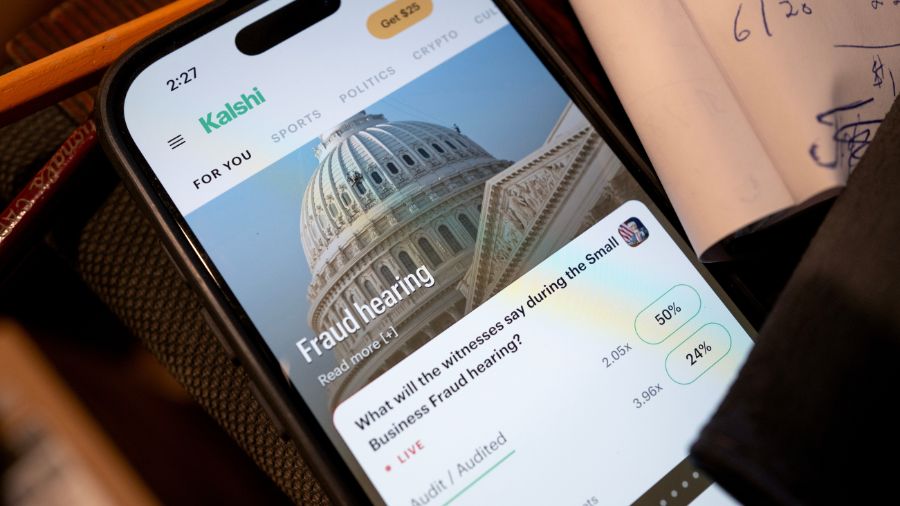
In this photo illustration, An app for Kalshi, an online prediction market site, is shown on February 25. (Photo Illustration: Scott Olson, Getty Images)
(Photo Illustration: Scott Olson, Getty Images)

A King County Superior Court judge has ruled that online prediction market operator Kalshi likely violated Washington state gambling laws and consumer protection statutes, handing a significant early victory to Attorney General Nick Brown in the state’s lawsuit against the company.
In a ruling issued Monday, the court granted a preliminary injunction against KalshiEX LLC, finding the state is likely to succeed in proving that the company operates an illegal gambling business in Washington. The judge also determined that Washington consumers could face substantial harm if Kalshi’s activities were allowed to continue while the case proceeds.
A final injunction order is expected Aug. 5 after additional discussions between the Attorney General’s Office and Kalshi regarding the scope of the court’s order and possible remedies.
“This victory is the first step toward holding Kalshi accountable for their brazen violations of Washington law,” Attorney General Nick Brown said in a statement. “Kalshi padded their pockets as they promoted illegal betting on sports, elections, the total number of measles cases this year, what will witnesses say during a child trafficking hearing, and even natural disasters.”
Kalshi operates an online platform that allows users to buy and sell contracts tied to the outcome of future events, including sporting contests, elections, and other real-world developments. The company describes its platform as a regulated prediction market, but Washington argued those transactions constitute illegal gambling under state law.
RELATED STORIES



WA’s Gambling Act
According to court filings, Washington’s Gambling Act defines gambling as risking something of value on the outcome of a contest of chance or future contingent event in exchange for the possibility of winning money or something of value.
The court agreed with the state’s position that Kalshi’s offerings likely fit within that definition.
“Each Kalshi bet risks money, relies in part on chance, and promises a payout to winners,” the Attorney General’s Office said in its announcement of the ruling.
State officials argued the platform functions similarly to a sportsbook, allowing consumers to place wagers on whether specific events will occur and receive payouts based on the odds assigned to those outcomes.
The state’s lawsuit also focused on Kalshi’s marketing practices. In its ruling, the court found that “Kalshi’s provision, marketing, and advertising of illegal gambling activities constitute unfair and/or deceptive acts or practices,” according to the Attorney General’s Office.
One advertisement cited by the state featured a user texting that they had found “a way to bet on the NFL even though we live in Washington,” which state attorneys argued demonstrated an attempt to evade Washington’s gambling restrictions.
Brown’s office said Washington has maintained strict controls on gambling since statehood and specifically outlawed internet gambling through legislative changes enacted in 2006.
To obtain the preliminary injunction, the state was required to demonstrate both a likelihood of success on the merits of its claims and a likelihood of substantial injury to consumers if the challenged conduct continued. The judge said Washington met both standards.
The ruling represents one of the most significant state-level challenges to the growing prediction markets industry, which has expanded in recent years by offering event-based contracts on sports, politics, and other topics while arguing those products differ from traditional gambling.
Kalshi has not publicly responded to Monday’s ruling. The company will have an opportunity to continue defending its business practices as the underlying lawsuit moves forward.