Seahawks vs. Chiefs: How the 12s can reclaim the world record for loudest stadium
Oct 24, 2026, 5:00 AM
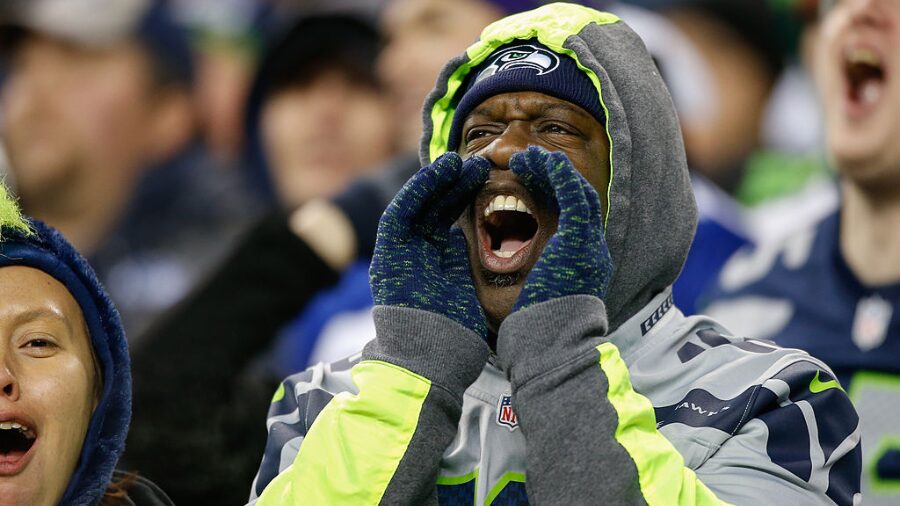
A fan cheers during the game between the Seattle Seahawks against the New Orleans Saints at CenturyLink Field on December 2, 2013 in Seattle, Washington. (Photo: Otto Greule Jr, Getty Images)
(Photo: Otto Greule Jr, Getty Images)
Seattle Seahawks fans have a record to reclaim, and science offers a few clues about how to do it.
The Kansas City Chiefs took the Guinness World Records title for loudest crowd roar at a sports stadium in September 2014, reaching 142.2 decibels at Arrowhead Stadium during a game against Tom Brady and the New England Patriots.
That surpassed the 12s’ officially recognized record of 137.6 decibels, set Dec. 2, 2013, at what was then called CenturyLink Field during a game against Drew Brees and the New Orleans Saints.
The difference is just 4.6 decibels. But making up that gap is more complicated than simply asking everyone at Lumen Field to yell a little louder.
What are decibels, and how are they different from loudness?
Decibels measure sound level. They are not a straightforward count of how much noise a crowd produces, and the numbers do not work like ordinary addition.
Decibels use a logarithmic scale, meaning a small numerical increase can represent a substantial change in sound energy.
“Adding up decibels in general is more complicated than folks think because decibels are on a logarithmic scale, so you know 60 decibels plus 60 decibels is not 120 decibels,” Ben Markham, president of Acentech, an acoustic consulting firm based in Boston, explained. “They don’t add up that way.”
Instead, when two independent sound sources of equal intensity combine under ideal conditions, the resulting level is about 63 decibels.
Sound level and perceived loudness are also different. Sound level is a physical measurement; loudness describes how people perceive a sound.
As a general rule, an increase of about 10 decibels is often perceived as roughly twice as loud, although the experience varies with the sound’s frequency and other conditions. But that doesn’t mean it would definitely be perceived as louder.
“In the kind of the mid-frequency range of human hearing, for most sounds, it takes about a 10 decibel increase for a sound to sound twice as loud as some other sound, and a 10-decibel increase is like 10 times the amount of energy in the amount of pressure rather than in a particular system,” Markham explained. “But that doesn’t mean that you would perceive that to be twice as loud to your ears.”
Therefore, the Chiefs’ record is not simply a crowd that sounds a little louder than Seattle’s. The numerical difference represents a meaningful increase in measured sound pressure, but not a fourfold increase in perceived loudness.
What does a 4.6-decibel difference really mean?
For sound-pressure measurements, a 4.6-decibel increase corresponds to roughly 1.7 times the sound pressure and about 2.9 times the sound intensity or acoustic power per unit area, assuming comparable measurement conditions.
In other words, matching the Chiefs’ number is a significant challenge, but it can be done.
“Three decibels or four decibels of an increase in loudness from a noticeability standpoint is only just a little bit louder, and if every single person in that stadium was motivated in such a way to get just a little bit louder, yeah, absolutely, you could take that record back,” Markham said.
But it would take a substantial increase in crowd size to make a difference of that magnitude.
Under idealized assumptions, doubling the number of similar, independent sound sources can produce roughly a 3-decibel increase in measured sound level. Doubling the number of 12s at Lumen Field would achieve that if crowd size alone were responsible.
That also does not mean Seahawks fans must shout nearly three times louder. Since acoustic power and perceived loudness are different measures, stadium geometry, microphone placement, and how many fans are actually yelling can all influence the final reading.
Confused yet? It’s OK, I was too. Again, the important takeaway is that the record can be broken.
Four ways the 12s can help reclaim the record
There are four main variables that can affect a stadium’s peak sound reading: how many people are there, how many are shouting, how loud they shout, and how the stadium’s physical design directs sound.
1. Fill Lumen Field with Seahawks fans.
A packed stadium gives Seattle more potential sound sources. That means filling seats matters and, on game day, bringing the full force of the 12s rather than leaving empty seats or allowing the crowd to be diluted by opposing-team fans.
2. Get everyone shouting at the same time.
A loud section is not enough if much of the stadium is quiet. The more fans who contribute to the roar at the critical moment, the greater the potential sound level.
3. Make every shout count.
Individual volume matters, too. If fans across the stadium raise their voices together, the combined effect can help push the peak reading higher.
4. Let Lumen Field’s acoustics work in Seattle’s favor.
Stadium shape and the relationship between the crowd, the field, and the measuring microphone affect how sound travels and reflects. Lumen Field was designed in part to direct crowd noise toward the field, potentially helping concentrate sound in particular areas.
Seattle cannot change the stadium’s architecture on game day, but it can take advantage of the venue’s existing design by generating a sustained, coordinated roar at the right moment.
“Usually when we measure sound … in a professional capacity of doing an environmental noise assessment or something, we’re taking some kind of average or some kind of statistical metric, like maybe the sound that exceeded 10% at the time or something like that,” Markham said. “According to the way that the Guinness Book of World Records measures it, you don’t have to be the loudest stadium over time, or on average, or the loudest crowd for a minute long, or anything like that. It’s literally the loudest in this infinitesimally small, just a few milliseconds-long sample that they’re taking when the crowd is really going crazy.”
Why microphone placement and timing matter
There is a catch that may have helped Arrowhead Stadium the night Chiefs fans set the record — if there was wind blowing into the recording microphone.
Weather records show no precipitation that day, with a high of 83 degrees and a low of 58.
However, because a brief burst of noise can determine whether a stadium sets a record, the decisive reading could always be influenced, depending on exact microphone position and the wind.
“If the windscreen that they had on that microphone wasn’t quite up to snuff, and they got a really big gust of wind, I mean, in a peak measurement, a gust of wind that makes the microphone flap in a jitter, that would be enough to make the difference.”
For a valid comparison, measurements need to follow the applicable record-setting rules and use reliable equipment and procedures. A higher number is meaningful only if the readings are obtained under comparable, properly controlled conditions.
The difference between two stadium records may reflect crowd performance, but it can also be influenced by differences in the environments and measurement setups.
RELATED STORIES



Why Seattle cannot simply call itself the pound-for-pound loudest crowd
Lumen Field has roughly 8,000 fewer seats than Arrowhead Stadium. Based on everything discussed in this story so far, you might come to the conclusion the 12s could claim to be the loudest fans “pound for pound”.
Unfortunately, we can’t.
“No, I don’t think you can say that because I think the number, the 8,000 on its own, isn’t enough to make up that magnitude of difference,” Markham explained. “I know that’s not the answer you were hoping I would give you, but no, I’m sorry, I don’t think you can say that.”
To determine which crowd is loudest pound for pound, researchers would need a consistent method to account for the number of people, their sound output, the stadium’s acoustics, and the microphone’s position. The two headline records alone cannot establish that comparison.
There are also limits to what a single peak reading tells us about the overall experience. It identifies the loudest captured instant, not necessarily the stadium with the loudest crowd throughout a game.
The bottom line: Seattle needs the whole stadium to bring the noise
Reclaiming the title will take more than a few fans setting personal volume records. It will take a full crowd, as many people shouting as possible, a coordinated burst of noise and a measurement that captures the moment.
The science suggests the gap is challenging, but not necessarily insurmountable. As the acoustics expert noted, a relatively small increase in perceived loudness across an entire stadium could make a meaningful difference to the measured peak.
For the 12s, the mission is straightforward — fill Lumen Field, get everyone involved, and make as much noise as possible at exactly the right moment.
The Chiefs have the number. Seattle has a reason to get loud. It just comes down to physics.
“It’s a fascinating field of work, and I feel like a lot of people don’t even necessarily think about it or know that this line of work even exists,” Markham shared. “It does. It’s interesting.”
Follow Luke Duecy on X. Read more of his stories here. Submit news tips here.