Seattle RV parking vote raises questions about towing, Homestead Act protections
Oct 19, 2026, 2:36 PM
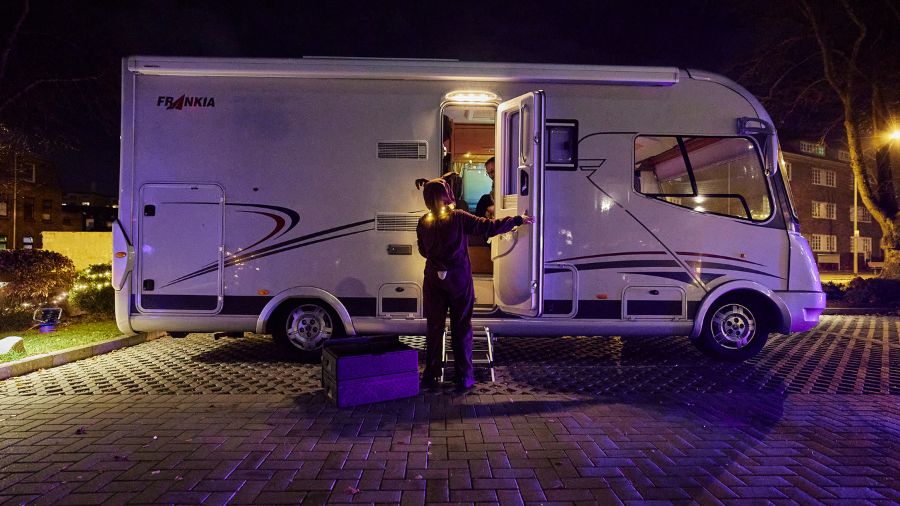
A person opens the door of an RV. (Photo: Morris MacMatzen, Getty Images)
(Photo: Morris MacMatzen, Getty Images)
Seattle City Council is set to vote Tuesday on a package of legislation restricting where people living in recreational vehicles can park overnight. But while the plan creates new parking rules and allows RVs without permits to be towed without notice, city analysis warned that impounding vehicles used as homes presented potential legal and logistical challenges that the legislation does not fully resolve.
The package includes Council Bill 121283, which creates the RV parking permit program; Council Bill 121281, which changes land-use and zoning rules involving recreational vehicles and storage; and Resolution 32216, which establishes the broader Vehicle Resident Assistance Program.
Under the proposed program, eligible RV residents could receive free permits to park overnight in designated industrial areas. Participants would have to engage with services, follow neighborhood rules, and move their vehicles every 72 hours.
People without permits would be limited to two hours of street parking and could have their RVs impounded without notice.
The plan is intended to provide an alternative to living on city streets. Seattle’s first planned RV safe lot, Glassyard Commons, is expected to open in mid-November just west of Highway 509 and the First Avenue South Bridge. The site is designed to accommodate 72 RVs, along with some tiny homes for additional residents.
The city would redirect $5 million in existing funding toward outreach, safe parking lots, vehicle storage, and services.
But city analysis identified significant obstacles to enforcing the new rules, including staffing shortages, limited storage capacity, and legal protections that may apply when a vehicle is also someone’s home.
WA Supreme Court ruling complicates RV impoundments
In 2021, the Washington Supreme Court ruled that a vehicle used as someone’s home could automatically qualify as a homestead under state law, without the owner filing a formal declaration.
The case involved Steven Long, who was living in his truck in a Seattle-owned gravel lot in 2016. After the city warned him that he was violating its 72-hour parking rule, a towing company impounded the truck while Long was at work.
Without the vehicle, Long slept outside before seeking shelter from the rain and wind. He later challenged the impoundment and the costs the city charged him.
The court ruled that Long’s truck qualified as a homestead. However, it reversed a lower court’s finding that Seattle had violated the state’s Homestead Act, concluding that Long’s claim was premature because the city had not yet attempted to collect the debt in the manner required by the law.
The court separately ruled that the impoundment and associated costs counted as fines under the federal Constitution’s excessive fines clause. It said an inquiry into a person’s ability to pay was necessary. Long had demonstrated that he could not afford the imposed costs.
The ruling does not prevent Seattle from impounding every lived-in vehicle. But it creates a distinction between towing a vehicle and selling it to recover the costs.
According to the city’s analysis, a lived-in vehicle may be impounded, but it cannot always be sold to pay for the impoundment because of homestead protections. The proposed permit program does not change that legal situation.
That could create a practical problem if enforcement leads to a significant increase in impounded motor homes and travel trailers. If owners challenge their impoundments and the vehicles cannot be auctioned promptly, the city could run short of storage space.
The analysis warned that limited storage capacity could ultimately impede additional impoundments.
New rules aim to strengthen enforcement, but challenges remain
The legislative package includes two changes intended to help parking enforcement officers.
First, CB 121283 would allow motor homes and travel trailers without permits to be impounded without notice. Under the city’s existing approach, some vehicle owners can avoid towing by moving their vehicles after receiving a 24-hour notice, then repeating the process when the cycle starts again.
The new provision is intended to close that loophole and make enforcement more effective.
Second, changes to the city’s junk-vehicle criteria could help parking enforcement officers identify vehicles that are not roadworthy and therefore may qualify for impoundment.
But the city’s analysis cautions that those changes would not fully resolve existing enforcement challenges.
Seattle’s parking enforcement team has a vacancy rate of about 20%, with approximately 20 positions unfilled, according to the city. The permit program would create additional responsibilities for officers enforcing new rules for motor homes and travel trailers.
The city also faces a projected $175 million budget deficit, forcing council members to weigh which programs to preserve and which to cut.
RELATED STORIES

Zoning bill raises a separate legal question
CB 121281 focuses on land use and zoning. It changes definitions and regulations involving recreational vehicles, outdoor storage and flexible-use parking. The bill does not itself establish the new RV parking permit requirements or the proposed towing rules.
Those provisions are addressed in CB 121283, while Resolution 32216 establishes the broader program.
Regulating where RVs can be parked or stored does not, by itself, necessarily violate Washington’s Homestead Act. But impounding a vehicle that serves as someone’s home raises separate questions about how the city can recover its costs and whether it can sell the vehicle to do so.
The Long case also raises questions about the constitutional limits on impoundment fees, particularly when a vehicle owner cannot afford to pay.
The city’s analysis suggested the new legislation could make some impoundments easier to carry out, but it did not eliminate the legal and logistical obstacles that can follow.
As the council considers the package, the challenge is not just where people can park their RVs; it is whether Seattle can enforce the rules when the vehicle it tows may also be someone’s legally protected home, and when the city may be unable to sell it to recover the costs.
Follow Luke Duecy on X. Read more of his stories here. Submit news tips here.