New civil liberties audit urges stronger safeguards at Seattle’s Real Time Crime Center
Nov 9, 2026, 3:28 PM

A photo of an officer working alongside the Seattle Police Department's Real Time Crime Center. (Photo courtesy of the Seattle Police Department)
(Photo courtesy of the Seattle Police Department)
A new civil liberties audit urged stronger safeguards at Seattle’s Real Time Crime Center, identifying gaps in rules governing camera access, data retention, and oversight.
New York University (NYU) School of Law’s Policing Project issued 19 recommendations, including warrants for certain uses of surveillance footage and clearer policies for handling requests from outside agencies.
“By centralizing surveillance technologies and data, real-time crime centers raise significant concerns around privacy, accountability, and oversight,” Max Isaacs, the Director of Technology Law & Policy at the Policing Project, stated in a news release Monday. “Although SPD has implemented meaningful safeguards, our review identified important policy gaps that city officials should act promptly to address significant risks.”
The mayor’s office commissioned the review in May. Auditors examined documents, visited the center, and interviewed police personnel, city staff, oversight officials, and advocates. The report does not recommend whether the center should continue operating or expand.
Audit finds gaps in data retention and access rules
Auditors found that some safeguards, including a five-day limit on retaining raw CCTV footage, are practices rather than written policies.
They urged Seattle to turn informal safeguards into binding written policies that clearly define which tools and features may be used and how.
The report also found that video saved to case files is retained indefinitely. Auditors recommended establishing retention periods based on a case’s status and outcome.
Although Seattle restricts the use of surveillance data for immigration enforcement and investigations involving protected health care, the audit warned that those rules cannot fully prevent outside agencies from obtaining footage through public records requests or court orders.
The center combines camera feeds and databases to assist officers responding to incidents and detectives investigating past crimes. Auditors recommended generally requiring a warrant when police trace someone’s movements across multiple camera clusters, except during active incidents involving probable cause and an urgent need to act.
That recommendation would not require warrants simply to review cameras near a crime scene.
RELATED STORIES
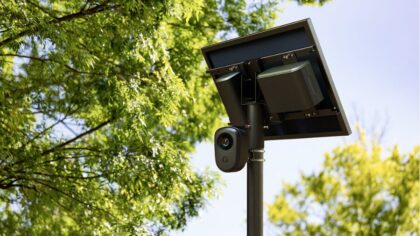
Stronger oversight recommended for Seattle’s Real Time Crime Center
Other recommendations include clearer rules for accessing protest footage, stronger logging of camera access and AI tools, and publication of a promised public dashboard. At the time of the audit, the dashboard had not been released.
The report acknowledged existing protections, including a ban on facial recognition and digital masking of private spaces on Seattle Police Department CCTV cameras. However, it found that protections vary across the camera systems connected to the center.
A separate University of Pennsylvania evaluation of the center’s effectiveness remains underway, with results expected in late 2027. The civil liberties audit said assessments of its overall effectiveness remain preliminary.
The mayor will announce next steps on CCTV cameras in the city Tuesday.