Can Seattle, Washington win its census fight with Trump?
Apr 5, 2018, 6:13 AM | Updated: 8:18 am
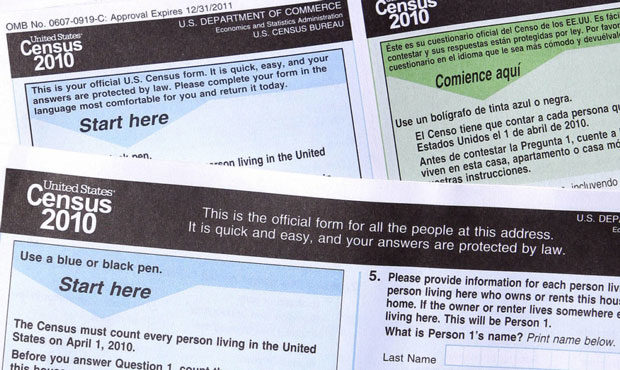
The 2020 U.S. Census will add a question about citizenship status, a move that brought swift condemnation from Democrats who said it would intimidate immigrants and discourage them from participating. (AP Photo/Ross D. Franklin, File)
(AP Photo/Ross D. Franklin, File)
The Trump administration has a tough fight on its hands as Seattle and Washington state take it to court over a single census question.
RELATED: State joins lawsuit against Trump over citizenship question
It’s a fight Trump will likely lose. At least, at first, according to former Washington state Attorney General Rob McKenna.
“Looking at the administration’s track record with other litigation, it’s been pretty mixed,” McKenna told KIRO Radio’s Dave Ross. “They’ve lost a lot of cases around the travel ban because of anti-immigration and perceived anti-Muslim rhetoric … my guess is that they’ll lose in the trial court and the circuit court of appeals. But they could end up getting that turned around at the Supreme Court.”
The Trump administration wants to add a question to the 2020 U.S. census that determines a person’s citizenship status. Such a question hasn’t been on the census since 1950, McKenna notes. The census is mandated by the U.S. Constitution and is used to determine how many people live in the country — citizens or not, McKenna notes.
Seattle and Washington state object to the citizenship question and want it removed. They have filed a lawsuit over it along with a range of other states and cities.
“This is not a census of citizens. It’s a census of residents,” McKenna said.
“The census bureau itself for a long time has resisted including questions about citizenship,” he said. “They resisted it during a lawsuit in the 1980s. They fought it when members of Congress suggested it back in the early 2000s. Nine Census Bureau directors got together around 10 years ago to say all the reasons why it’s a bad idea to ask about citizenship. Mainly, it was because it would discourage participation, even by people here as legal residents but aren’t citizens.”
“The administration is taking a course here that the last several administrations, Republicans and Democrats, have resisted doing,” he added.
Census and the Constitution
States could argue they are harmed if people are discouraged from participating in the census. Data helps determine how many state representatives there are in Washington DC. Therefore, fewer people counted means less representation. The data also helps determine levels of federal funding.
That’s why Seattle, Washington state, and the other cities and states likely have standing in the lawsuit against the administration, McKenna says. Trump’s travel ban is a case that can provide a hint at how the census case will turn out.
“The harder question is if it is unconstitutional to ask any particular question that might have the effect of discouraging people from participating,” McKenna said.
“That will be an issue for the courts to wrestle with,” he said. “Unfortunately for the administration’s legal position, it’s anti-immigrant rhetoric, and President Trump’s anti-immigrant rhetoric as a candidate and to some extent as president is going to be used against the administration as it has been in the travel ban case.”
Trump lost a many court battles over his travel ban. He finally gained approval over the most recent version.
Follow @http://twitter.com/Mynorthwest