Why this year’s toxic algae blooms in Washington are different
Jun 16, 2015, 6:37 AM | Updated: 2:14 pm
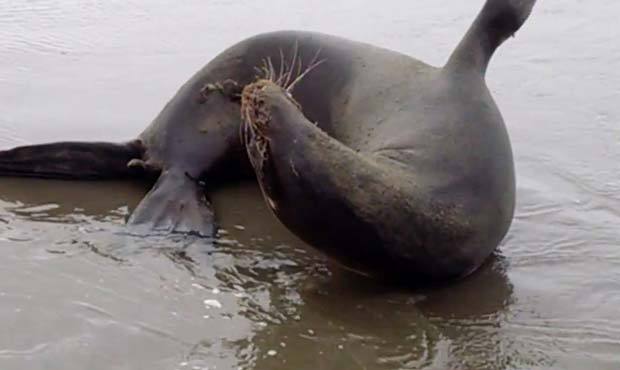
A sea lion experiences seizures, caused by eating fish that in turn feed on toxic algae. it is the first time NOAA has witnessed a sea lion experiencing seizures from domoic acid. (NOAA)
(NOAA)

Washington’s waters are seeing more toxic algae this year than in the past decade.
National Oceanic and Atmospheric Administration (NOAA) scientists set out Monday on an ocean research expedition in hopes of getting some insight into why.
Almost every year a toxin that can cause paralysis shows up in algal blooms in Washington and this year is no exception. But what has oceanographers scratching their heads this summer is the high levels of a rarer toxin, called domoic acid. It can cause amnesiac shellfish poisoning and that can mean nerve damage.
The first case of amnesiac shellfish poisoning was identified in 1987 on Prince Edward Island in Canada. Vera Trainer with NOAA’s Northwest Fisheries Science Center in Seattle said about a hundred people ate mussels contaminated by the toxin.
“Three people died and there were several people who suffered from permanent short-term memory loss,” Trainer said. “An example was a physics professor who remembered his lectures, but his short-term memory was gone. He couldn’t remember where he parked his car, where he ate breakfast, whether he saw the sunrise that morning.”
All of a sudden this year, Trainer says, the domoic acid levels are through the roof in Washington waters and throughout the West Coast — from the central California and possibly all the way up to Alaska.
“Folks who were out on the coast doing monitoring of this harmful algae were asking, ‘What’s going on? Why aren’t we seeing anything?’ And then ‘bang!’ Here we have it after a decade of being completely quiet,” Trainer said.
The toxic algae is a big hit to the state’s shellfish industry. The entire southern coast of Washington is closed to crab fishing, an unprecedented stoppage that estimates the economic loss in the multi-millions.
Washington’s razor clam digging season was forced to end early this year. That, according to state estimates, cost coastal communities $9 million in revenue, just in May.