MYNORTHWEST NEWS

WSU researchers discover vaccine-resistant, COVID-like virus ‘likely capable of infecting humans’

Sep 22, 2022, 12:34 PM

Photo from KIRO 7...

Photo from KIRO 7

A team led by researchers from Washington State University’s Paul G. Allen School for Global Health has discovered a virus in a Russian bat similar to the virus behind COVID-19 that is “likely capable of infecting humans” and would be resistant to current vaccines, according to a news release.

The researchers found that spike proteins from the bat virus, which is called Khosta-2, can infect human cells and are resistant to monoclonal antibodies and serum from individuals vaccinated against SARS-CoV-2, the virus behind COVID-19.

Follow this link to read additional stories from KIRO

Both Khosta-2 and SARS-CoV-2 belong to the same subcategory of coronaviruses.

“Our research further demonstrates that sarbecoviruses circulating in wildlife outside of Asia — even in places like western Russia where the Khosta-2 virus was found — also pose a threat to global health and ongoing vaccine campaigns against SARS-CoV-2,” said Michael Letko, WSU virologist and corresponding author of the study.

According to Letko, the discovery of Khosta-2 highlights the need to develop universal vaccines for sarbecoviruses in general, rather than just known variants of COVID-19.

“Unfortunately, many of our current vaccines are designed for specific viruses we know infect human cells or those that seem to pose the biggest risk to infect us. But that is a list that’s ever-changing,” Letko said. “We need to broaden the design of these vaccines to protect against all sarbecoviruses.”

When the Khosta-1 and Khosta-2 viruses were originally discovered in Russian bats in late 2020, it was thought that they posed no threat to humans. But researchers learned that, like SARS-CoV-2, Khosta-2 can use its spike protein to infect cells by attaching to a receptor protein found throughout human cells.

Then, using a serum made from people vaccinated against COVID-19, the researchers saw that Khosta-2 was not neutralized by the vaccines.

Letko did say that the virus lacks some of the genes that are believed to be involved in pathogenesis in humans, but that there is a risk of it recombining with a virus like SARS-CoV-2.

“When you see SARS-2 has this ability to spill back from humans and into wildlife, and then there are other viruses like Khosta-2 waiting in those animals with these properties we really don’t want them to have, it sets up this scenario where you keep rolling the dice until they combine to make a potentially riskier virus,” Letko said.

Follow this link to read additional stories from KIRO

MyNorthwest News

I-5 crash...

MyNorthwest Staff

Crash blocking two right lanes, HOV lane on northbound I-5 in Seattle

A crash is blocking the two right lanes and the HOV lane on northbound I-5 in Seattle.

6 minutes ago

cancer care tacoma...

Regan Gallo-Fenz

Effort underway for $50M cancer care center in Tacoma

A land use permit is pending for the City of Tacoma, bringing an estimated $50 million cancer center to the South Sound.

30 minutes ago

Pioneer Square Cocktail Bar...

Michael Strite

New cocktail bar Bar Tartare coming soon to Seattle’s Pioneer Square

A new cocktail bar is moving into Seattle's Pioneer Square neighborhood. Bar Tartare is setting up shop at 704 1st Avenue.

1 hour ago

amazon (1)...

Julia Dallas

Amazon employee sues, alleging company failed to protect her after she reported rape by senior manager

An Amazon employee is suing the company, alleging it failed to protect her after she reported that a senior manager raped her.

2 hours ago

Portage Bay cafe close...

Charlie Harger

Portage Bay Cafe had a strong summer. It’s closing a cafe anyway

Portage Bay Cafe will close one of its restaurants on Sunday, saying the location doesn’t have enough indoor seating to make it through another winter.

2 hours ago

Coca-Cola KFC Partnership...

Natalie Dreier, Cox Media Group National Content Desk

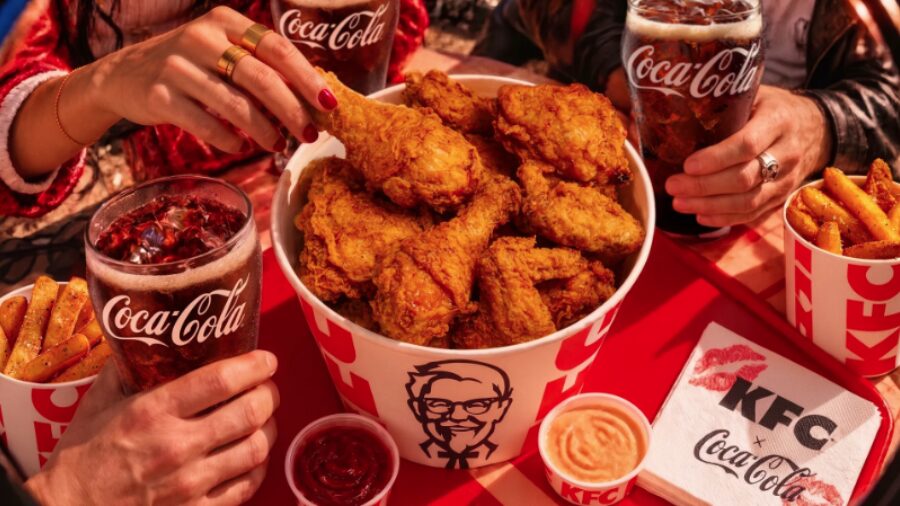
Cola wars: Coke replaces Pepsi at KFC

A major shakeup is happening at KFC. After more than three decades, the company is changing from Pepsi to Coke.

3 hours ago

WSU researchers discover vaccine-resistant, COVID-like virus ‘likely capable of infecting humans’